What is found when the old unit comes out?
Usually nothing. Sometimes decay, and often an original installation that explains the leak.
Part of our VELUX Window Installation guide
Most replacements run to plan. It is worth knowing the exceptions, because they are why we flag a contingency at quotation rather than after.
Decayed timber

The most common finding. A unit failing for years has usually been letting a little water past for some of them, and the timber around the opening takes it.
Soft timber is cut back to sound material and spliced. There is no version of this job where a new unit goes onto decayed timber.
The original installation was wrong
Regularly, and it explains a great deal. The commonest is a flat profile flashing kit on a profiled tile, leaving a gap under every roll, which accounts for a leak blamed on the unit for a decade.
Others: the underlay collar missing, battens left unsupported over the opening and dropped, or on a flat roof a kerb too low for the covering ever to have terminated.
Where we find one we fix it, because refitting to the same detail reproduces the fault.
No insulation collar

Very common, and the explanation for reveal condensation somebody has lived with for years. Adding one during replacement costs very little.
No vapour control
Also common, particularly on flat roofs. Sealing it to the new frame is straightforward while the opening is exposed.
Good news too

Frequently a sound opening in good timber, properly detailed, in which case the job is quick and there is nothing to add.
How we handle it
Flagged at quotation with an indication of cost. We cannot see inside a structure before opening it, and a fixed price that ignores the possibility either is optimistic or intends to raise it later.
Four things, in order of likelihood

Nothing about a rooflight replacement is certain until the old unit is out and the covering is back around the opening. That is why an honest quotation names a contingency rather than pretending everything will be sound.
1. The old flashing was wrong
The most common finding. A flat kit on a profiled tile, a universal flashing improvised to fit, an underlay collar lapped the wrong way, or the covering reinstated under the flashing rather than over it.
Where a unit has been leaking or the timber is damp, this is usually why. It is not extra work to correct, because the new installation is done properly regardless, and it explains a great deal.
2. No insulation collar

Frequently absent on older work. It is a separate order line and the first thing dropped from a cheap quotation, and its absence shows as condensation on the plaster reveal every winter.
Again not extra work, because we fit one as standard.
3. Decayed timber
The one that costs money. Soft trimmers, decayed rafter ends, crumbling battens. On a unit that has been failing quietly for years it is a realistic possibility rather than a remote one.
The affected timber is cut back to sound material and new timber spliced or sistered in. Scale ranges from a soft corner, which is an hour, to structural repair, which is a different conversation and may need Building Control involvement.
When we find it we stop, show you, and explain what it means before doing anything else.
4. No underlay at all

Normal on a period roof that has never been stripped. Modern weathering assumes a membrane to lap into, and where there is none the detail is built around the opening instead.
Entirely workable, more time, and it should be anticipated on any pre war property rather than treated as a surprise.
The rarer ones
An opening that was never trimmed properly. A size that turns out not to match the data plate because a previous replacement altered the opening. Asbestos in an older flat roof build up, which stops work for testing rather than being guessed at.
How we price for the unknown

The quotation carries a stated contingency with an indication of cost, so the possibility is priced in advance rather than presented as an invoice afterwards. Where nothing is found, nothing is charged.
How we price for it
The quotation carries a stated contingency for decayed timber with an indication of cost, so the possibility is priced in advance rather than presented as an invoice afterwards. Where nothing is found, nothing is charged.
That is a deliberate choice. A fixed price that assumes everything behind the lining is sound is either carrying a hidden margin to cover the risk, in which case you pay for it whether or not anything is wrong, or it is going to change on the day.
What happens when we find something
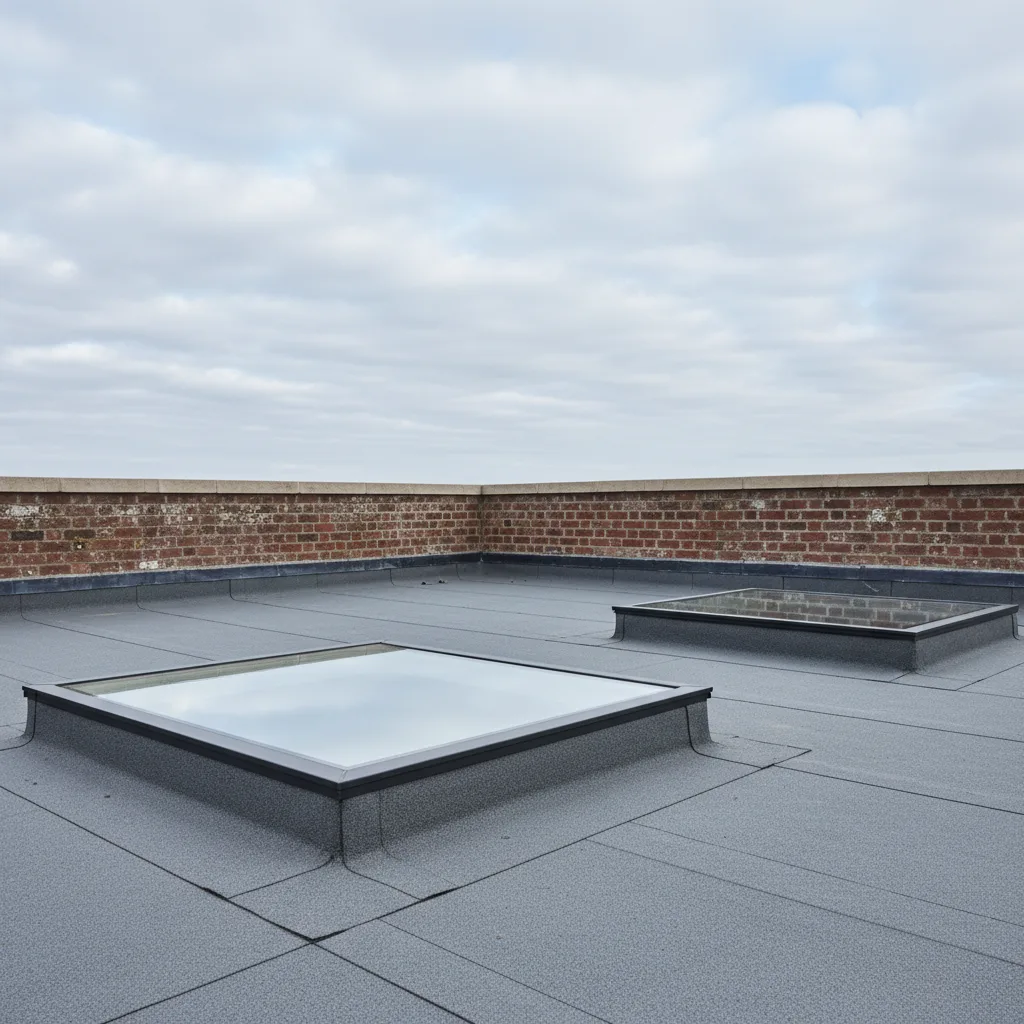
Work stops and we show you. On a soft corner of a trimmer that is an hour and a conversation of thirty seconds. On decayed rafter ends it is a structural repair, and that may need Building Control involvement and occasionally an engineer.
On a listed building, where a historic timber turns out to be significant, we consult the conservation officer before anything is cut. That is slower and it is the correct sequence.
What we do not do is build over it. Decay is caused by water getting in and it does not stop until the cause is corrected, and a new window fitted over soft timber is a job that will be done again.
The three common discoveries
Soft timber in the trimmers. The most frequent by a distance. A twenty five year old rooflight that has been leaking slowly produces no visible symptom until the timber is gone, and the removal is the only occasion it is ever seen.
No underlay, or underlay that was cut and never collared. On period roofs there is frequently no membrane at all, which is normal and changes the detail. On later ones, an underlay cut straight across the opening with no collar explains any history of damp.
Missing insulation. No collar around the frame, an uninsulated kerb, and insulation stopping short of the reveal. All invisible from inside and all costing you heat and producing condensation.
Less often, and more serious
Asbestos containing material in older flat roof build ups, which stops work for testing rather than being removed.
And structural alteration somebody made without trimming properly, which is a conversation with an engineer.
Why it should be priced beforehand
As a provisional allowance, so that finding it is a variation at a known rate rather than a stoppage and an argument on the day.
More on VELUX Window Installation
Ready to bring the daylight in?
Tell us about your project and we’ll send a clear, fixed written quote, no pressure, no surprises.
- Fixed written price before any work starts
- No pressure, no obligation, no sales calls
- Flexible survey times that suit you
- A reply within one working day