VELUX Window Installation
Size codes read, obsolete units matched, flashing kit specified to the roof you actually have rather than the one the code assumes.
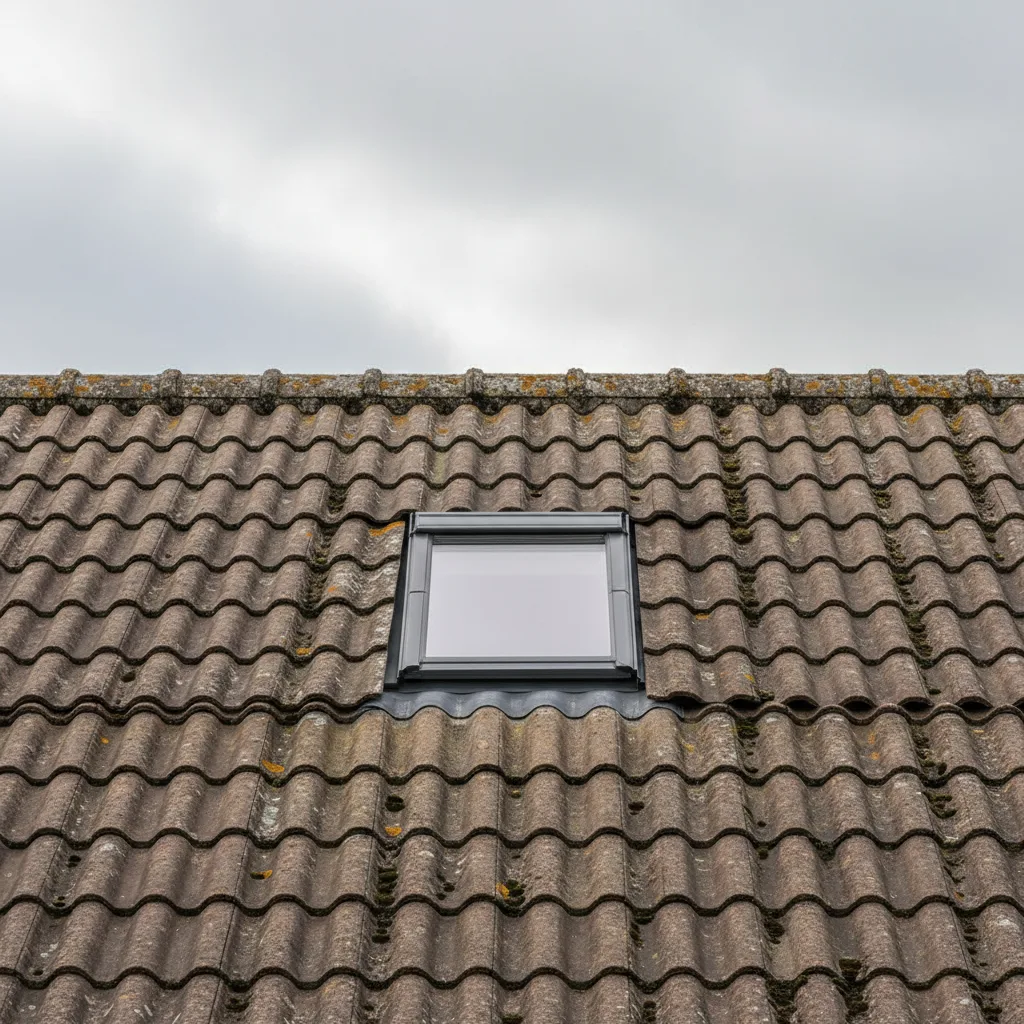
VELUX is a manufacturer, not a product category, but it is the name almost everyone uses when they mean a roof window. That is fine. It does mean that a good deal of this page is about telling you what you actually have, because most VELUX enquiries here are replacements rather than new openings.
Reading the code
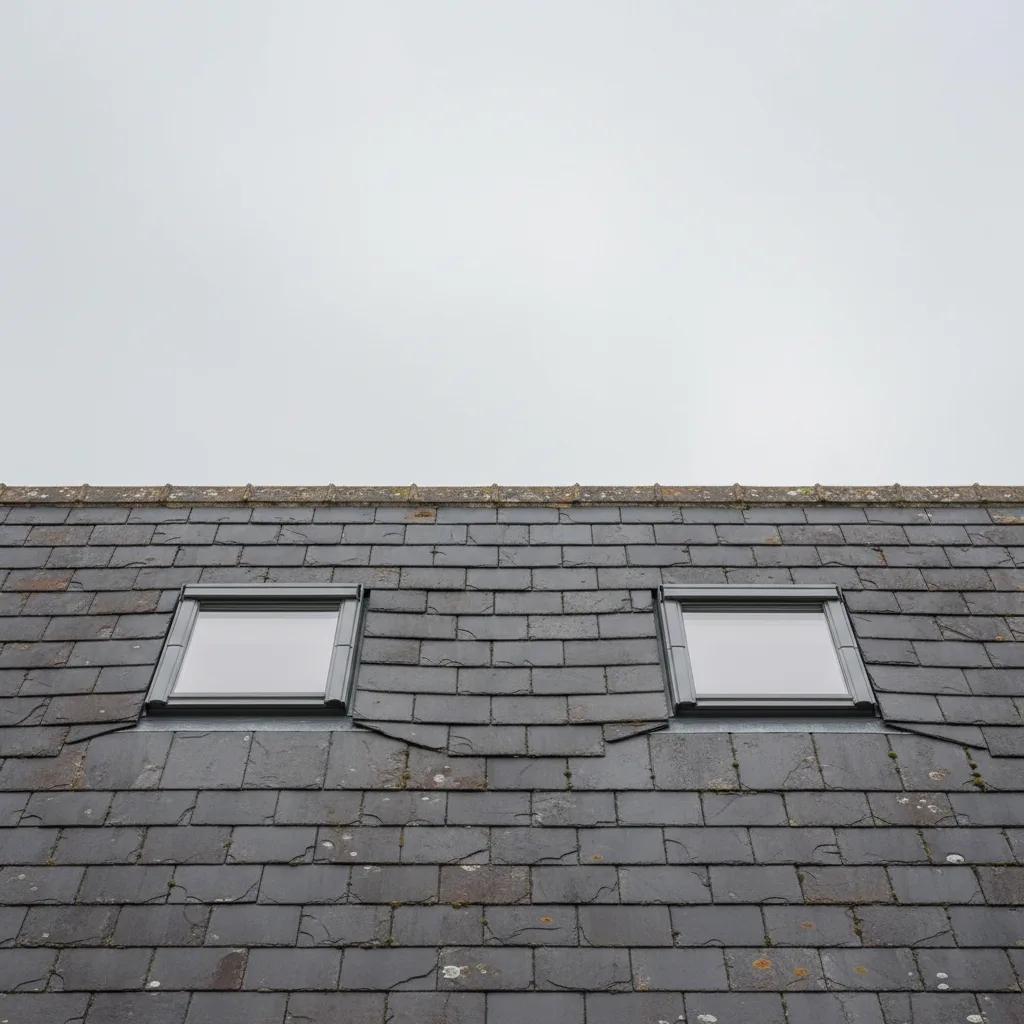
Every VELUX carries a code on a data plate, and the plate is the fastest route to a straight answer. On most units it is visible when the sash is opened, on the top edge of the sash or on the frame beside the hinge.
The code tells you the model and the size. The size part is what matters for a replacement, because it is the frame dimension the opening was built around. If you can photograph the plate, you can usually be given a price without anyone visiting, which is why we ask for it first.
Where the plate is gone or unreadable, the opening is measured instead. That is a survey rather than a phone call, and it is the honest version of the answer.
Obsolete sizes

Size ranges change. A window fitted in the 1980s or 1990s may be a size that is no longer made, and this comes up constantly on Colchester’s older loft conversions.
There are three routes, in order of preference. Fit the nearest current size and adapt the opening, which is usually a small amount of carpentry and is invisible afterwards. Fit a different manufacturer’s unit that matches the old dimension. Or reframe the opening to a current size, which is more work but leaves you with a standard size for the next thirty years.
What we will not do is force a unit into an opening it does not fit and pack the difference. It looks acceptable for about a year.
Manual, electric and solar

Manual is a rod or a handle, and for anything within reach it is the sensible answer. Electric needs a mains feed to the window, which is straightforward during a conversion and disruptive afterwards. Solar powered units carry their own panel and battery and need no wiring at all, which makes them the usual answer for retrofitting an opener to a window that is already in place.
The honest comparison: solar costs more than manual and less than running a new circuit, opens more slowly than mains electric, and works perfectly well on a north facing slope in Essex despite what people expect.
Blinds

Factory blinds fitted at installation are neater than anything retrofitted, because the brackets are designed into the frame. Blackout blinds in a bedroom are worth specifying at the start: a loft bedroom with an uncovered roof window facing east is light at four in the morning in June.
Glass upgrades while the roof is open

If a unit is being replaced anyway, the marginal cost of better glass is small, because the labour and the access are already being paid for. A low emissivity coating, argon fill and a warm edge spacer are worth taking at that moment. Coming back for the glass alone later costs nearly as much as the original replacement.
The guarantee, and what it covers

A manufacturer’s warranty covers the unit. It does not cover the installation, and the overwhelming majority of roof window problems are installation problems: the wrong flashing kit, an underlay not dressed correctly, a soaker lapped the wrong way.
Our ten year guarantee covers the workmanship. Where a unit fails under the manufacturer’s warranty, we handle that claim rather than leaving you to argue with a manufacturer about a product we chose and fitted.
What a replacement costs, and what moves it

We give an indicative range by email from a photograph of the data plate, and a fixed written price after survey.
Whether the opening is reused. A like for like swap into a sound opening is the cheapest job in this trade. Altering the opening is a different order of work.
Access. Frequently the biggest surprise on the quotation. A single storey rear slope may be reachable from a tower and cost nothing extra. A second storey, or a front elevation over a road, generally means scaffold, which is a real line rather than a rounding error.
The unit. Stock size, obsolete size, or made to measure, with the glass specification on top.
The covering. Slate and plain tile are straightforward. Profiled tiles need a deep flashing kit. Obsolete or fragile tiles that break when lifted have to be sourced.
What is found. Soft timber around the opening has to be cut out and replaced, and on a unit that has been failing for years it is a real possibility rather than a remote one.
Doing several together
The single best way to reduce the cost per window. Access is a fixed cost shared across every unit done in the same visit, so two done together are meaningfully cheaper than two done a year apart. If several went in at the same time they will fail at about the same time, which is the practical argument for doing them all.
The data plate, and why we ask for it first

Every unit carries a plate identifying model and size, usually visible on the top edge of the sash or on the frame beside the hinge once the window is opened. On a centre pivot window, rotating the sash brings it into easy view.
Photograph it rather than transcribing it. The characters are small, several are easily confused, and a mistyped code buys the wrong window. With that photograph we can usually tell you what it is, whether the size is still made, what the options are if not, and a realistic price, without anyone visiting.
Where the plate is painted over, worn away or missing, the opening is measured instead, which means a survey rather than a phone call.
Discontinued sizes on a replacement
Size ranges change over the decades, and a window fitted in the 1980s or 1990s is quite likely to be a size nobody makes now. Given how much loft conversion work happened around Colchester in those years, we see it constantly.
It is entirely solvable. Three routes, in order of preference.
Adapt the opening to the nearest current size. Current sizes are frequently within 40mm or 60mm of an old one, and adapting means packing out or trimming back, then making good the reveal. Invisible when finished, and it leaves a standard size for the next thirty years.
Find another manufacturer at the old dimension. Worth it where the opening is genuinely awkward to alter, for example tight against a purlin, a steel or a party wall. The trade is a mixed set of windows on one roof.
Reframe to a current size. More work now, and right where several windows are being standardised or the timber needs replacing anyway.
What we will not do is force a unit into an opening it does not fit and pack the difference. It survives about a year before the packing settles, the frame goes out of square and the sash stops closing properly. If a quotation is noticeably cheaper than the others, this is often why.
The glass upgrade that comes free
A unit fitted twenty five years ago has no low emissivity coating, no argon, an aluminium spacer and no solar control. The replacement has all four as standard.
The room will be warmer in winter, cooler in summer and quieter in rain, and none of that is an optional extra. Where the window is being replaced anyway, the marginal cost of solar control glass or an acoustic laminate is small, because the labour and the access are already being paid for. Coming back for the glass alone later costs nearly as much as the original replacement.
What the manufacturer’s warranty does not cover
The installation, and the overwhelming majority of roof window problems are installation problems: the wrong flashing kit for the covering, an underlay collar omitted, a soaker lapped the wrong way, an insulation collar left out.
A manufacturer warrants the product. It also generally excludes anything installed outside its own instructions, which means a badly fitted window can void the product warranty as well as leaking.
Our ten year guarantee covers the workmanship, and where a unit fails under the manufacturer’s warranty we handle that claim rather than leaving you to argue with a manufacturer about a product we chose and fitted.
Installation day, and what actually happens
A like for like replacement into a sound opening is a single day for one window, and most of it is not spent on the roof.
Protection first. Floors covered, furniture moved or sheeted, and a dust barrier at the door of the room. A roof window replacement makes dust when the internal lining comes back, and containing it at the start is faster than cleaning it up at the end.
Strip out. The internal lining comes off, the old sash is lifted out, and the flashings are removed along with enough of the covering around the opening to expose the frame. This is the point at which the timber is inspected, and where we find decay we stop and tell you what it means before doing anything else.
Frame in. The new frame is set, checked for square and level in both directions, and fixed. Square matters more than anything else here: a frame twisted by a few millimetres gives a sash that catches at one corner, and no amount of adjustment later fixes it.
Weathering. The underlay collar is dressed and lapped so water running down the underlay passes around the opening rather than into it, then the flashing kit goes on and the covering is reinstated over it. This sequence is the whole job. Nearly every roof window that leaks leaks because a step here was reversed.
Insulation collar and lining. The collar closes the gap between frame and structure. The internal lining goes back, plastered or trimmed depending on what was there.
Handover. Sash out, operation demonstrated, filter and cleaning position shown, and the guarantee paperwork left with you rather than posted later.
We work in the weather that East Anglia gives us, which means an opening is never left uncovered overnight and a strip out does not start if the forecast will not allow it to be closed the same day.
| Covering | Profile depth | Kit type | Where it is common around Colchester |
|---|---|---|---|
| Natural slate | Flat, up to about 8mm | Flat profile, with slim soakers | Victorian and Edwardian stock in Lexden, Dovercourt and Manningtree |
| Clay plain tile | Shallow, flat faced | Flat or low profile | The older village stock across the Colne Valley and Braintree district |
| Clay pantile | Deep single roll | Profiled, sized to the roll | Dedham Vale, the Suffolk border villages and the waterside towns |
| Concrete interlocking tile | Profiled, up to about 120mm | Deep profile | Almost every post-war estate, including Highwoods, Greenstead and Great Notley |
| Fibre cement slate | Flat | Flat profile | Later twentieth century infill |
| Metal or single ply | Not applicable | Kerb and upstand, not a flashing kit | Modern flat roof extensions |
From quote to daylight, with no surprises
Fixed quote
A clear, fixed written price, online or by phone.
Survey
A specialist confirms the right glazing spec. Flexible times.
Install
Clean, weather-tight fitting that protects your property.
Guarantee
We tidy up and back the work with a written guarantee.
Frequently asked questions
How do I find out what VELUX I have?
There is a data plate on the unit, usually visible on the top edge of the sash or on the frame by the hinge once the window is opened. Photograph it and we can usually price a replacement without visiting. If the plate is missing, the opening has to be measured instead.
My VELUX size is no longer made. What now?
Three routes. Fit the nearest current size and adapt the opening, which is usually minor carpentry and invisible afterwards. Fit another manufacturer's unit that matches the old dimension. Or reframe to a current size, which is more work but leaves you standard for the next thirty years.
Can you replace just the glass?
Sometimes. On some models the sealed unit is replaceable; on others the glass and sash are one component. Where the frame is sound and the model allows it, replacing the glass is cheaper. Where the frame has gone, replacing the glass into a failed frame is money wasted.
Are solar powered roof windows any good?
Yes, and they are usually the right answer for adding an opener to a window already in place, because there is no wiring. They open more slowly than mains electric and cost more than manual. They work fine on a north facing slope in this country, which surprises most people.
Which brand is best?
For most jobs the brand matters less than the flashing kit being correct for your roof covering and the underlay being dressed properly. VELUX has the widest size range and the best parts availability in ten years time, which is the argument for it on a replacement.
Helpful reading on this
Costs, comparisons and answers to the questions we’re asked most.
Other skylight services
Ready to bring the daylight in?
Tell us about your project and we’ll send a clear, fixed written quote, no pressure, no surprises.
- Fixed written price before any work starts
- No pressure, no obligation, no sales calls
- Flexible survey times that suit you
- A reply within one working day