Glass specification for a lantern over a kitchen
Overhead glass in a kitchen faces the hardest conditions in the building, and the specification most often dropped is the one most often regretted.
Part of our Roof Lantern Installation guide
Glass in a lantern faces almost straight up at the sky, which is the hardest position glass gets asked to work in. It receives the most solar energy of any glass in the building in summer, and loses heat to the coldest surface available, the night sky, in winter.
A kitchen makes both worse. It is the room with the most internal heat gain from cooking and appliances, and the most moisture.
The four things that matter

Solar control. A coating on the outer pane that reflects part of the sun’s energy before it enters. Clear double glazing has a g-value around 0.7, meaning seventy per cent of solar energy comes through. Solar control glass brings that to around 0.4 or lower.
On a south or west facing kitchen lantern this is not optional. Without it the room is unusable on a summer afternoon, and the only remedy afterwards is replacing the glass, which means replacing most of the cost of the lantern.
Low emissivity. A coating on the inner pane that reflects heat back into the room. Standard on any decent unit and the main reason a modern lantern performs so much better than one from twenty years ago.
Laminated inner pane. Toughened outer, laminated inner is the standard build for overhead glass, and it is a safety requirement rather than an upgrade. Laminated glass holds together if it breaks rather than coming down into the room below.
Warm edge spacer. The bar separating the panes at the perimeter. A traditional aluminium spacer conducts heat and makes the glass edge the coldest point of the unit, which is where condensation forms first. A warm edge spacer is a low conductivity material and it is the difference between a lantern that mists at the edges on a cold morning and one that does not.
Self cleaning
A coating that breaks down organic dirt in daylight and lets rain sheet it off rather than forming droplets. It works, within limits.
The limits are worth stating. It needs rain and it needs a fall, so on a very shallow pitch it does much less. It does not deal with bird mess or leaf staining. And it is not a substitute for cleaning, it is a way of cleaning less often. On a lantern above reach, that is still worth having.
What a good specification looks like

For a south facing kitchen lantern in Essex: toughened outer with a solar control coating, argon fill, warm edge spacer, laminated inner with a low emissivity coating. Add self cleaning if the lantern is hard to reach.
For a north facing one: the same without the solar control, which is money saved rather than a compromise. North light is even, cool and glare free, and it needs no shading at all.
More on the numbers behind this is on the energy efficient rooflights page.
Why a kitchen lantern is a special case
A lantern over a kitchen is doing more work than one over a dining room or a living space, and the specification should reflect it.
The room generates its own heat from cooking. It generates a great deal of moisture. It is frequently the room the family spends most time in. And on most extensions it faces the garden, which in this country means south or west more often than not.
Four demands on one piece of glazing, and they do not all pull the same way.
Solar control: the one that is not optional
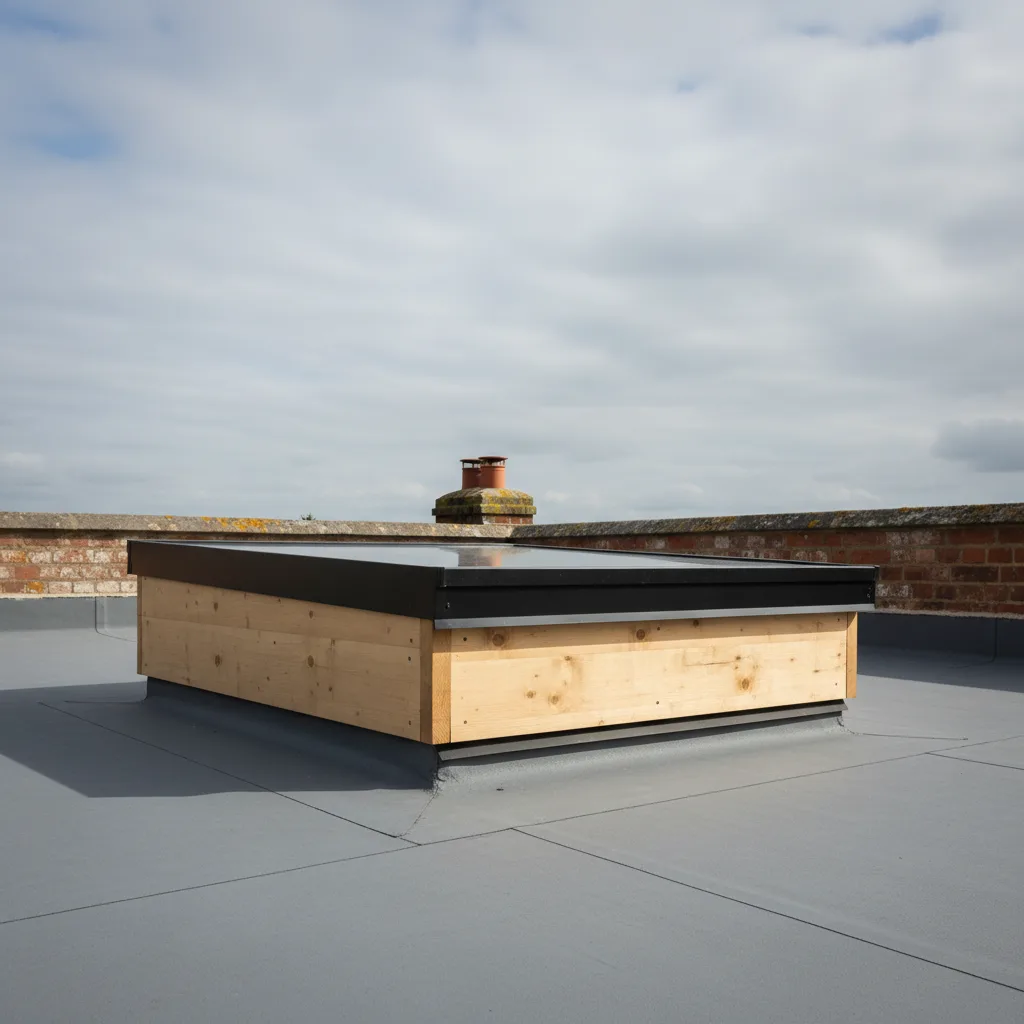
A lantern presents sloping faces to several directions and, at 15 to 25 degrees, presents them close to square on to a high summer sun.
Add a room already producing heat from an oven and hobs, and a south or west facing kitchen extension without solar control glass is unusable on a July afternoon. That is the most common regret about lanterns, and it is entirely preventable at the point of order.
The number to ask for is the g value, the proportion of solar energy that gets through. A clear double glazed unit is around 0.6 to 0.7; a solar control unit 0.3 to 0.4.
Read it alongside the light transmission percentage. Clear glazing transmits around 75 to 80 percent of visible light; solar control around 60 to 70. A unit with a very low g value and poor light transmission is stopping heat by being dark, which defeats the purpose of putting glass in a roof.
You notice very little difference in brightness and a useful reduction in glare. You notice a great deal in July.
It costs a modest premium at order and a great deal afterwards, because the labour and access to change lantern glazing are most of the cost of a new one.
The warm edge spacer, which is about condensation
A kitchen produces more moisture than any room except a bathroom, and a lantern is the coldest surface in it.
A traditional aluminium spacer bar conducts heat around the perimeter of every pane, so the glass edge runs several degrees below the centre. On a lantern with several panes that is a great deal of cold edge, and the visible result is water forming as a band at the edge of each pane on cold mornings while the middles stay clear.
A warm edge spacer in stainless steel or structural foam runs several degrees warmer and largely removes it. It also improves the whole unit U-value by around 0.1.
It should be standard rather than an upgrade. Where a quotation does not say, ask.
The thermal break in the frame

Not glass, and it belongs in the same conversation because it produces the same symptom.
Aluminium conducts extremely well. A lantern frame without a thermal break is a set of cold bridges holding glass, and in a kitchen it will run with condensation on the internal frame members long before anything happens to the glazing.
Every reputable lantern has one. It is worth confirming rather than assuming, particularly on a keenly priced product.
The whole unit U-value
Ask for whole unit rather than centre pane. Centre pane measures the glass away from the edges and excludes the spacer and the frame, which is exactly where the heat gets out, and it is always the better figure.
Whole unit is what the room experiences and what Building Regulations use. On an extension the lantern forms part of the thermal calculation for the whole structure, so this is not merely academic.
Laminated inner pane

Standard on most quality lanterns and worth confirming.
Primarily a safety matter: a lantern is overhead, and glass falling downward into a kitchen where people are working is a different proposition from glass falling outward. A laminated inner pane, if broken, holds together on its interlayer rather than falling into the room.
It brings a useful side benefit, which is the next point.
Acoustic performance
Rain on a lantern is audible, and heavy rain or hail on a large glazed area is unmistakably present.
Over a kitchen most people find that rather pleasant, and standard glazing with a laminated inner pane is fine. The interlayer already damps a good deal of it.
Acoustic laminate goes further and costs a modest premium. It is worth it over a bedroom and rarely earned over a kitchen, unless the kitchen is open plan to a sitting area where people watch television.
Self cleaning coatings on a lantern

Genuinely useful on a lantern, and this is one of the few places it works properly.
The coating breaks down organic deposits and relies on rain sheeting off to carry them away. That requires run off, which a lantern at 15 to 25 degrees provides and a flat rooflight does not.
Since a lantern is frequently over a space where cleaning access is awkward, it reduces the frequency of a job that is otherwise a tower or a pole system.
It reduces frequency rather than removing it, and it does nothing for the inside face, which in a kitchen collects cooking residue.
What we would specify for a typical kitchen lantern
South or west facing: solar control glass, warm edge spacer, thermally broken frame, laminated inner pane, self cleaning coating, and an opening vent at the apex with a rain sensor.
North or east facing: the same minus the solar control, because there is no direct sun to manage and the coating would only reduce light transmission for nothing. Spend the saving on the kerb insulation.
Triple glazing on neither. It improves the U-value modestly while adding weight, reducing daylight transmission and costing substantially more, and it does very little about solar gain, which is the complaint kitchens actually have.
The two things that are not glass

Worth repeating because they matter more than the difference between one good glazing specification and another.
An opening vent at the highest point, so the heat and moisture a kitchen generates can leave rather than accumulating. Motorised, because a pole operated vent at lantern height does not get used, and with a rain sensor so it can be left open.
And an insulated kerb. A lantern kerb has a long perimeter, and an uninsulated timber kerb punches straight through the roof insulation around all of it. It is a sheet of rigid board and an hour, it disappears under the covering, and it is the first thing dropped from a cheap price.
Get those two right and a moderately specified lantern will outperform an expensively glazed one without them.
The four numbers to ask for
Whole unit U value, not centre pane. A lantern has rafters, hips and a ridge, so the frame is a substantial proportion of the total area and the centre pane figure flatters it considerably.
The g value, which sets solar gain. On a kitchen lantern this is the number that decides whether the room is usable on a hot afternoon.
Light transmission, so you know what the solar control is costing you in brightness.
Spacer type. Warm edge or aluminium, stated rather than assumed.
Why a kitchen is the demanding case

Two reasons that pull in the same direction.
Internal heat gain. Ovens, hobs and appliances add heat that no other room does. Solar gain arrives on top of that, and the combination is what makes a south facing kitchen with a large lantern genuinely unpleasant in summer.
Moisture. Cooking produces a great deal of water vapour, and it rises straight to the coldest surface in the room, which is the lantern.
So a kitchen lantern needs both good solar control and good thermal performance, and it needs the frame to be thermally broken so the internal frame faces do not run cold and collect condensation.
The specification that works
Solar control glazing on any south or west facing kitchen lantern, and on any lantern of significant size regardless of orientation, because a lantern faces the whole sky.
A warm edge spacer, which addresses the edge where condensation appears first.
A thermally broken frame, checked rather than assumed. A structurally adequate lantern is not automatically a thermally adequate one.
Laminated inner panes for overhead safety, and an acoustic laminate if rain noise over a room people sit in matters.
Self cleaning coating where the lantern has a real pitch, because it needs run off to work.
The two things glass cannot do alone
An insulated kerb, continuous with the roof insulation. Without it the internal kerb face runs cold and produces condensation regardless of how good the glass is.
An opening vent, which removes hot moist air from the highest point in the room where it collects.
Specification and detailing together. Either alone leaves you with a kitchen that either overheats or drips.
More on Roof Lantern Installation
Ready to bring the daylight in?
Tell us about your project and we’ll send a clear, fixed written quote, no pressure, no surprises.
- Fixed written price before any work starts
- No pressure, no obligation, no sales calls
- Flexible survey times that suit you
- A reply within one working day