Why a lantern drips in a kitchen and what stops it
Almost always condensation rather than a leak, and the distinction is easy to make.
Part of our Roof Lantern Installation guide
A lantern over a kitchen that drips in winter is almost always producing condensation rather than letting rain in. The two look identical and the remedies are completely different, so the first job is telling them apart.
How to tell

Condensation appears in cold weather, worst first thing in the morning, and often on dry days. It forms on the coldest surfaces first: the frame at the perimeter, the glass edge, the corners. It gets worse when you cook or dry washing.
A leak follows rain. It appears during or shortly after it, worse in driving rain from a particular direction, and it does not care about the temperature.
If it happens on a cold dry morning, it is condensation. That single question resolves most cases.
Why kitchens are worst
A kitchen produces more moisture than any other room: boiling, washing, dishwashers, and often the washing machine and a clothes airer. That moisture is carried in warm air, warm air rises, and the highest thing in the room is the lantern.
So the wettest air in the house meets the coldest surface in the room. It would be surprising if it did not condense.
What reduces it
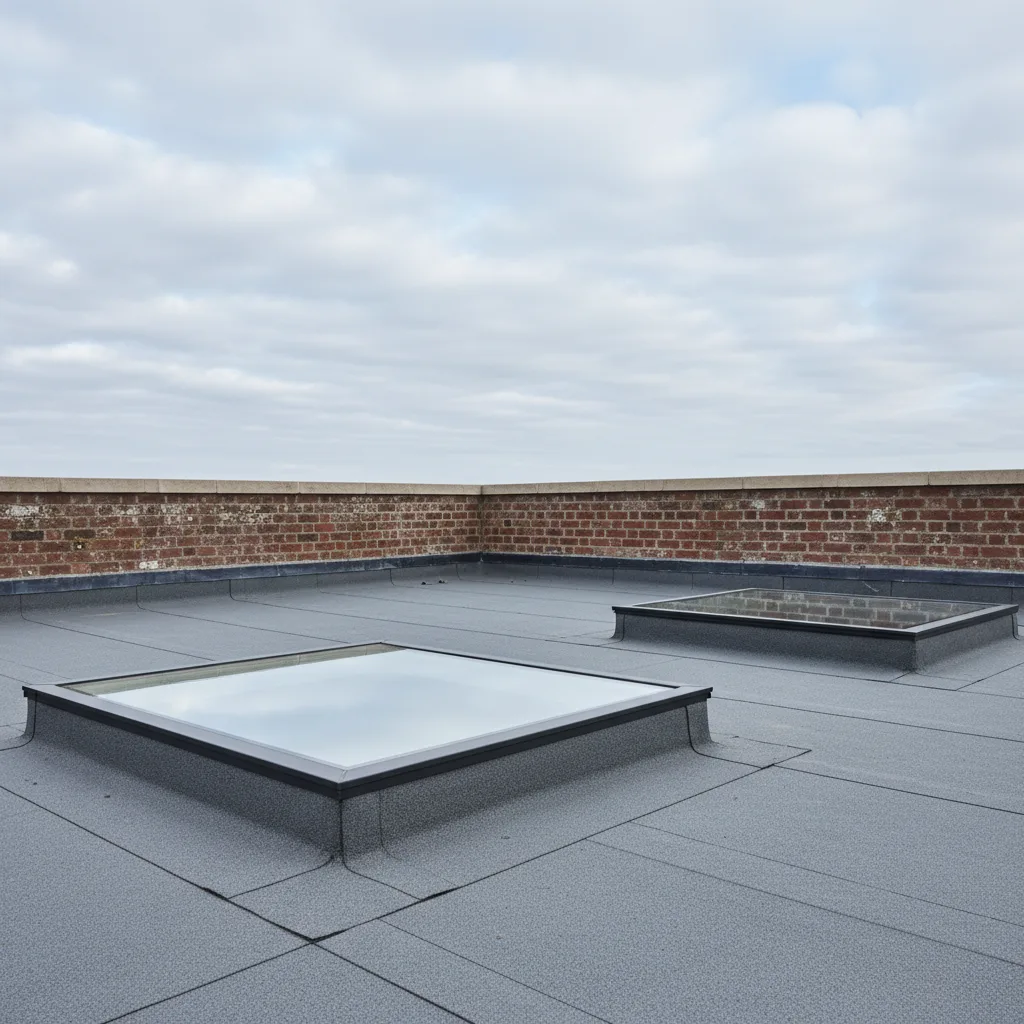
A warm edge spacer. The traditional aluminium spacer conducts heat and makes the glass perimeter the coldest point. A low conductivity spacer raises that temperature and is the difference between misting at the edges and not.
An insulated kerb. An uninsulated timber upstand is a cold bridge running the whole perimeter. Insulating its outer face is cheap during construction and impossible afterwards without opening the roof.
A sealed vapour control layer. If the VCL is not carried up the kerb and sealed to the frame, moist air enters the roof build up at the perimeter, and that produces damp in the ceiling rather than droplets on the frame.
Ventilation. An opening ridge vent removes the moist air before it condenses. Extraction at the hob removes it at source. Both help more than any glass upgrade.
What does not help
Replacing a sound lantern. If the cause is an uninsulated kerb, a new lantern on the same kerb will do exactly the same thing, and you will have paid for it.
We establish which of the four it is before quoting a remedy.
Almost always condensation, not a leak
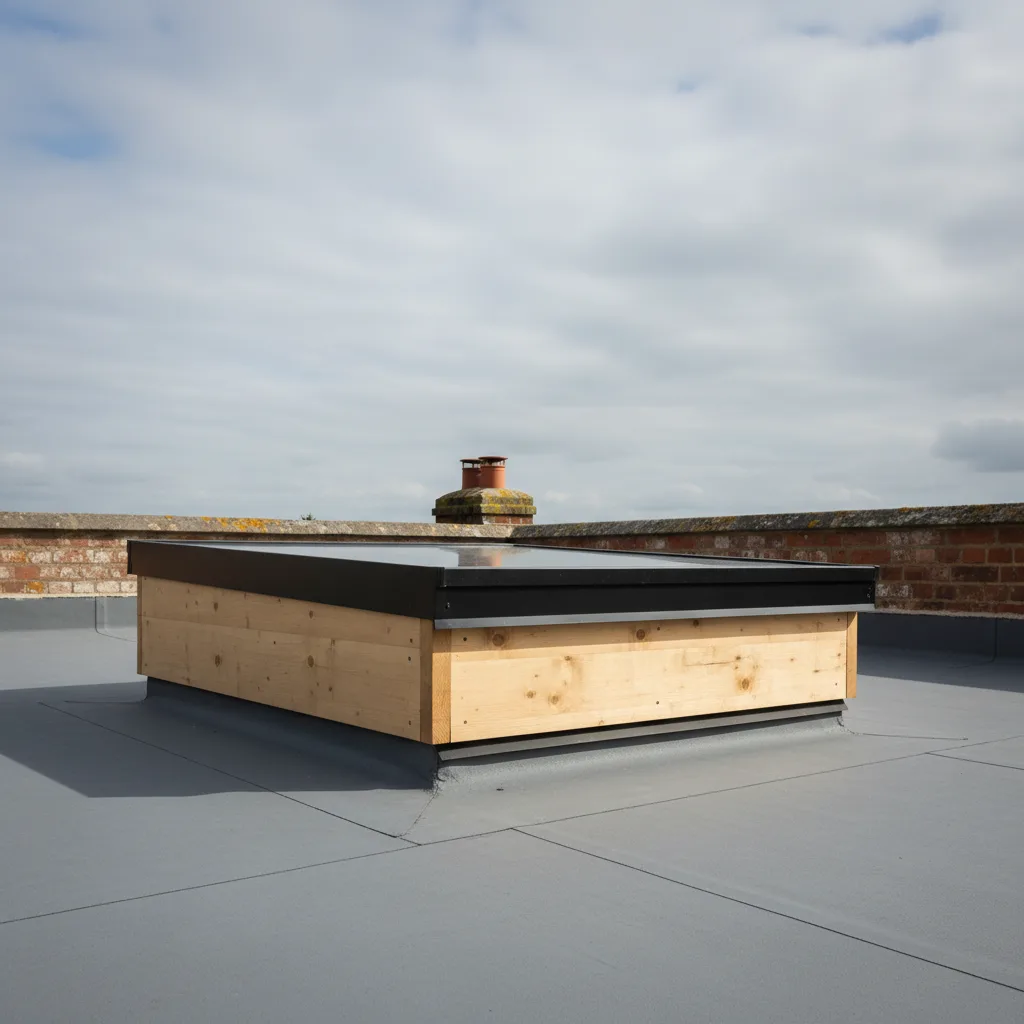
A kitchen produces a great deal of moisture: boiling, steaming, washing, a dishwasher venting, a kettle several times a day. That moisture goes into the air, the warm air rises, and it collects at the highest point of the room.
The highest point of a kitchen extension with a lantern is the lantern, and a lantern is the coldest surface in the room because it faces the open sky on every side.
So the warmest, wettest air in the house meets the coldest surface available, and water forms. It runs down the glass, collects at the glazing bars or the eaves of the lantern, and drips.
From below that is indistinguishable from a leak, and it produces a great many roofing investigations on roofs that are perfectly sound.
How to tell the difference
Condensation appears in cold weather, is worst shortly after the room has been used, forms evenly across the inner face of the glass, and has nothing to do with whether it rained. It is worse on a clear cold night than a mild wet one.
A leak follows rain, usually rain driven from one particular direction. It arrives at one point rather than spread evenly, and it leaves a mark that is still there when everything has dried.
If it drips after cooking on a still January evening but the room stays dry through a September downpour, it is condensation.
The four things that reduce it

1. Extract ventilation that actually works. The single most effective measure and the one most often deficient.
A cooker hood ducted to outside, sized for the hob, and used every time something is cooked. A recirculating hood with a charcoal filter removes smell and does nothing whatever about moisture, and a great many kitchens have one because it was cheaper to install.
Check where the duct goes. Ducting a kitchen extract into a loft or a void rather than through a wall or roof is common and it simply relocates the problem.
2. An opening vent at the apex of the lantern. Warm moist air collects at the highest point, and an opening there lets it leave directly, drawing drier air in through anything open lower down.
That clears a kitchen in minutes where a wall window alone takes hours. It needs something open at low level to work: a door or a window, however slightly.
Above reach, that means motorised, and with a rain sensor so it can be left open without watching the weather.
3. Warmer glass. A good whole unit U-value with a warm edge spacer means the inner surface runs warmer and condensation forms less readily.
A traditional aluminium spacer bar conducts heat around the perimeter of every pane, so the glass edge runs several degrees colder than the centre. On a lantern with many panes that is a great deal of cold edge, and the visible result is water forming as a band at the edge of each pane while the middles stay clear.
That is very common on older lanterns and it is regularly mistaken for a failing unit.
4. A thermally broken frame. Aluminium conducts extremely well. A lantern frame without a thermal break is a set of cold bridges holding glass, and condensation will form on the internal frame members long before it forms on the glass.
Every reputable lantern has one. On an older lantern that drips from the bars rather than the glass, its absence is frequently the reason.
The drainage channels people do not know about
Worth understanding, because it explains water that appears from within the frame.
A well made lantern is designed on the assumption that a small amount of water will get past an outer gasket. Internal channels within the glazing bars collect it and carry it down and out at the eaves.
That is by design. A little water inside the frame is not a fault.
What is a fault is a blocked channel. Dust and debris accumulate in them over years, water backs up, and it appears inside at the bars. Clearing them is maintenance rather than repair, and it is part of a proper lantern service.
Where it genuinely is a leak

Four causes, in order of likelihood, and all of them at the kerb rather than in the lantern.
No fall, or the wrong fall. Where the flat roof does not drain away from the kerb, water stands against the base after every shower and works the seal loose over a few winters.
The covering dressed wrongly. The membrane should be dressed up the full height of the kerb and terminated properly before the lantern is set. Where it stops short, or was dressed afterwards, water gets behind it.
A kerb too low or out of square. 150mm above the finished surface is the working minimum, and a kerb out of square does not take the frame evenly.
A blocked outlet. A perfect fall discharging into a gulley full of leaves produces exactly the same pond. Check this before assuming anything else.
What we would look at first in your kitchen
Whether the extract hood ducts to outside and gets used. That resolves more of these than anything on the roof.
Whether the lantern has an opening vent, and if it does, whether it is ever opened. A pole operated vent at lantern height does not get used, which is the practical argument for motorising.
Where the water forms: evenly on the glass, at the edges of the panes, on the frame members, or at one point after rain. Those four answers point to four different causes.
And whether it follows cooking or follows rain.
Fixing an existing lantern that drips

In order of cost.
Sort the extract ventilation, which is a kitchen job rather than a roofing one.
Add or motorise an opening vent, ideally with a rain sensor, so the room can be purged without anybody thinking about it.
Clear the internal drainage channels and check the roof outlet.
Correct the falls locally around the kerb if water is standing against it.
Replacing the glazing to get a warm edge spacer, or replacing a lantern with no thermal break, is the expensive route and it is the last resort rather than the first move.
The first three together solve most of these for a fraction of the fourth.
The kitchen is the hardest room for this
Cooking produces a great deal of water vapour. Boiling a pan, running a dishwasher, drying washing on an airer: all of it goes into the air, and warm air holds it until it meets a cold surface.
In a kitchen with a lantern, the coldest surface in the room is at the very top of the volume, which is exactly where the warm moist air has risen to.
So a lantern in a kitchen is the most likely place in the house for condensation, and the drips arrive at the worst possible moment when somebody is cooking underneath.
Which surface is wet tells you the fault

The glass, in the middle of the panes. Glazing performance and room humidity. A better unit with a warm edge spacer raises the internal surface temperature.
The frame members, glass clear. The frame is not thermally broken, or the break is inadequate. An aluminium lantern without a proper break runs cold on its internal faces, and a lantern has a great deal of internal frame.
The kerb reveal, glass and frame clear. The kerb is uninsulated. This is the most common cause and the one most often misdiagnosed as a leak.
Between the panes. A failed sealed unit, unrelated to the room.
The three fixes
Insulate the kerb on its outer face, continuous with the roof insulation, up to the underside of the lantern frame. Without this nothing else matters much.
Specify a thermally broken frame and check it rather than assuming. A structurally adequate lantern is not automatically a thermally adequate one, and the difference is invisible in a photograph.
Ventilate the room properly. An extract that runs long enough to be useful, and an opening vent in the lantern itself, which removes moist air from the top of the volume where it has collected.
The behavioural half

Lids on pans. The extract on before cooking starts rather than after the steam has filled the room. Not drying washing under the lantern.
None of that is a substitute for correct detailing, and all of it helps.
The diagnostic that saves money
Timing. Water after rain is ingress. Water in cold weather regardless of rain is condensation.
Establishing which before anybody goes on the roof avoids paying somebody to look for a leak that does not exist.
More on Roof Lantern Installation
Ready to bring the daylight in?
Tell us about your project and we’ll send a clear, fixed written quote, no pressure, no surprises.
- Fixed written price before any work starts
- No pressure, no obligation, no sales calls
- Flexible survey times that suit you
- A reply within one working day