Article 4 directions and permitted development
A local removal of rights that is invisible from the property and changes everything.
Part of our Conservation Rooflight Installation guide
Permitted development lets certain work proceed without a planning application. An Article 4 direction is a local authority’s power to remove those rights for a defined area or a defined type of work.
What it does

Where one applies, work that would otherwise be permitted development needs a full planning application, with the fee and the timescale that involves.
It is used to protect the character of an area where the cumulative effect of small changes would erode it. Rooflights, windows, doors, boundary treatments and hard standings are common subjects.
Why it catches people out
It is invisible. There is nothing on the property to indicate it, no marker, and neighbours may not know either. A house in a conservation area may or may not be covered.
It is entirely possible for one side of a street to be covered and the other not.
How it is scoped

Directions are specific. One might remove rights only for front elevations, or only for roof alterations visible from a highway, or for all elevations.
So the question is whether one applies, and then what it covers, and a rear slope may still be permitted development even where the front is not.
Checking
The local planning authority holds the record, and it is a straightforward enquiry. We check before quoting, because it changes the process and the timescale rather than the product.
What it does not change

Building Regulations, which are separate and apply regardless. And listed building consent, which is a different regime with its own requirements.
The practical effect
Mostly time. A job that could have started next month now needs an application and a decision period. That is a scheduling matter rather than a barrier, provided it is discovered at the start rather than after the units are ordered.
The single most misunderstood point in rooflight planning

Being in a conservation area does not, by itself, mean you need planning permission for a rooflight.
That sentence surprises most people, and it is the source of more unnecessary applications and more unnecessary spending on specialist products than anything else in this subject. It is also the source of the opposite error: work carried out without permission by somebody who assumed the ordinary rules applied when a direction had removed them.
The distinction is worth understanding properly, because it decides whether a job is a phone call or a six month process.
What permitted development gives you
Permitted development is a national grant of planning permission for certain minor works, given in advance so that householders do not have to apply for every small alteration.
For a rooflight on a house, the conditions are specific.
It must not project more than 150mm beyond the plane of the existing roof slope. Measured from the existing roof surface to the highest point of the finished installation, including any flashing upstand standing proud. This is why low profile units exist and it is the condition that bulky domes fail.
It must not be higher than the highest part of the existing roof. Nothing above the ridge.
On a side elevation facing a boundary, the glazing must be obscure, and any opening part must be either non opening below 1.7 metres from the floor of the room or restricted so it cannot open below that height.
Meet all three and no application is needed, anywhere in the country, conservation area or not.
What an Article 4 direction does

An Article 4 direction is a formal step by which a local planning authority withdraws specified permitted development rights within a defined area. It is made deliberately, after a process, and it exists because the authority has decided that in that particular area the ordinary rights would harm the character it is trying to protect.
Where one covers rooflights at your address, the national grant no longer applies and a planning application is required for work that would otherwise have been permitted.
Directions vary enormously in scope, and this is the part people get wrong even when they know the term.
Some cover an entire conservation area and all elevations. Some cover only elevations fronting a highway or a public open space, which means a rear slope may still be permitted development while the front is not. Some cover particular streets rather than the whole designation. Some withdraw rights for windows and doors but not for rooflights specifically.
So the answer genuinely varies street by street, and sometimes elevation by elevation on the same house.
How to find out
Ask the local planning authority. It is a short enquiry, it is free, and it is the only reliable answer.
Many authorities publish maps of conservation areas and of directions, and where they do you can check yourself. Where the mapping is unclear, or where the direction’s wording is ambiguous about rooflights, a written enquiry to the conservation or planning team settles it.
We do that check as part of quoting for every address, rather than asking the customer to, because the answer changes what we would recommend.
The other things that remove permitted development

Article 4 is not the only route, and a property can be caught by several at once.
Listing. Listed building consent is required for a rooflight on any slope, front or rear, whether or not anybody can see it, because the listing covers the whole building inside and out. There is no small works threshold and a sun tunnel is not exempt for being small. This is separate from and additional to planning permission.
Being a flat or maisonette. No permitted development rights at all, anywhere, designated or not. Any rooflight needs a planning application, and in practice the freeholder’s consent as well. This catches out more people than every other exception combined, because a converted first floor flat in an ordinary terrace looks like a house from the pavement.
A planning condition. Permissions frequently remove permitted development rights by condition, and this is standard on barn and agricultural conversions and common on new housing estates. Those conditions run with the property regardless of who owns it now, and they do not appear anywhere except in the original decision notice.
On a converted building, reading the original permission is the first step rather than the last.
Prior removal by a previous owner’s works. Where permitted development allowances have already been used up by earlier extensions, which affects extensions more than rooflights but is worth knowing about on a much altered property.
What a landscape designation does and does not do
A National Landscape, formerly an Area of Outstanding Natural Beauty, does not by itself require an application for a rooflight. What it does is affect how an application is determined where one is needed, with considerable weight given to conserving the character of the landscape.
In practice that means a proposal visible in longer views faces more scrutiny than one that is not, and it makes an honest description of visibility more valuable in the application rather than less.
Where an application is needed, what gets approved

Consistently, a conservation rooflight: sitting low against the plane of the covering rather than standing proud of it, upright rather than wide in proportion, with a central glazing bar, in matt black or a very dark finish.
The profile matters more than the other three characteristics combined, which is why the manufacturer’s section drawing showing exactly how far the unit stands above the covering is the document that actually decides an application. Its absence is the most common reason a submission sits unresolved.
Describe visibility honestly. A rear slope screened by the ridge from every public vantage point is a much easier case than the same unit at the front, and saying so plainly helps rather than hurts. So does stating explicitly where an existing modern rooflight or plastic dome is being replaced by a conservation unit, because that is a heritage improvement.
Where an application is not needed
This is the part worth checking before spending money.
On an unlisted house in a conservation area with no direction covering rooflights, or with a direction covering only street facing elevations, a rear slope rooflight may be straightforward permitted development. In that case there is no application, no fee, no wait, and no requirement to fit a conservation unit at all.
A conservation rooflight costs meaningfully more than a standard one, and where a standard unit would be permitted there is no reason to pay the difference. We say so rather than defaulting to the expensive product, and it is one of the more useful things a survey establishes.
Building Regulations remain, regardless
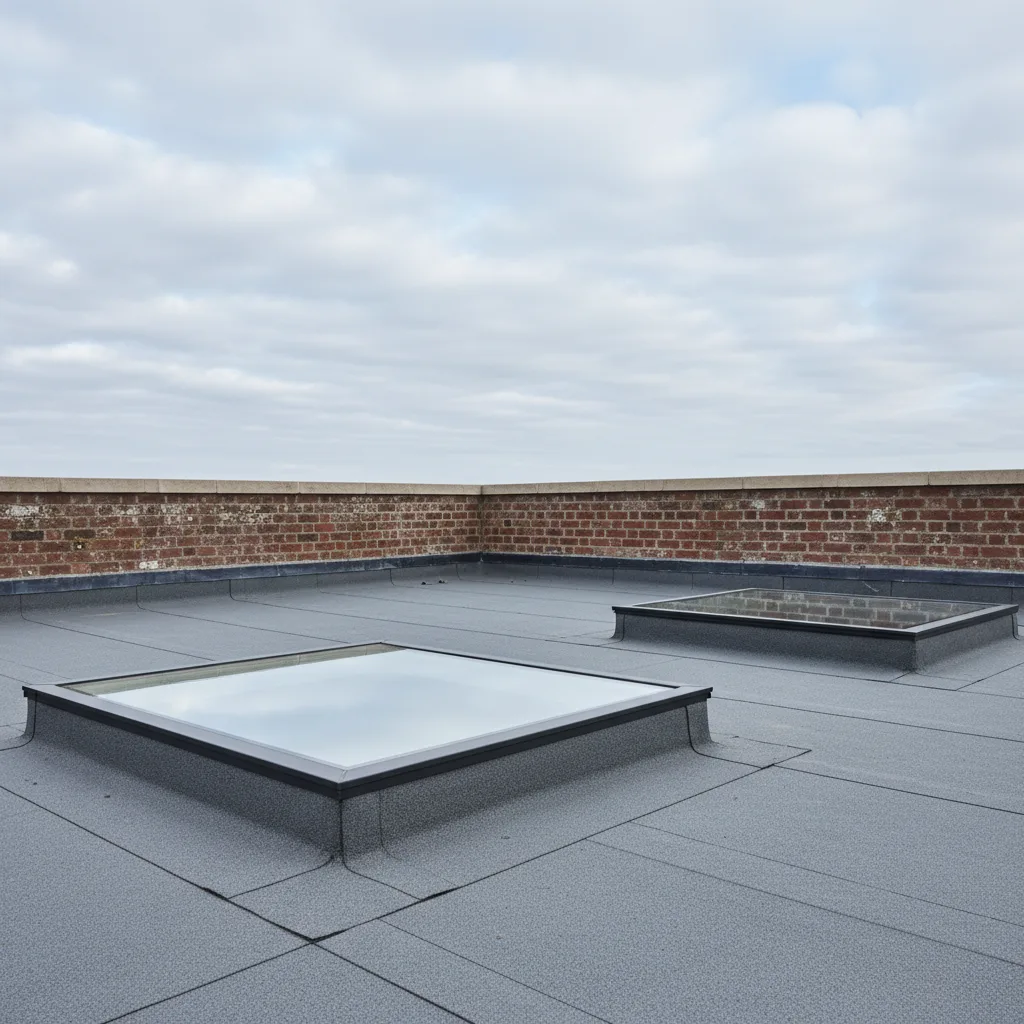
Permitted development is a planning concept only. It says nothing about Building Regulations, which apply independently and are notifiable whatever the planning position.
A new opening engages Part A for structure and Part L for energy efficiency, and in a habitable loft room Part B for means of escape. A replacement engages Part L as a controlled fitting.
The two systems are frequently confused, and a job can be permitted development and notifiable at the same time. Most are.
If there is genuine doubt
A lawful development certificate from the council confirms the position formally. It costs a fee, it takes some weeks, and it produces a document that settles the question for good.
It is worth having on an unusual case, on anything where a neighbour is likely to query the work, and particularly if you expect to sell within a few years, because it removes exactly the question a buyer’s solicitor would otherwise raise.
For a straightforward rear slope rooflight on an unlisted house outside any direction, it is not necessary.
What permitted development actually is
A national grant of planning permission for specified classes of development, given by legislation rather than by the local authority. It is why most rooflights on most houses need no application.
For rooflights the conditions concern projection above the existing roof plane, not exceeding the highest part of the roof, and in some cases obscure glazing and restricted opening on side elevations.
Satisfy them and you need no permission. That is the default position.
How the withdrawal works
It withdraws that national grant, for specified classes of development, across a defined area or occasionally for a single building.
Where one covers rooflights, permission is needed for work that would otherwise have been permitted, and it applies everywhere on the building the direction covers, rear slopes included.
The direction is made by the local authority, after consultation, usually to protect the character of a conservation area where cumulative small changes were eroding it.
Why they catch people
They are not visible from the street. There is no sign, no marking on the building, and nothing in the deeds that a purchaser will necessarily notice.
They vary in scope. One may cover only front elevations, another may cover the whole roof, another may include windows, doors and boundary treatments as well.
And they are more common in the best preserved areas, which is precisely where the buildings people most want to put rooflights in are.
Where else permitted development does not apply
Flats and maisonettes, which have no such rights at all.
Listed buildings, which need listed building consent regardless of the planning position.
Properties where rights were removed by a planning condition, which is common on newer estates and on conversions.
And where earlier extensions have used up an allowance.
How to check
One call or email to the council planning department, naming the address. They will confirm whether the property is listed, whether it is in a conservation area, and whether an Article 4 direction applies.
Get it in writing. It takes days rather than weeks and it is the difference between a straightforward job and an enforcement problem.
The consequence of getting it wrong
Unauthorised development can be subject to enforcement requiring removal. On a listed building it is a criminal offence. And either way it surfaces at sale when solicitors ask.
More on Conservation Rooflight Installation
Ready to bring the daylight in?
Tell us about your project and we’ll send a clear, fixed written quote, no pressure, no surprises.
- Fixed written price before any work starts
- No pressure, no obligation, no sales calls
- Flexible survey times that suit you
- A reply within one working day