Do roof lanterns lose a lot of heat?
A modern one performs like a good window. Most of the loss is at the kerb, not the glass.
Part of our Roof Lantern Installation guide
A modern lantern with a low emissivity coating, argon fill and a warm edge spacer achieves a whole unit U-value around 1.2 to 1.4. That is comparable to a good modern window, and it comfortably meets the 2.2 expected for a replacement.
Where the heat actually goes

Not usually through the middle of the glass. Two other places matter more.
The spacer bar at the edge of the unit. A traditional aluminium spacer conducts heat straight from inside to outside around the whole perimeter of every pane. A warm edge spacer replaces it with a low conductivity material.
The kerb. An uninsulated timber upstand is a cold bridge running the entire perimeter of the lantern, and on a typical unit it loses more heat than the glass does. Insulating its outer face is cheap during construction and impossible afterwards.
The honest comparison

A lantern loses more heat than the insulated roof it replaced, because glass will never match 150mm of insulation. What it gives back is daylight, which reduces lighting load, and solar gain in winter, which is genuinely useful in a south facing room.
Against an old lantern, the improvement is dramatic. A unit from twenty five years ago has no coating, no argon and an aluminium spacer, and might be around 3.0.
What not to bother with

Triple glazing takes you from about 1.2 to about 0.8. It costs substantially more, weighs more, and the same money spent on an insulated kerb and a sealed vapour barrier will do more for how the room feels. More on energy efficient rooflights.
More than a roof, less than people fear

A lantern is a large area of glazing where there used to be insulated roof, so yes, it loses more heat than the roof it replaced. A modern lantern with a good glazing specification has a whole unit U-value around 1.2 to 1.5. An insulated flat roof is nearer 0.15.
The honest way to think about it is that a lantern is a deliberate trade: a great deal of daylight and volume in exchange for a modest thermal penalty over a limited area.
Where the heat actually leaves

Not evenly across the glass, and this is where poor installations differ from good ones.
The spacer bar. A traditional aluminium spacer conducts heat around the whole perimeter of every pane. On a lantern with many panes that is a great deal of perimeter, and the visible symptom is a band of condensation around the edge of each pane on cold mornings while the centres stay clear. A warm edge spacer in stainless or structural foam runs several degrees warmer.
The frame. Aluminium conducts extremely well, so the frame needs a thermal break. A lantern without one is a set of cold bridges holding glass, and it will show as condensation on the internal frame members. Every reputable lantern has one; it is worth confirming.
The kerb. Frequently the largest loss and it appears on no specification. A lantern kerb has a long perimeter, and an uninsulated timber kerb punches straight through the roof insulation around all of it. Insulating its outer face costs a sheet of rigid board and an hour, and it vanishes under the covering, which is precisely why it gets skipped.
What to specify

A thermally broken frame, a warm edge spacer, argon fill and a low emissivity coating as the baseline. Solar control glass on any lantern that faces south or west, because a lantern gains heat far more readily than it loses it and summer discomfort is the more common complaint.
An insulated kerb, named on the quotation.
Triple glazing

Usually not worth it on a lantern. It takes the whole unit figure from around 1.3 to around 0.9, which is real and modest. It is considerably heavier, which affects the frame and the structure below, it transmits noticeably less daylight, which works against the reason you fitted a lantern, and it costs substantially more.
The same money spent on solar control glass, a properly insulated kerb and an opening vent does more for how the room feels through the year.
The other half of the problem
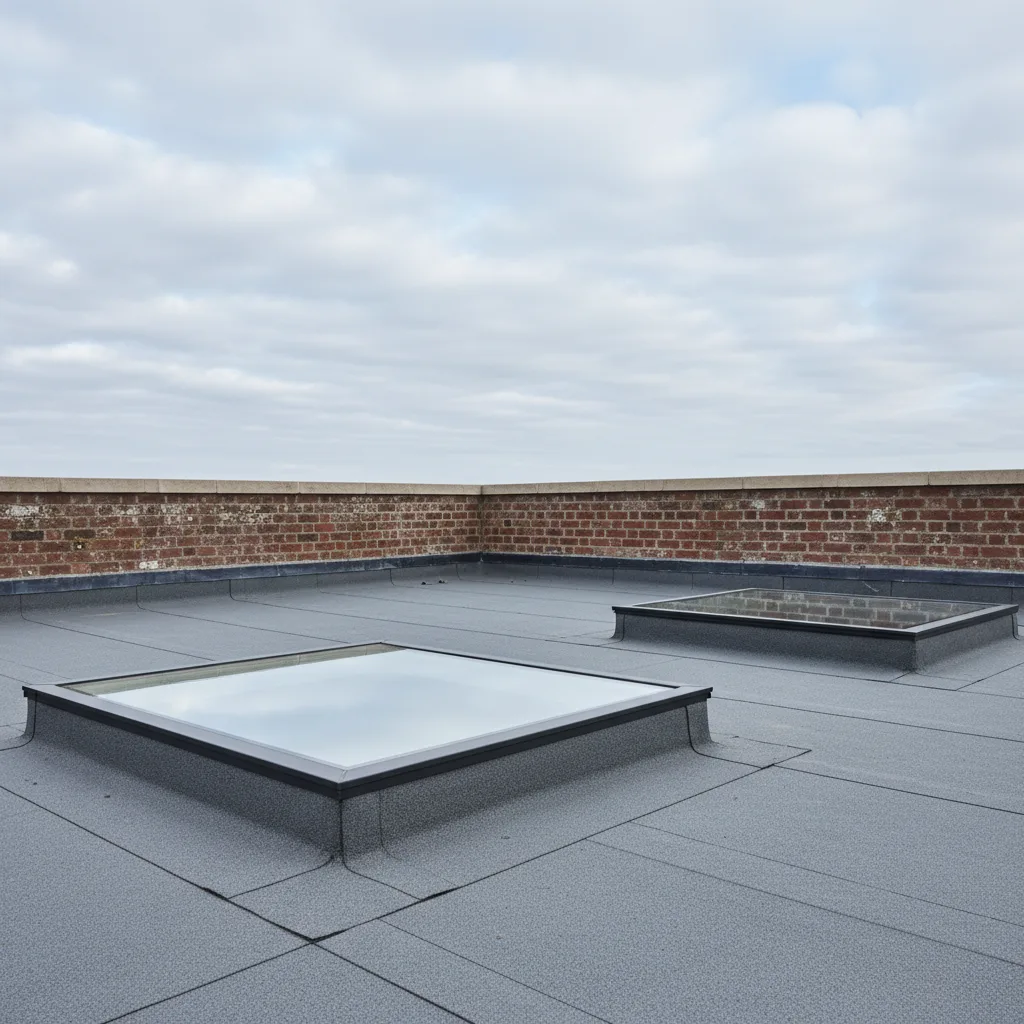
Most complaints about lanterns are about summer heat rather than winter cold. A large area of near horizontal glazing collects the midday sun directly, and a room under one without solar control glass is unusable on a July afternoon.
Specify the glass for the orientation, and put an opening vent at the highest point so accumulated heat can leave overnight.
More than the roof they replace, and the frame is a big part of it
Glass is not insulation, so a lantern always loses more than the insulated roof it sits in. That is the price of the daylight.
What is less obvious is how much of the loss is frame rather than glass. A lantern has rafters, hips and a ridge, and on a finely divided traditional design the frame is a substantial proportion of the total area.
Which is why the centre pane U value is particularly misleading on a lantern, and why the number to ask for is the whole unit figure covering the complete assembly.
The design trade
A lantern with fewer, larger panes has less frame and performs better thermally than one of the same footprint divided into many small panes.
The finely divided version looks more traditional and suits a period building. That is a real choice between appearance and performance, and it is worth making deliberately rather than discovering afterwards.
What reduces the loss
A thermally broken frame, which interrupts the conductive path through the aluminium. Without it the internal frame faces run cold and collect condensation.
A warm edge spacer in the glazing units.
A low emissivity coating and gas fill.
And an insulated kerb, continuous with the roof insulation, which is outside the manufacturer figures entirely and is where a great many lanterns lose heat and gain condensation.
The other side
Solar gain in winter is a genuine free heat input, and a lantern faces the whole sky so it collects it well. The same property that makes summer overheating a risk makes winter gain real.
More on Roof Lantern Installation
Ready to bring the daylight in?
Tell us about your project and we’ll send a clear, fixed written quote, no pressure, no surprises.
- Fixed written price before any work starts
- No pressure, no obligation, no sales calls
- Flexible survey times that suit you
- A reply within one working day