Does a rooflight affect an EPC rating?
Marginally. Replacing old glazing helps a little; adding new glazing costs a little.
Part of our Energy Efficient Rooflights guide
Yes, and less than people hope in either direction.
How an EPC treats it

The assessment models the whole dwelling. Glazing is one input among many: wall and roof construction, heating system, controls, hot water and insulation levels all carry more weight.
A rooflight is a small proportion of the total envelope, so its effect on the final number is modest.
Replacing old glazing
Helps. A unit from twenty five years ago at around 3.0 replaced by a modern one at 1.2 is a genuine improvement, and the assessment will record it.
Whether it moves a band depends on how close to a boundary the property already sits.
Adding new glazing

Costs slightly. Replacing insulated roof with glass increases heat loss per square metre, even with a good unit.
The model gives some credit for daylight reducing lighting demand and for winter solar gain, which partly offsets it.
What moves an EPC more
Loft insulation depth. Heating controls. The boiler or heat pump. Wall insulation. Low energy lighting.
If the objective is the rating rather than the room, rooflights are not where the money works hardest, and we would rather say so.
What the assessor needs

Evidence of the specification. Keep the quotation, the product data and the Building Control certificate where the work was notifiable. An assessor who cannot evidence a modern unit may default to an assumed value that is worse than what you fitted.
The honest position
Fit a rooflight for daylight and for the room. The EPC effect is real, small, and not the reason to do it.
Yes, and usually for the better

An Energy Performance Certificate is calculated from the fabric of the building: wall, floor and roof construction, glazing, heating system, controls and lighting. Rooflights are part of the glazing input, so changing them changes the result.
Whether it moves the rating depends on how much glazing you have relative to the building and how far the change goes.
Replacing an old unit
A rooflight fitted twenty five years ago has no low emissivity coating, no argon fill, an aluminium spacer bar and no solar control. Its whole unit U-value might be 3.0 or worse. A modern replacement lands around 1.2 to 1.4.
That is a substantial improvement in the fabric input, and on a property with several old rooflights, or a loft conversion where the roof windows are a significant proportion of the glazing, it can be enough to move a band.
On a house with one modest rooflight among a great deal of wall glazing, it will improve the number without necessarily changing the letter.
Adding a new opening

More nuanced. You are replacing a piece of insulated roof, which performs well, with glazing, which performs less well. In pure heat loss terms that is a small step backwards.
Against that, the assessment also accounts for daylight and, in some methodologies, for the reduced need for artificial lighting. And a well specified rooflight in a well detailed opening is a modest area.
In practice, adding one or two rooflights to a house rarely moves an EPC band by itself. Adding a large area of glazing to a small dwelling can move it the wrong way, and that is worth knowing if you are working to a target for a mortgage product or a rental requirement.
The part assessors do not see
The kerb, on a flat roof installation, and the insulation collar on a pitched one.
An EPC assessor records the glazing type and area. They do not open up the reveal to check whether an insulation collar was fitted, or lift the covering to see whether the kerb was insulated on its outer face. Both make a real difference to how the building actually performs, and neither appears in the calculation.
That is a reason to care about them for comfort and running cost rather than for the certificate.
What to give the assessor

The written specification naming the unit, the glazing and the whole unit U-value, plus the Building Control certificate. An assessor working from an assumption will input a default figure, and defaults for rooflights are conservative.
Producing the paperwork frequently improves the result by more than the physical difference between two similar units would.
Rental property
Where a minimum EPC standard applies to a let property, replacing old rooflights is among the cheaper fabric improvements available, particularly on a converted loft where they represent a large share of the glazing. It is worth modelling before committing to something more disruptive.
Yes, and less than people assume

An EPC assessment accounts for the area and the U value of every glazed element, so adding a rooflight adds a glazed area with a worse U value than the roof it replaced. That pushes in a negative direction.
The magnitude is usually small, because a domestic rooflight is a modest area relative to the whole envelope. Replacing an old poorly performing unit with a modern one pushes in the positive direction and can outweigh it.
What the assessment uses
The whole unit U value, not the centre pane figure, and the area of the opening.
So the specification genuinely matters here. A warm edge spacer, a good low emissivity coating and a gas fill all show up, and the difference between a basic unit and a well specified one is real in the calculation as well as in the room.
What the assessment does not credit is the site detailing. An insulation collar, an insulated kerb and a sealed vapour control layer make a substantial difference to actual performance and appear nowhere in the model.
The evidence question
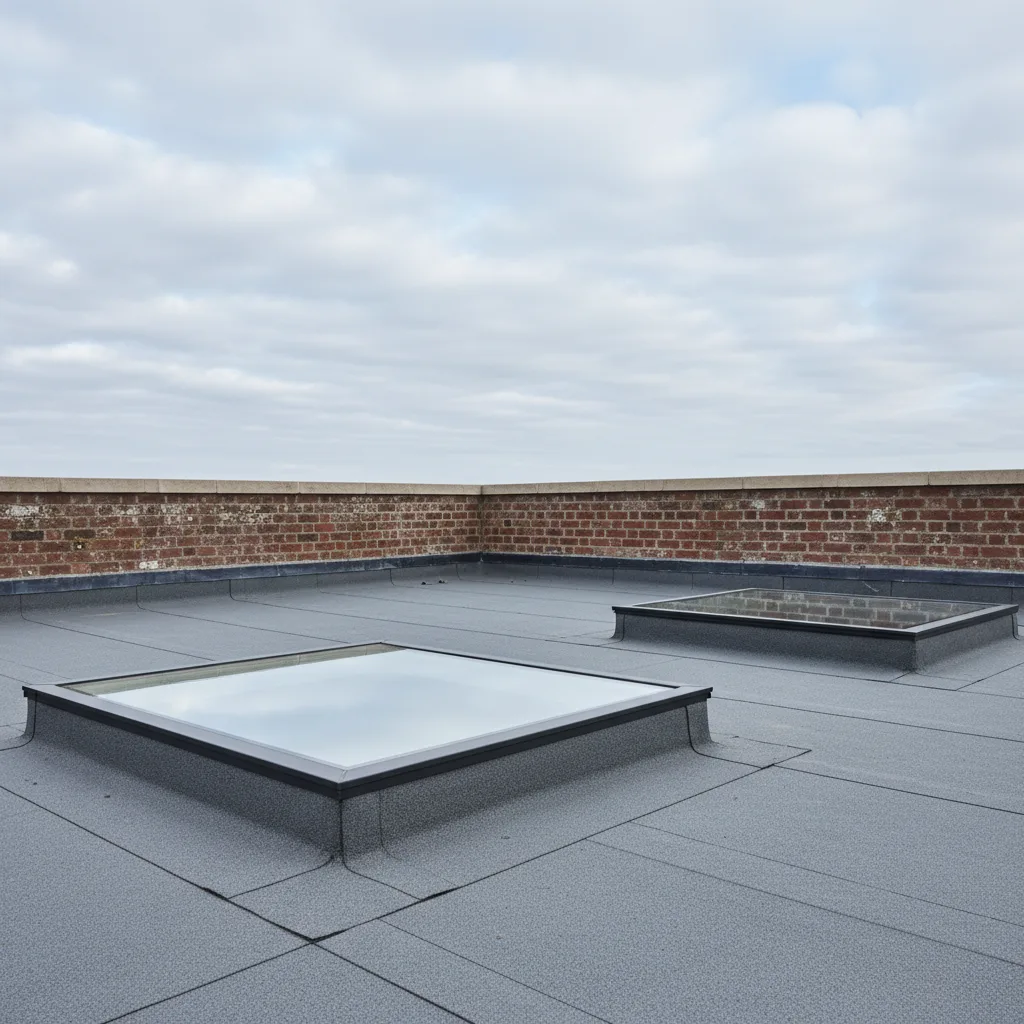
An assessor works from what can be observed and from documentary evidence. Where you have a specification sheet showing the glazing performance, it can be used. Where you do not, the assessor applies a default assumption, which is usually pessimistic.
So keeping the paperwork is worth actual points. File the manufacturer specification with the installation certificate.
The wider point
Daylight replacing electric lighting does not appear in a domestic EPC, and neither does the fact that a well lit room gets used. The rating is a useful comparison tool, not a complete account of whether a rooflight was a good idea.
More on Energy Efficient Rooflights
Ready to bring the daylight in?
Tell us about your project and we’ll send a clear, fixed written quote, no pressure, no surprises.
- Fixed written price before any work starts
- No pressure, no obligation, no sales calls
- Flexible survey times that suit you
- A reply within one working day