Tunnel diameter and the light it delivers
Doubling the diameter quadruples the light, because it is the area that counts.
Part of our Sun Tunnel Installation guide
Light gathered is proportional to the collector area, and area goes with the square of the diameter. So the step between sizes matters more than the numbers suggest.
The common sizes

250mm. The usual domestic size. Roughly the light of a modest ceiling fitting on an overcast day, and considerably more in sun. Suits a hallway, a small landing, an en suite or a WC.
350mm. Roughly double the output of a 250mm, because the area is about twice as large. Suits a family bathroom, a larger landing, or a hallway with doors off it.
530mm and above. Commercial sizes, occasionally used domestically over a stairwell or a large internal space.
The right comparison
Not against a rooflight. A rooflight will always deliver far more light, and where a rooflight fits it is the better answer.
The comparison is against the room as it is: a hallway you switch a light on to cross at two in the afternoon. Against that, a 250mm tunnel is transformative.
Two smaller against one larger

In a longer space such as a corridor, two 250mm tunnels spaced along it beat one 350mm in the middle, because light falls away from a single point source and two pools cover more.
In a single small room, one larger tunnel is simpler and cheaper than two.
What reduces output
Run length, bends, and flexible tube. A 350mm tunnel on a long flexible run with two elbows can deliver less than a 250mm on a short straight rigid one.
Diameter is only one of the four variables, and it is the one most often quoted in isolation.
Why diameter matters more than anything else

Light entering a sun tunnel is proportional to the area of the aperture, not its width. That single fact is the most useful thing to understand about specifying one, and it is the thing most often got wrong.
Area goes with the square of the radius. So stepping from 250mm to 350mm is not a forty percent increase in light: it is roughly double. Stepping from 350mm to 530mm roughly doubles it again.
The cost difference between one size and the next is small. The light difference is substantial. That asymmetry is why we almost always recommend going up a size where there is any doubt.
What each size actually suits
250mm. An internal WC, a small ensuite, a short hallway, a walk in wardrobe. Rooms where you want enough daylight to see and orient yourself rather than to occupy the space.
In a windowless WC it is transformative, because the alternative is nothing. In a family bathroom it will feel thin.
350mm. A landing, a family bathroom, a small kitchen, a utility room. The most commonly fitted size and the one that suits most domestic situations.
This is the size at which a room stops reading as artificially lit and starts reading as daylit.
530mm. A room you actually live in: a larger kitchen, a hallway you want genuinely bright, a stairwell. Also the right answer for any long run, where the extra area compensates for the losses along the tube.
The one caution is the diffuser. Its diameter matches the tube, so a 530mm unit puts a substantial disc in the ceiling. In a small internal WC that can look out of proportion, and it is the single situation where the smaller size is genuinely right despite the lower output.
What else changes the answer

Diameter sets the ceiling on how much light can enter. Three other factors decide how much of it arrives.
Tube type. A rigid mirrored tube reflects 98 percent or better at each bounce. A flexible foil concertina reflects perhaps 80 percent and scatters light at every fold, delivering roughly a third of what a rigid tube of the same diameter and length gives.
If flexible is genuinely the only option for the route, size up substantially and expect less. On a long run a flexible tube delivers very little.
Run length. Light loss compounds along the tube. A one metre drop in a bungalow loses almost nothing. A four metre run through a loft and a first floor void loses a good deal.
Bends. Each one costs more than a metre of straight tube. A route with two bends is worth reconsidering, and moving the ceiling position by half a metre to get a straight drop is frequently the better trade.
A working rule
Start from the room, then adjust for the route.
Pick the size from the guide above for the room you have. Then, if the run is over about three metres, or has more than one bend, or has to be flexible, go up one size.
A straight two metre run at 350mm will beat a four metre run with two bends at 530mm, so improving the route is worth more than increasing the diameter if you can do both.
Two smaller rather than one large

Worth serious consideration in any room bigger than a WC.
Two 350mm tunnels spaced apart in a hallway or a kitchen read as ambient daylight across the space. One 530mm in the middle reads as a spotlight with the corners still dark, even though the total aperture is similar.
The light is the same; the distribution is completely different, and distribution is what makes a room feel daylit.
Where two are fitted on the same visit, the second costs meaningfully less than the first, because the access, the protection and the setting up are shared. The gap between one tunnel and two is much smaller than people expect.
What the light is like
Soft, even, diffuse and shadowless. It does not read as a beam and it does not cast the hard edged patch of sun a rooflight can.
It tracks the day: brighter in the middle, dimmer at each end, and effectively nothing after dusk. Most units take an optional light fitting inside the diffuser, and on a bathroom or hallway that is worth specifying at the outset so one ceiling opening does both jobs.
Orientation matters less than people assume, because the dome collects diffuse skylight as well as direct sun. A north facing tunnel works, with less peak brightness on a clear day and almost identical performance on an overcast one, which in this country is most days.
What matters far more than orientation is obstruction. A dome under a tree canopy, behind a chimney or shaded by a taller building loses more than any compass direction does. Stand where the dome would go and look up: if you can see a clear patch of open sky, the tunnel will work.
How to specify yours

Send a photograph of the room, a photograph of the loft space above it, and the floor area of the room.
From those we can recommend a diameter and a route, and frequently identify a position a metre away from the obvious one that halves the run. That single change is usually worth more than a size increase.
Why diameter is the most effective lever
It works on both halves of the problem at once, which nothing else does.
Collection. The dome gathers light over its area, and area rises with the square of the diameter. A modest step up in diameter is a substantial step up in collecting area.
Transmission. In a wider tube a ray travels further between contacts with the wall, so there are fewer reflections over a given length and less is lost on the way down.
So going up a size gets you more light in at the top and keeps more of it on the way through. The price difference between adjacent sizes is comparatively small, which makes this the best value decision in the whole specification.
Matching size to the job

A small diameter suits a short straight run into a modest space: a cloakroom, a small landing, a corridor between two rooms.
A medium diameter is the general purpose choice for a hallway or a landing with a normal run.
A large diameter suits a bigger room, a long run, any route with a bend, and any situation where the tunnel is the only daylight the space will ever get.
The rule of thumb worth carrying: if the run is long, or bent, or the space matters, go up.
What limits it
Structure at both ends.
At the ceiling, the tube passes between joists, and joist spacing sets a practical maximum without cutting anything.
At the roof, the same applies between rafters, and on a trussed rafter roof at 600mm centres the clear span is fixed.
Which is why the survey looks in the loft before the size is chosen. It is entirely possible to want a diameter the structure will not take.
Two tunnels rather than one large one
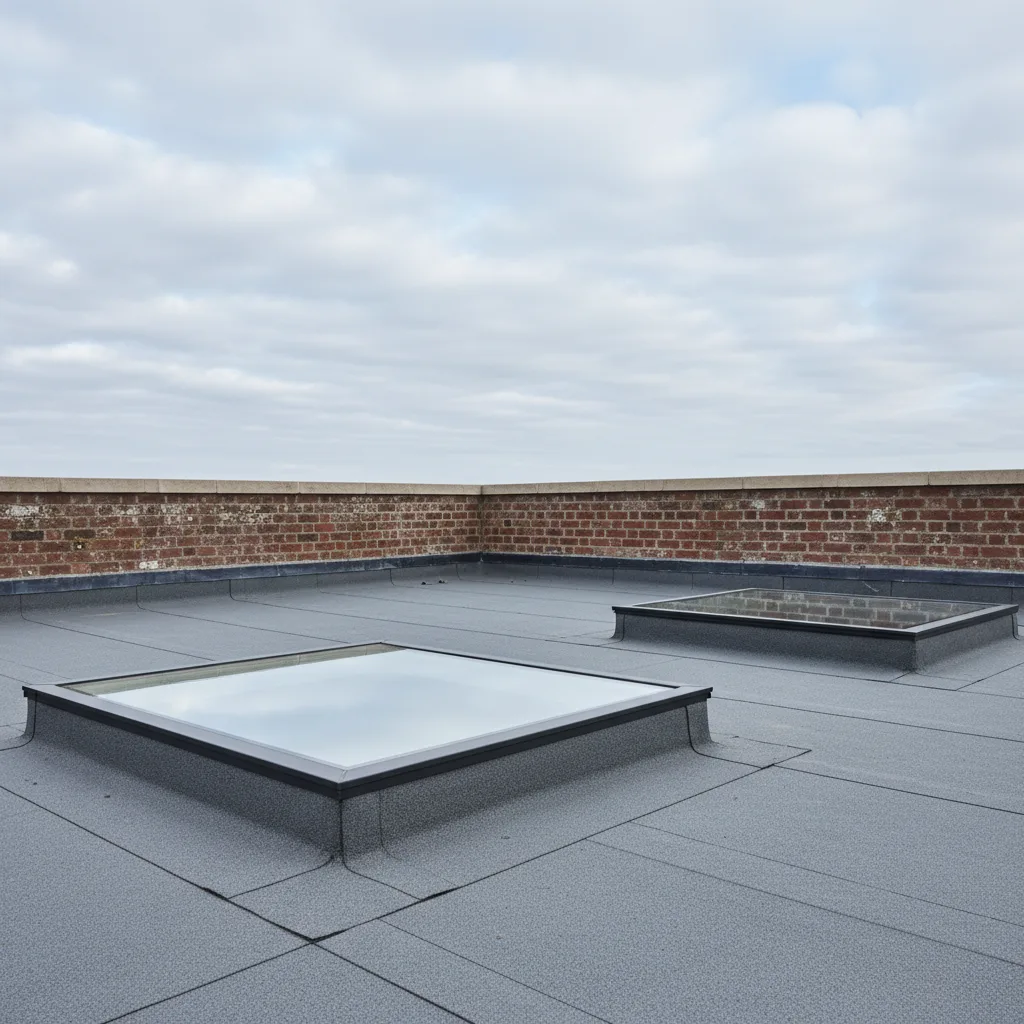
In a long hallway this is frequently the better answer.
One large tunnel produces a bright pool with dark ends. Two smaller ones spread the light along the space, and each run is shorter and can be straighter, so the losses on both are lower.
It costs more than a single unit and less than people assume, because the second dome and diffuser are the marginal cost while the access and the making good are shared.
The diffuser as well as the tube
Diameter sets how much light arrives. The diffuser determines what it does when it gets there.
A flat diffuser spreads light downward in a fairly directed pool. A domed or prismatic one spreads it more widely across the ceiling and the walls, which makes a space read as lit rather than spotlit.
In a hallway the wider spread is usually what you want, because the effect you are after is the space feeling daylit rather than a bright disc on the floor.
What not to expect from a bigger tube
It will not turn a sun tunnel into a rooflight. Even at the largest domestic diameter with a short straight rigid run, the output is a fraction of what a rooflight of comparable cost delivers.
Judged against a rooflight it disappoints. Judged against a windowless hallway with a light burning all day, it is excellent, and the larger diameter is what makes the difference between adequate and genuinely good.
Checking the structure before choosing the size
Diameter is constrained at both ends, and the constraint is not negotiable.
At the ceiling, the tube passes between joists without cutting them. At the roof, the same applies between rafters, and on a trussed rafter roof at standard centres the clear span is fixed.
So the survey looks in the loft before the diameter is chosen. It is entirely possible to want a size the structure will not take, and discovering that after ordering is avoidable.
The dome as well as the tube
A larger diameter also means a larger dome on the roof, which matters on a sensitive building.
On a conservation area rear slope that is rarely an issue. On a prominent slope or a listed building it may be, and a smaller dome that satisfies an officer is worth more than a larger one that is refused.
Some manufacturers offer a low profile or flat glass top for exactly these positions, and naming it in a pre application conversation is worth doing.
Cost against benefit
The step between adjacent diameters is a modest proportion of the installed cost, because the access, the roof work and the making good are the same whichever size goes in.
Which is why going up a size is nearly always good value, and why installing the smallest tunnel that fits is a false economy on a run of any length.
More on Sun Tunnel Installation
Ready to bring the daylight in?
Tell us about your project and we’ll send a clear, fixed written quote, no pressure, no surprises.
- Fixed written price before any work starts
- No pressure, no obligation, no sales calls
- Flexible survey times that suit you
- A reply within one working day