Do you need a rain sensor?
If you will ever open it and leave the room, yes. Cheap now, expensive later.
Part of our Electric and Opening Rooflights guide
Depends on one question: will you ever open it and not be there when it rains?
Yes, if

It is in a kitchen or bathroom you leave open for ventilation while you go out. It is on a schedule or automation. Or it is somewhere you would not notice rain starting, such as a rooflight over a stairwell.
Optional, if
You only ever open it while you are in the room and would notice weather immediately.
What it actually does

A pad on the roof near the unit detects water bridging its contacts and drives the window shut, usually within a second or two of the first drops.
The window takes fifteen to thirty seconds to close, so a little rain gets in. In practice a few drops rather than a wet floor.
What it does not do
Predict. There is no forecast involved. It reacts to rain that has already started, which is enough to prevent the outcome that matters.
It also cannot tell rain from a hose or heavy dew, so it will occasionally close for those. Harmless.
Reopening

Most do not reopen automatically, and that is right: a window reopening unattended is worse than one staying shut.
Cost timing
Cheap at installation, because the sensor cable runs back to the control point along with everything else. Considerably more later, because that cable has to be run into a finished ceiling.
If in doubt, fit it.
Maintenance

Wipe it annually, or a dirty sensor will start refusing to let the window open at all.
On anything above easy reach, yes
A rain sensor is a small detector on the frame that signals the actuator to close the window when it starts raining. It is a modest option and it is the feature that decides whether a motorised rooflight actually gets used.
The logic is simple. A window you have to remember to close before rain is a window you leave shut, because the risk of coming home to a wet floor outweighs the benefit of ventilation. A window that closes itself is a window you leave open.
What it enables

Night purge. Open the rooflight late, let the heat accumulated through the day leave the building overnight, and stop worrying about a shower at four in the morning. On a south or west facing extension this is the difference between a room used in July and one avoided.
Leaving the house. Ventilating a bathroom or a kitchen while you are out, without checking the forecast.
Rooms you are not in. A loft bedroom aired during the day.
Where it matters most
Any rooflight above reach, where closing it manually means finding a pole. Any lantern vent, which is always high. Any coastal or exposed site, where weather arrives quickly and with little warning.
Where you can do without

A low level rooflight in a room you occupy, that you close by hand as a matter of course. A north facing unit in a cool room that rarely needs purging.
The limitations, honestly
It closes on the first drops, not before. A small amount of water gets in during the seconds it takes to close. That is a few drops rather than a problem, but it is not zero.
It needs power. In a mains power cut the sensor is out too, which is the one scenario worth planning for and the reason to know how your manual override works.
It needs cleaning. A sensor caked in grime either misses rain or reads permanent moisture and refuses to let the window open at all, which looks exactly like a fault. Wipe it when you clean the gasket.
It does not detect wind. A dry gale will not close the window, and a large open sash in a gust is a load on the actuator.
What we specify

A rain sensor as standard on any motorised rooflight rather than as an option, because the unit costs very little more with one and it is what makes the motor worth having.
Solar powered units include one on most systems and it runs from the same panel, so there is no additional wiring question.
The case for fitting one
On any powered rooflight in a house that is empty during the day, which is most houses. The point is not convenience, it is the downpour that arrives at two in the afternoon while everybody is at work.
On a rooflight over anything water would damage: a kitchen, a room with a wooden floor, a stairwell where water lands two storeys down.
And on a unit that is out of reach, where closing it manually in a hurry is not realistic.
Where it matters less
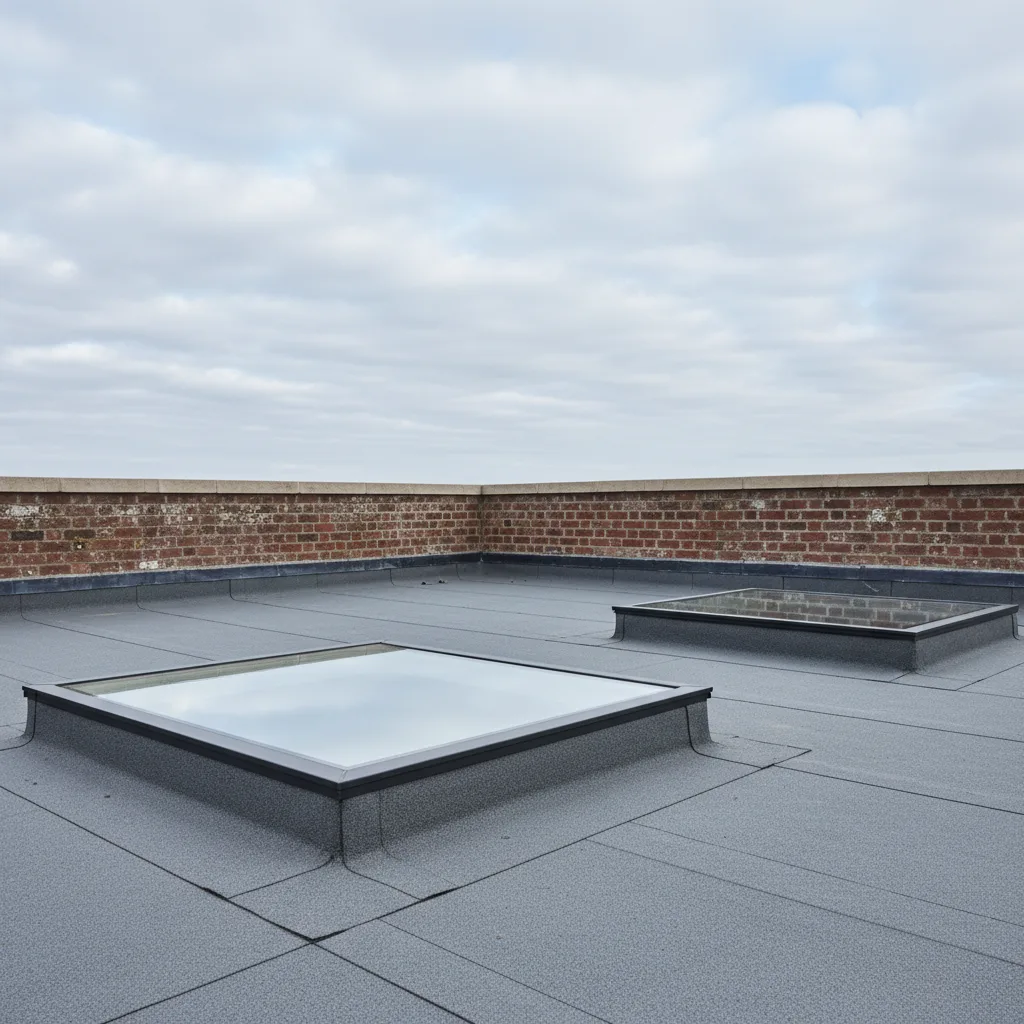
On a unit only ever opened deliberately while somebody is in the room and closed before they leave. A bathroom vent operated by hand is the obvious case.
Even then, adding one at installation costs little and adding one later costs a call out, so the arithmetic usually favours fitting it.
Its limits, honestly stated
It responds to rain arriving, so a small amount of water enters before the unit shuts.
It needs wiping. A sensor coated in pollen or dust either stops responding or starts closing the unit in dry weather, and both faults get blamed on the motor.
And it will close the rooflight on a warm evening when a light shower passes, which some people find irritating enough to matter. Most systems allow it to be overridden temporarily.
It does not detect wind. A rooflight left open in a gale is a separate risk, and the answer to that is a wind rated unit or the habit of closing it.
More on Electric and Opening Rooflights
Ready to bring the daylight in?
Tell us about your project and we’ll send a clear, fixed written quote, no pressure, no surprises.
- Fixed written price before any work starts
- No pressure, no obligation, no sales calls
- Flexible survey times that suit you
- A reply within one working day