What causes condensation on a rooflight?
Warm humid air meeting the coldest surface in the room. Where the cold surface is tells you what to fix.
Part of our Replacing a Failed or Misted Rooflight guide
Warm air holds more moisture than cold air. When it meets a surface below its dew point, the moisture comes out as water. A rooflight is often the coldest surface in the room and it is at the top, where the warmest, wettest air collects.
Telling it from a leak

Condensation appears in cold weather, worst first thing, often on dry days, and worse when you cook, shower or dry washing. It forms first on the coldest points: the frame, the glass edge, the corners of the reveal.
A leak follows rain and ignores temperature. If it happens on a cold dry morning, it is condensation.
Where it forms tells you what to fix

A band around the edge of the glass: an aluminium spacer bar conducting heat and chilling the perimeter. A warm edge spacer solves it.
On the frame: a cold frame, either an aluminium frame without a thermal break or an uninsulated kerb behind it.
At the top of the reveal, or damp plaster: the vapour control layer was not sealed to the frame, so moist air is entering the roof build up and condensing inside it. That is the one that damages things.
All over the glass on a cold morning: usually room humidity rather than a fault. Check the ventilation filter first.
Between the panes

A failed seal. Different problem, and the unit needs replacing.
The four things that reduce it

A warm edge spacer. An insulated kerb. A sealed vapour control layer. And ventilation, meaning extraction at source plus ideally an opening rooflight to let humid air out at the top.
What does not help

Replacing a sound unit when the cause is an uninsulated kerb. The new one will do the same thing.
Warm moist air meeting a cold surface

Every home produces moisture: cooking, washing, drying clothes, breathing. Warm air holds more of it than cold air, so when warm moist air touches a surface below its dew point, the moisture comes out as water.
In a room with a rooflight, the coldest surface is frequently the rooflight, because it faces the open sky. That is why frost forms on rooflights before it forms on wall windows, and why condensation appears there first.
Where exactly it forms tells you what is wrong

Evenly across the inner face of the glass. Ordinary condensation. Appears on cold mornings, worst in deep winter, unrelated to rain, clears as the day warms. Not a fault, and no work on the window will fix it.
As a band around the edge of the glass while the centre stays clear. The signature of an aluminium spacer bar conducting heat around the perimeter of the pane so the glass edge runs several degrees colder. Extremely common on units fitted before the mid 2000s, and regularly mistaken for a failed unit. A warm edge spacer largely removes it, which means a new unit rather than a repair.
On the plaster reveal rather than the glass. This one usually is an installation fault, and the cause is almost always a missing insulation collar. Without it the reveal runs cold enough to condense. It is a separate order line and the first thing dropped from a cheap quotation, and the symptom does not appear until months later.
Between the panes, unwipeable. A failed sealed unit at end of life, not condensation in the room at all.
What actually fixes ordinary condensation
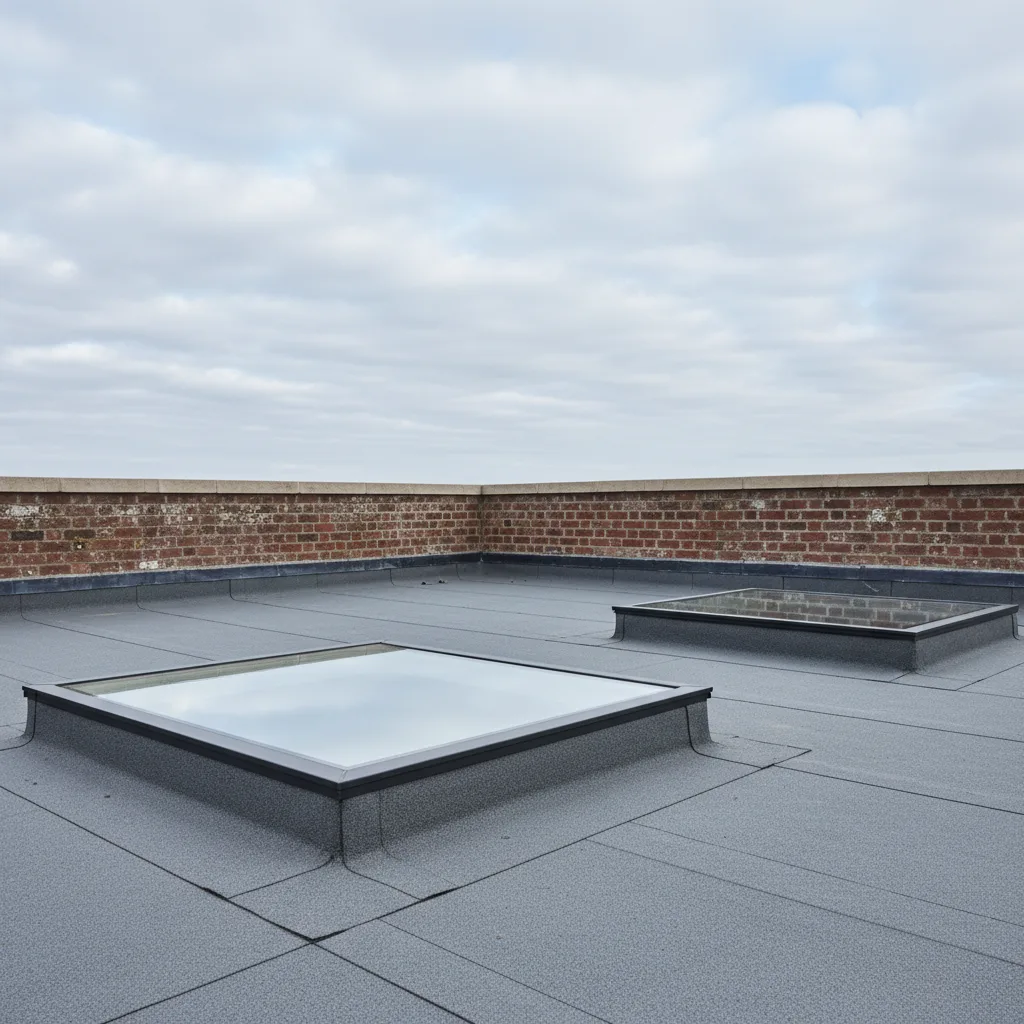
Not the window. Ventilation.
An opening at the highest point of a room lets warm moist air leave, and as it goes it draws drier air in through anything open lower down. That clears a room in minutes where a wall window alone takes hours, and it only works if something at low level is open as well.
Where the rooflight is above easy reach, a motorised opener with a rain sensor makes the difference between a window that gets used and one that stays shut.
Extract fans matter more than anything in kitchens and bathrooms: sized for the room, on an over run timer or humidity sensor, and ducted to outside rather than into a loft.
What reduces it
A better whole unit U-value and a warm edge spacer, so the glass runs warmer. A fitted insulation collar, so the reveal does not. Both are specified at order stage rather than added later.
The mechanism
Warm air holds moisture. When it meets a surface cold enough, that moisture condenses onto it. A rooflight is usually the coldest surface in the ceiling, so it collects the moisture first.
The rooflight is not producing the water. It is showing you where the coldest surface is, and frequently telling you the room has more humidity than its ventilation can clear.
Which surface is wet identifies the fault
The middle of the glass, internally. Glazing specification and room humidity. A better unit raises the internal surface temperature; better ventilation lowers the moisture load.
A band around the edge of the glass, with the middle clear. The spacer. An aluminium spacer chills the inner pane at its perimeter. A warm edge spacer raises that temperature and pushes the condensation point back.
The frame or the reveal, with the glass clear. A thermal bridge. The kerb or the frame perimeter is uninsulated, or the insulation does not run continuously up to the frame.
Between the panes. The sealed unit has failed. Nothing to do with the room.
Damp in the ceiling around the opening, in cold weather, without rain. Interstitial condensation inside the construction, which means the vapour control layer is not sealed to the frame. This is the one that causes real damage, because it rots timber where nobody can see it.
The remedies
Insulate the kerb and the reveal continuously. Tape the vapour control layer to the frame. Specify a warm edge spacer and a good whole unit U value. And give the room a way to lose moisture, which in a kitchen or bathroom means extraction that runs long enough to be useful.
More on Replacing a Failed or Misted Rooflight
Ready to bring the daylight in?
Tell us about your project and we’ll send a clear, fixed written quote, no pressure, no surprises.
- Fixed written price before any work starts
- No pressure, no obligation, no sales calls
- Flexible survey times that suit you
- A reply within one working day