How do you clean a rooflight you cannot reach?
A pole from the ground for most, and self cleaning glass specified at order for the rest.
Part of our Replacing a Failed or Misted Rooflight guide
Three practical routes, and one decision that should be made before the unit is ordered.
A water fed pole

What a professional window cleaner uses: a telescopic pole with a brush and purified water, reaching a single storey roof easily and a second storey with a longer pole.
Purified water dries without spotting, which is why it works without wiping.
Most domestic rooflights are within reach of one, and it is the answer for the majority.
Rotate the sash

On a centre pivot roof window, the sash rotates through about 180 degrees and locks, bringing the outer face inside the room.
Free, safe, and the main practical advantage of a roof window over a fixed rooflight. Find the catch that holds it rotated before you start.
Self cleaning glass

Specified at order. A coating that breaks down organic dirt in daylight and lets rain sheet it off.
It reduces how often cleaning is needed rather than removing it, and it needs rain and a fall to work, so it does more on a pitched lantern than on a flat unit. It does nothing for bird mess.
On a rooflight you genuinely cannot reach, it is worth having.
What not to do

Climb onto the rooflight. A standard unit is not rated for foot traffic.
Lean out of an adjacent window with a cloth.
Pressure wash it, which drives water past seals designed for rain rather than a jet.
Decide before ordering

If a rooflight will be hard to reach, say so at survey. Self cleaning glass and a rotating action are both specification choices, and neither can be added afterwards.
Decide this before it goes in

It is one of the most common regrets about a rooflight, and it is entirely avoidable at specification stage. On anything above easy reach, how the glass gets cleaned is a design decision rather than an afterthought.
Centre pivot, which solves it

A centre pivot window rotates fully so the outer face turns inward and can be cleaned from inside the room. Most designs have a catch that holds the sash in the cleaning position.
On a high level unit this is the single most useful feature a roof window can have, and it is the main reason centre pivot remains popular despite the sash obstructing the opening when open.
Some units do both, opening top hung for use and pivoting for cleaning. On a high window with an escape duty that removes the trade off entirely and it is worth the premium.
Where the unit does not pivot
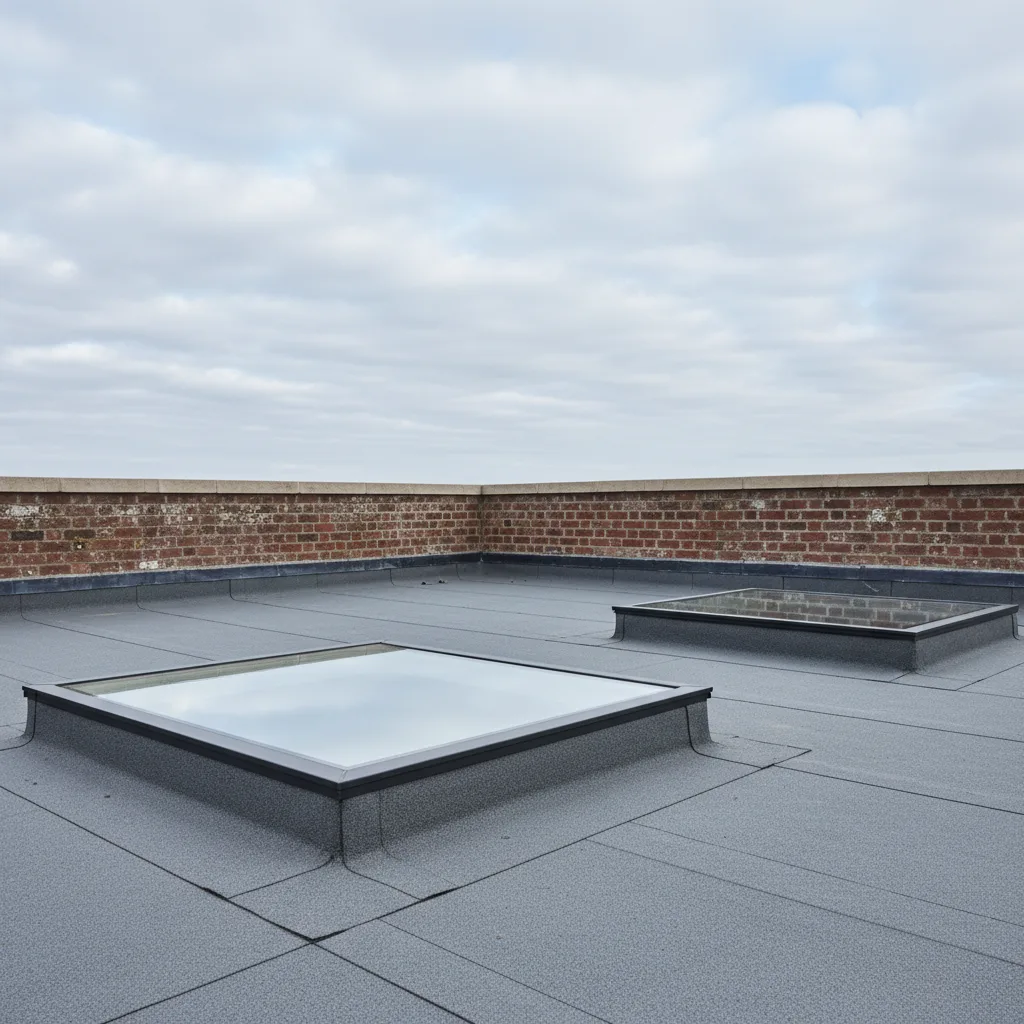
A pole system. A telescopic pole with a soft brush head, ideally with a water feed. Effective on a pitched unit reachable from below, and it needs somewhere to stand.
External access. On a single storey extension roof, straightforward. On anything higher it means a tower or scaffold, which is a real cost for a cleaning visit.
Self cleaning glass. The coating breaks down organic deposits and lets rain sheet off rather than bead, carrying them away. It works well on a pitched unit where rain runs off, and does very little on a near flat one where water sits. It reduces the frequency rather than removing the job.
Fixed units and lanterns
No mechanism at all, so external cleaning always means access from outside. On a lantern over a double height space that is a tower or a pole system, and it is worth being honest with yourself about how often it will actually happen.
The pitch helps: a lantern at 15 to 25 degrees sheds water and dirt considerably better than a flat pane, and rain does most of the work.
The underside
Usually the easier half, but on a high unit it still needs a pole with a soft head. Leaning a ladder against a glazed surface is not the answer.
What we would suggest
On a high level pitched unit, specify centre pivot or dual action. On a lantern or a flat rooflight, specify self cleaning glass and accept an occasional professional clean. And on any installation, ask the question before the unit is ordered rather than after the scaffold has come down.
The three practical routes
A water fed pole. A soft brush head on a telescopic pole fed with purified water, used from ground level. This is how professional window cleaners reach most domestic rooflights, and purified water is the point: it dries without spotting, so nothing needs wiping.
It reaches a surprising height and it works on both pitched roof windows and flat rooflights near the edge of a roof.
A mobile tower. Where the unit is set back from the edge and a pole cannot reach the middle of it. Takes a couple of hours including setting up, and gives safe working access.
Self cleaning glass and patience. Specified at installation, it extends the interval considerably rather than eliminating the task, and it works best on steeper glazing where rain sheets off.
What not to attempt
Leaning out of the unit itself, or standing on a flat rooflight that is not rated to be walked on. A non fragile rating is a fall protection classification for accidental loading, not a permission to use the unit as a working platform.
And a pressure washer from a distance, aimed upward at a seal. It reaches, and it forces water into joints designed only to shed rain.
Designing the problem out
On a new installation, think about cleaning before you fix the position. A rooflight positioned within reach of a pole, or a powered unit that rotates to a cleaning position, is a decision made once that pays back for twenty years.
More on Replacing a Failed or Misted Rooflight
Ready to bring the daylight in?
Tell us about your project and we’ll send a clear, fixed written quote, no pressure, no surprises.
- Fixed written price before any work starts
- No pressure, no obligation, no sales calls
- Flexible survey times that suit you
- A reply within one working day