Do rooflights need planning permission?
Usually not on a house. Usually yes on a listed building, and it depends on the slope in a conservation area.
Part of our Conservation Rooflight Installation guide
For most houses, no. Rooflights are generally permitted development provided they meet the conditions.
The conditions

No more than 150mm above the plane of the existing roof, not higher than the highest part of the roof, and on a side elevation obscure glazed and non-opening below 1.7m.
When permission is needed

Listed buildings. Listed building consent for anything affecting character, regardless of permitted development.
Conservation areas. Narrower rights. A slope facing a highway usually needs permission; a rear slope often does not.
Article 4 directions, which may remove rights entirely for the elevations covered and are invisible from the property.
Flats and maisonettes, where these rights do not apply.
Planning conditions removing rights, common on newer estates.
Locally

Colchester has a large conservation area over the historic core and the Dutch Quarter, with extensive designation through Dedham, Nayland, Coggeshall and the Colne Valley villages.
It is one of the more heavily designated boroughs in the county, so the answer here is “it depends” more often than it would elsewhere.
Building Regulations are separate

Different regime. A new opening is notifiable regardless of whether planning permission is needed.
What we do

Check before quoting rather than after. Where permission is needed, that changes both the product and the timescale, and it is better established at the start.
Usually not, on a house

On an unlisted house outside any conservation designation, a rooflight is normally permitted development. That means no application, no fee and no wait.
The conditions are specific and worth knowing, because they are the difference between permitted and not.
It must not project more than 150mm beyond the plane of the roof slope. This is the one that matters most and it is why low profile units exist. A bulky dome standing well proud of the tiles fails it.
It must not be higher than the highest part of the roof. In practice, nothing above the ridge.
On a side elevation facing a boundary, any opening must be obscure glazed and, if it opens, must be either non opening below 1.7 metres from the floor of the room or restricted in how far it opens below that height.
Meet those and you do not need permission.
Where the answer changes
Listed buildings. Listed building consent is required, always, on any slope, front or rear, whether or not anybody can see it. The listing covers the entire building inside and out and there is no de minimis threshold. Carrying out the work without consent is a criminal offence rather than a planning irregularity.
Conservation areas. A conservation area does not by itself remove permitted development for rooflights on a house. What removes it is an Article 4 direction, which many conservation areas have, frequently applying to elevations fronting a highway. This is a question for the council, and the answer varies street by street.
Flats and maisonettes. No permitted development rights at all. Any rooflight needs a planning application, and in practice the freeholder’s consent as well.
Converted buildings. Barn and agricultural conversions are frequently granted with permitted development rights removed by condition. Those conditions run with the property regardless of who owns it now, so the original permission is worth reading before assuming anything.
Article 4 on modern estates. Rare, but developer covenants in the deeds do something similar in private law: restricting alterations to elevations facing the street. They are enforceable and invisible on a planning search.
Building Regulations are a separate matter
Permitted development means no planning application. It does not mean no Building Regulations. A new opening in a roof engages Part A for structure and Part L for energy, and in a habitable loft room Part B for means of escape. That is notifiable regardless of the planning position, and it is the installer’s job to handle.
Checking your own address
Two enquiries, both free and both quick. Search the national heritage list to establish whether the building is listed. Then ask the local planning authority whether you are in a conservation area and whether an Article 4 direction applies.
We do both as part of quoting, and where the honest answer is that a slope will not be consented we would rather say so before a survey than after.
A note on lanterns
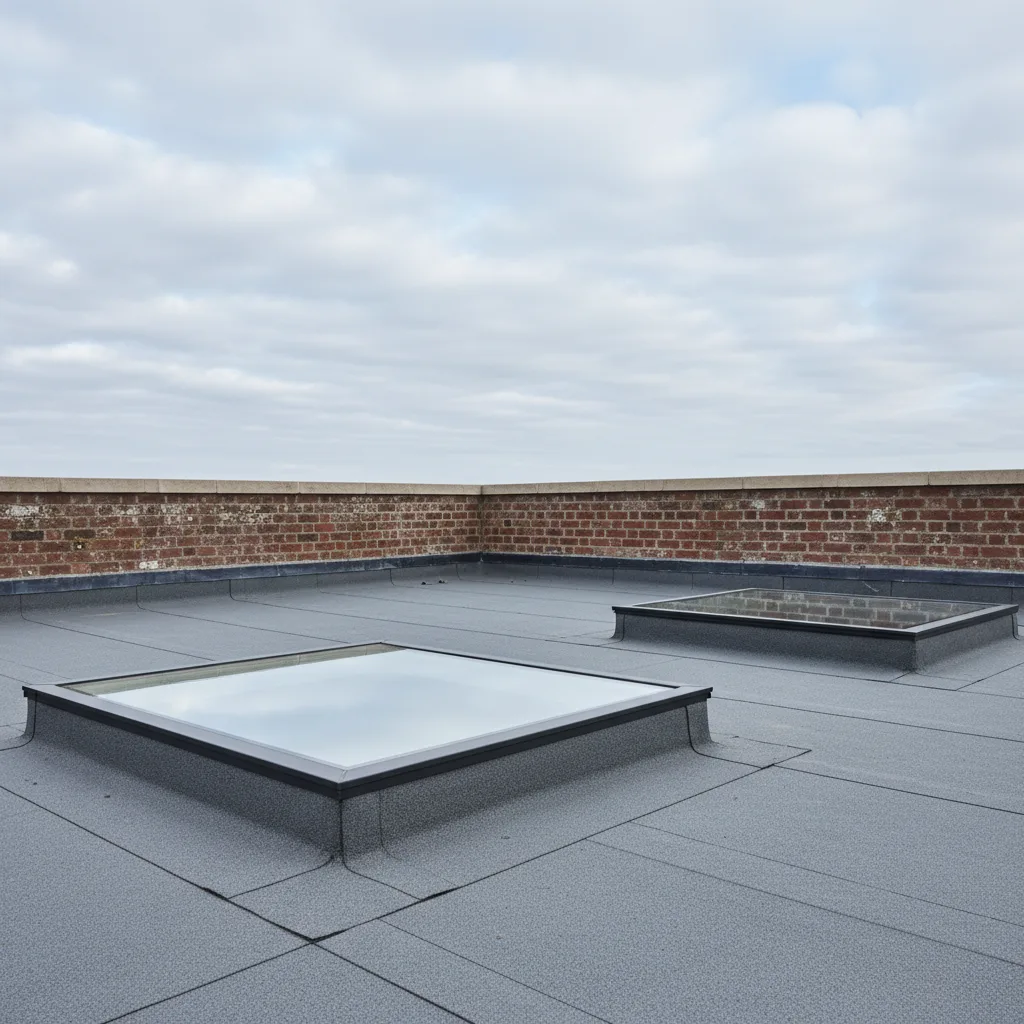
A roof lantern stands proud of the roof by considerably more than the 150mm permitted development limit that applies to a rooflight. On the flat roof of a rear extension it is usually dealt with as part of the extension’s own permission or permitted development allowance rather than separately, but that is not automatic.
On a large or prominent lantern it is worth confirming with the council rather than assuming.
Ask us
Tell us the address and we will check the listing, the conservation position and any Article 4 direction as part of quoting. Both enquiries are free and they take a day rather than a week.
Side elevations
The condition people most often miss. On a side elevation facing a boundary, permitted development requires obscure glazing, and any opening part must be either non opening below 1.7 metres from the floor of the room or restricted so it cannot open below that height. That is a legal requirement rather than a preference, and we check it at survey.
One last point
Flats and maisonettes have no permitted development rights at all, listed or not, designated or not. That single fact catches out more people than every other exception combined.

More on Conservation Rooflight Installation
Ready to bring the daylight in?
Tell us about your project and we’ll send a clear, fixed written quote, no pressure, no surprises.
- Fixed written price before any work starts
- No pressure, no obligation, no sales calls
- Flexible survey times that suit you
- A reply within one working day