Can a roof lantern be fitted to an existing extension?
Often yes. It is a bigger job than fitting one during a build, and the roof covering decides how much bigger.
Part of our Roof Lantern Installation guide
Often yes, and it is one of the more transformative things you can do to a dark existing extension. It is a more involved job than fitting one during a build, and it is worth understanding why before comparing prices.
What has to happen

The roof covering is opened up, an opening is formed in the deck and structure, trimmers or a steel are installed, a kerb is built, the covering is dressed up the kerb and terminated, the lantern is set, and the ceiling below is opened, framed, boarded and finished.
That is a week of work in an occupied house rather than a day on a building site.
What decides the price
The covering. A single ply or felt roof can be cut and welded or torched back neatly. A GRP roof is harder to make a durable new joint into, and sometimes the honest answer is that the roof wants recovering rather than patching.
The age of the covering. If it is near the end of its life, forming an opening in it is spending money on something you will replace. Doing both together shares the cost.
Structure. Cutting joists means trimming, and a wide opening means a steel designed by an engineer.
What is inside the ceiling. Cables, pipes and downlights all live in the void, and a lantern opening frequently lands on some of them.
Warm and cold roofs
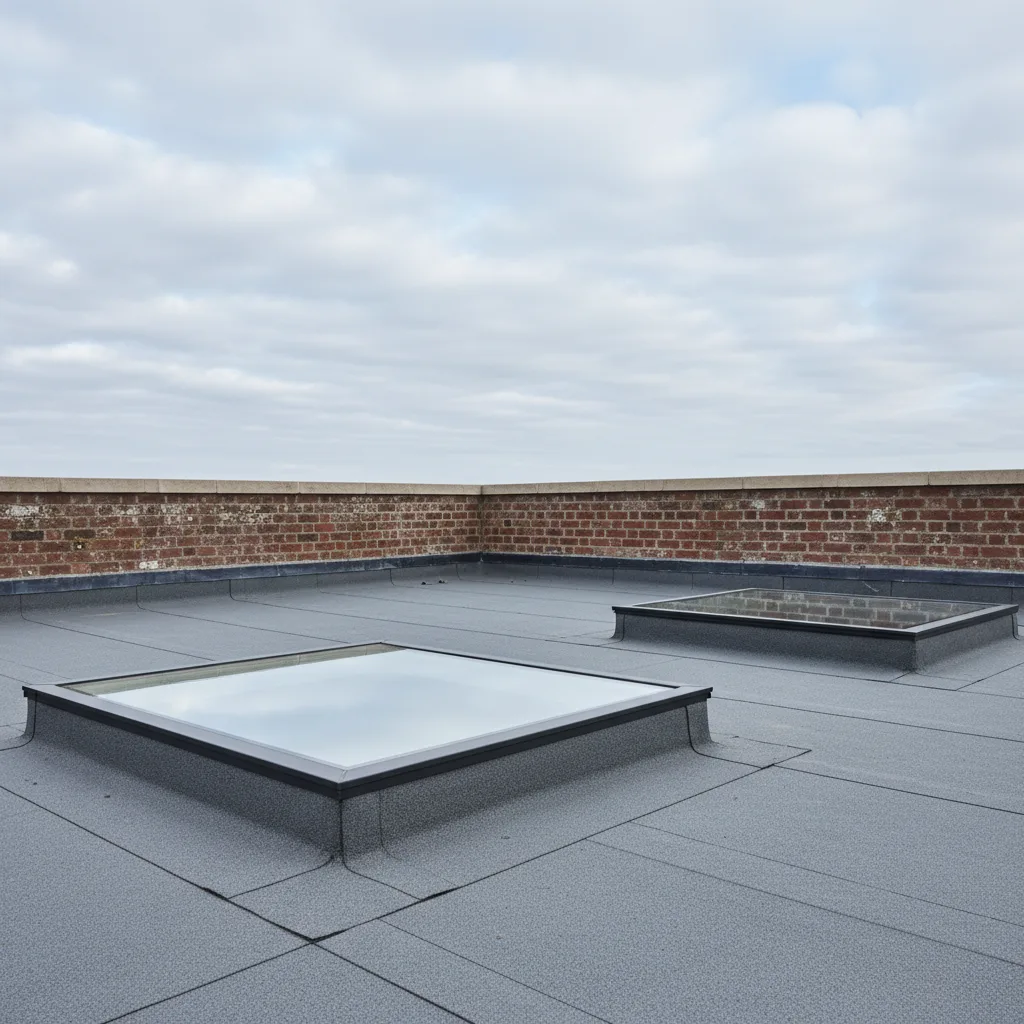
An older extension may be a cold roof, ventilated above the insulation. A lantern kerb in a cold roof is detailed differently from one in a warm roof, and getting the two confused produces condensation. Establishing which you have is part of the survey.
When it is not worth it
Where the extension roof is close to failure, or where the structure would need substantial work for a modest opening, two flat rooflights often deliver more light for considerably less disruption. We will say so.
Yes, and it is a bigger job than on a new build
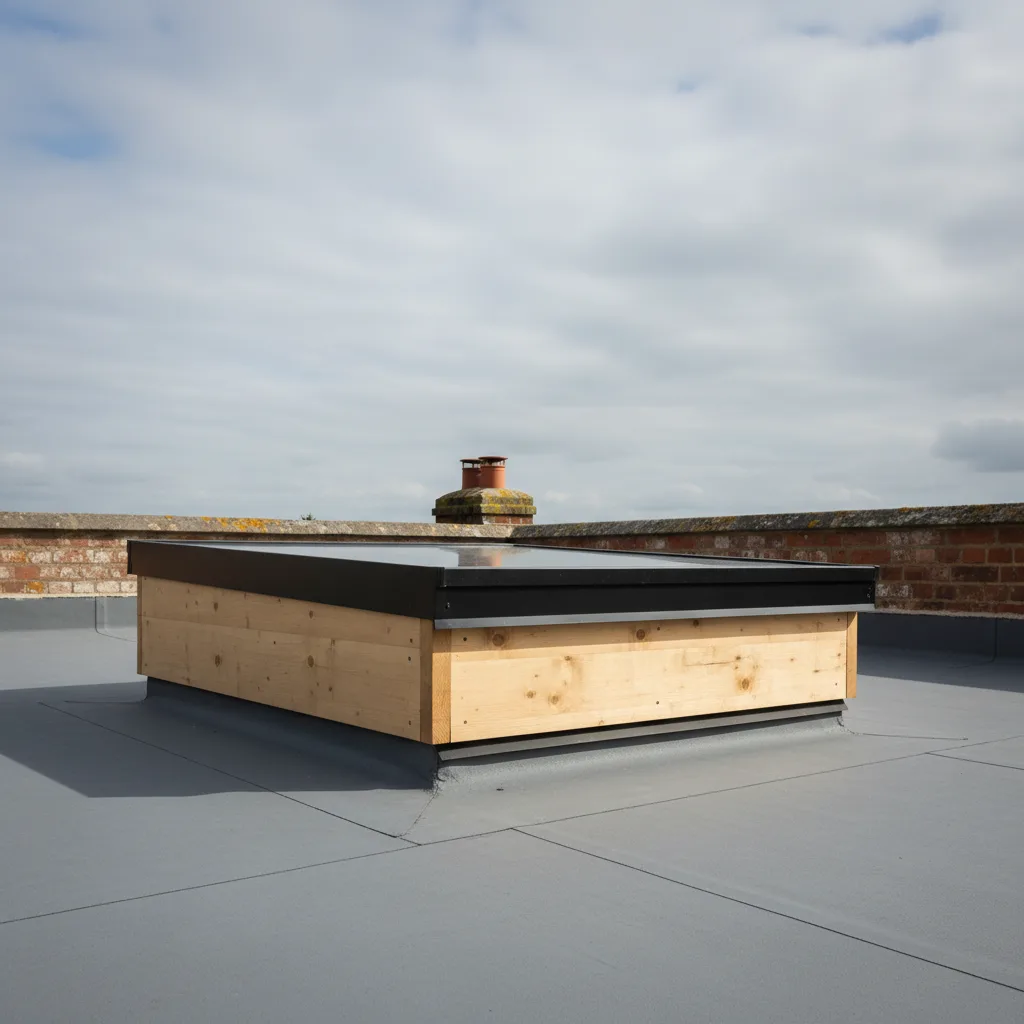
Retrofitting a lantern into a flat roof that was built without one is entirely normal work. What changes is that four things have to be established and corrected rather than designed in from the start, and together they usually cost more than the lantern.
1. The structure
The joists were sized for the roof as built, with no allowance for a large opening in it. Cutting them means a designed trimmer, and beyond a certain span steel, calculated by a structural engineer.
Which way the joists run relative to the opening changes the answer more than the size of the lantern does. An opening set within the span rather than cutting across it frequently avoids steel entirely, and on a rectangular lantern that sometimes means rotating the design.
2. The fall

Where the existing roof has no fall, or falls toward the proposed opening, that has to be corrected locally around the kerb using tapered insulation or firrings. It is normal work and it belongs in the quotation.
Standing water against a perimeter seal is the commonest cause of a failed lantern installation, so this is not optional.
3. The kerb
Built from the deck, square and level, at least 150mm above the finished surface, insulated on its outer face, with the covering dressed up it and terminated properly before the lantern sits on it.
On a lantern the kerb carries the structure as well as weathering the opening, so it is doing more work than under a flat rooflight.
4. Getting it there

A large pane cannot be manhandled. Crane or glass robot access and a route to the roof have to be established before anything is ordered, and on a property with no side access that may constrain what size is realistic.
The programme
Typically a week on an existing extension against a day or two on a new build. Survey, structural design, order with several weeks of lead time, then fit to the delivery date.
The engineer’s drawing has to come before the order, because the opening dimensions depend on the trimmer design and the lantern is manufactured to those dimensions.
If the roof covering is near the end of its life

Do both together. The access, the setting up and the making good are shared, and the falls, the kerb and the covering can be detailed as one job rather than one retrofitted into the other. It is considerably cheaper than doing them separately.
The alternative worth pricing
Two or three flat roof rooflights in a row. Lighter, far less structural work, and on a long room they light it more evenly than a single lantern.
Yes, and the roof decides how big a job it is

Three things get established before anything else: what the roof build up is, whether it has an adequate fall, and what the structure will allow.
The build up
A warm roof, with insulation above the deck, is the straightforward case. The kerb sits within the insulation and the detailing is clean.
A cold roof, with insulation at ceiling level and a ventilated void above, is more demanding. The kerb interrupts the ventilation path, and air has to be able to pass around it or a stagnant damp pocket forms beside the lantern.
Most flat roofs built before the last twenty years are cold roofs, so on an older extension this needs establishing by inspection rather than assumption.
The fall

A lantern kerb is an obstruction in the water path. On a roof with marginal or lost fall, water will pond permanently against it, which is what ends waterproofing details.
Correct the fall first, with tapered insulation or firrings. Doing it afterwards means the lantern comes out.
The structure
An opening of any size needs trimming and usually steel, designed by an engineer. On an existing extension the joist arrangement frequently makes one dimension much cheaper to achieve than another, and it is worth asking where the cost steps are before fixing a size.
The question worth asking first
How old the covering is. Fitting a lantern into a membrane with a few years left in it means the lantern comes out again when the roof is recovered.
Where the covering is due, do both together. The lantern detail is then formed as part of a new roof rather than patched into an old one, and it costs less than doing them separately.
More on Roof Lantern Installation
Ready to bring the daylight in?
Tell us about your project and we’ll send a clear, fixed written quote, no pressure, no surprises.
- Fixed written price before any work starts
- No pressure, no obligation, no sales calls
- Flexible survey times that suit you
- A reply within one working day