Do roof lanterns need planning permission?
Usually not on a rear extension. Usually yes in a conservation area, on a listed building, or under an Article 4 direction.
Part of our Roof Lantern Installation guide
On most houses, a roof lantern on a rear extension is permitted development and needs no application. There are clear exceptions and they matter in this part of Essex more than in most.
The general rule

Under permitted development a rooflight must not project more than 150mm above the plane of the existing roof, and must not be higher than the highest part of the roof. On a rear extension this is normally assessed against the extension’s own roof, and lanterns are routinely fitted without difficulty.
When it does need permission

- Conservation areas. Permitted development is narrower. A rooflight on a slope facing a highway usually needs permission; a rear slope often does not.
- Listed buildings. Listed building consent is required for anything affecting character, inside or out, regardless of permitted development.
- Article 4 directions. Permitted development rights may be removed entirely for the elevations covered.
- Flats and maisonettes. Permitted development rights for extensions and rooflights generally do not apply.
- Where rights have already been used up by previous extensions.
Building Regulations are separate

Planning permission and Building Regulations are different things, and a job can need one, both or neither. A new opening is notifiable under Building Regulations even where planning permission is not required. Where the work is notifiable we handle the notification and the certificate comes to you.
Locally

Colchester has a large conservation area over the historic core and the Dutch Quarter, and there is extensive designation through Dedham, Nayland and the Colne Valley villages. We check the designation before quoting rather than after. More on the conservation page.
Usually as part of the extension, not separately

A roof lantern stands proud of the roof by considerably more than the 150mm limit that makes a rooflight permitted development. So it does not qualify as a rooflight under those rules.
What usually happens is that the lantern is dealt with as part of the extension it sits on. Where a rear extension is being built under permitted development or under a planning permission, the roof form including the lantern is part of that.
That is the common case, and it is why most people never make a separate application for a lantern.
Where it is not automatic

Retrofitting onto an existing extension. Adding a lantern to a flat roof that was built without one is an alteration in its own right. Whether it needs permission depends on its height, its visibility and whether the original permission constrained the roof form.
Height limits on permitted development extensions. A single storey rear extension built under permitted development has a maximum height, and a lantern standing on it counts toward that. A modest lantern on a low extension may push it over.
Prominent positions. A large lantern visible from a highway, or on a side extension, faces more scrutiny than one on a rear roof screened by the house.
Listed buildings. Consent is required, always. A lantern is a substantial addition to a historic roof and it is a much harder case to make than a conservation rooflight.
Conservation areas with an Article 4 direction. Permitted development rights removed, so an application is needed.
Flats and maisonettes. No permitted development rights at all.
Building Regulations, always

Separate from planning and it applies regardless. A lantern engages Part A for structure, because the opening has to carry it, and Part L for energy efficiency, because it forms part of the thermal calculation for the extension.
There is also a limit on total glazed area as a proportion of floor area, so a heavily glazed extension needs a calculation rather than an assumption.
How to be sure
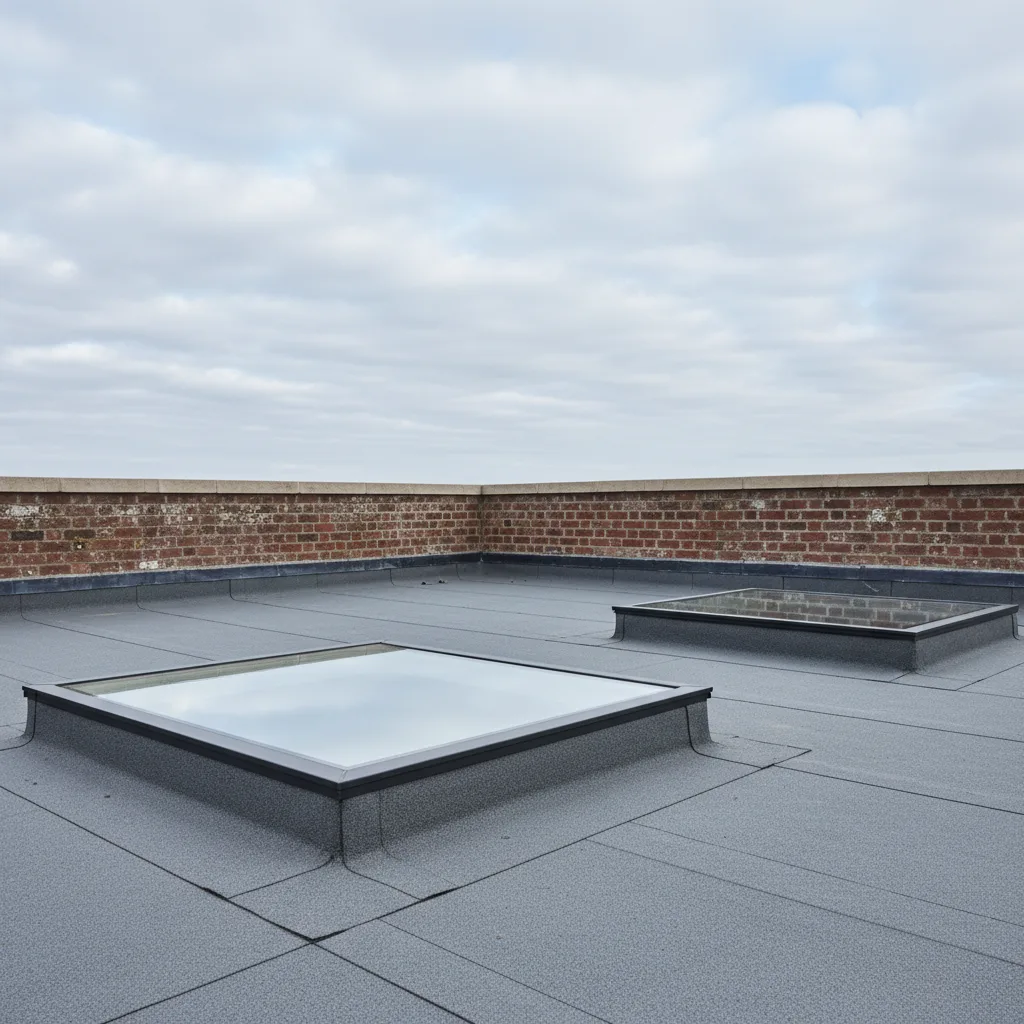
On a retrofit, or on anything large or prominent, confirm the position with the council rather than assuming. Where there is genuine doubt, a lawful development certificate settles it formally and is worth having if you expect to sell within a few years.
We check the listing, conservation and Article 4 position for every address we quote.
What to check on a retrofit
Whether the original permission for the extension constrained the roof form, because a lantern added later is an alteration in its own right rather than part of what was already approved.
Whether the extension was built under permitted development with a height limit, since a lantern standing on it counts toward that and a modest lantern on a low extension may push it over.
And whether the property is listed or covered by an Article 4 direction, in which case an application is needed regardless.
Where there is genuine doubt, a lawful development certificate settles it formally. On anything large or prominent it is worth having, particularly if you expect to sell within a few years.
Usually not, and the exceptions are specific
Most lanterns go onto single storey rear extensions, and where that extension is itself permitted development, a lantern within the permitted height is normally part of it.
The conditions that matter are height related. The extension has a maximum height under permitted development, and the lantern rises above the roof plane, so a large lantern can push an extension over a limit that was comfortable before.
Because footprint and lantern height are linked, sizing a lantern without checking the resulting overall height is how this catches people.
Where permission is needed
Listed buildings. Listed building consent is required, and carrying out the work without it is a criminal offence rather than a planning breach.
Conservation areas. Permitted development rights are restricted, and how much depends on the area and on whether an Article 4 direction is in force.
Flats and maisonettes, which do not have permitted development rights at all.
Where rights have been removed by a planning condition, which is common on newer estates, or used up by earlier extensions.
The practical step
The council planning department will confirm the position for a specific address, and it is worth having that confirmation in writing before ordering.
A lantern is bespoke, made to your dimensions, with a lead time of weeks and no resale value. Ordering one before the consent position is settled is a risk with no upside.
The building control position
They apply regardless of whether planning permission is needed, and they cover the thermal performance, the structural opening and, on a new extension, overheating.
More on Roof Lantern Installation
Ready to bring the daylight in?
Tell us about your project and we’ll send a clear, fixed written quote, no pressure, no surprises.
- Fixed written price before any work starts
- No pressure, no obligation, no sales calls
- Flexible survey times that suit you
- A reply within one working day