Do roof lanterns leak?
A correctly detailed one does not. When one does, it is almost never the lantern.
Part of our Roof Lantern Installation guide
A properly detailed lantern on a properly built kerb does not leak. When one does, the cause is nearly always in one of four places, and only one of them is the lantern itself.
1. The kerb was too low

The covering has to be dressed up the face of the kerb and terminated under the lantern’s flange. A kerb that is too low leaves nowhere to do that, and water gets behind the termination. This is the most common cause we find.
2. There was no roof margin
A lantern pushed out towards the walls to gain glass leaves no flat roof around the kerb for the covering to work with. The detail becomes impossible rather than merely difficult.
3. Water ponds against the upstand

Flat roofs fall so water leaves them. A lantern positioned where water arrives slowly, or on a roof with inadequate fall, sits in standing water along its upslope face. Standing water finds any weakness eventually.
4. It is not a leak at all
A large share of reported leaks are condensation. Warm moist air from a kitchen reaches a cold surface at the perimeter and condenses, then runs down the inside of the frame. It looks exactly like a leak and it is not.
The distinguishing question is whether it happens in cold dry weather. Rain leaks follow rain; condensation follows cold. The fix is an insulated kerb and a vapour control layer sealed to the frame, which is detailing rather than a new lantern.
What we do

Where we fit a lantern we control all four. Where we are called to an existing one, we establish which of the four it is before quoting a remedy, because replacing a sound lantern to fix a kerb problem is money wasted.
Properly detailed ones do not
A lantern is a rigid glazed structure with factory made joints, and the unit itself is rarely the problem. Almost every leaking lantern we are called to is leaking at the kerb, and the cause is one of four things.
1. No fall, or the wrong fall

The commonest by a distance. Where the flat roof does not fall away from the kerb, or falls toward it, water stands against the base after every shower.
A seal designed to shed water is not designed to be submerged, and over a few winters it works loose. The fix is correcting the fall locally around the kerb, not resealing.
2. The covering dressed wrongly
The roof membrane should be dressed up the full height of the kerb and terminated properly before the lantern sits on it. Where it stops short, or where it was dressed after the lantern was set rather than before, water gets behind it.
This is invisible from above once finished, which is why it survives inspection and fails in year three.
3. A kerb that is too low or out of square

150mm above the finished surface is the working minimum. A lantern is also manufactured to a tolerance, and a kerb that is out of square will not take it evenly, which leaves the frame stressed and the seal uneven.
4. A blocked outlet
A perfect fall discharging into a gulley full of leaves and silt produces exactly the same pond. Check this before assuming anything is wrong with the lantern.
What is not a leak

Condensation on the inner face of the glass on cold mornings, unrelated to rain. A lantern is a large cold surface facing the sky at the highest point of a room, so it is where moisture in the room shows up first.
Water on the internal frame members points at a frame without an adequate thermal break, which is a specification issue rather than a weathering one.
The internal glazing bars
A well made lantern drains water that gets past an outer gasket into internal channels within the bars, which carry it out at the eaves. That is by design, so a small amount of water inside the frame is not a fault.
Where those channels are blocked with debris, water backs up and appears inside. Clearing them is maintenance rather than repair.
What we check first

The fall on the existing roof, before anything else. It is why we will not price a lantern without a survey.
Where the water gets in when they do
Almost never through the glass or the frame of a well made lantern. Three other places account for nearly all of it.
The kerb junction. Where the waterproofing meets the lantern. If the membrane has been dressed over the top of an installed lantern rather than up the kerb and terminated into it, the lap runs the wrong way and water is being asked to climb.
An out of square kerb. A lantern set on a kerb that is not square or level will not sit down evenly, and the gap gets taken up in sealant. Sealant carrying a structural gap is a temporary arrangement.
Ponding. On a roof with inadequate fall, water sits permanently against the kerb upstand, and that is the condition that ends any waterproofing detail.
The one that is not a leak
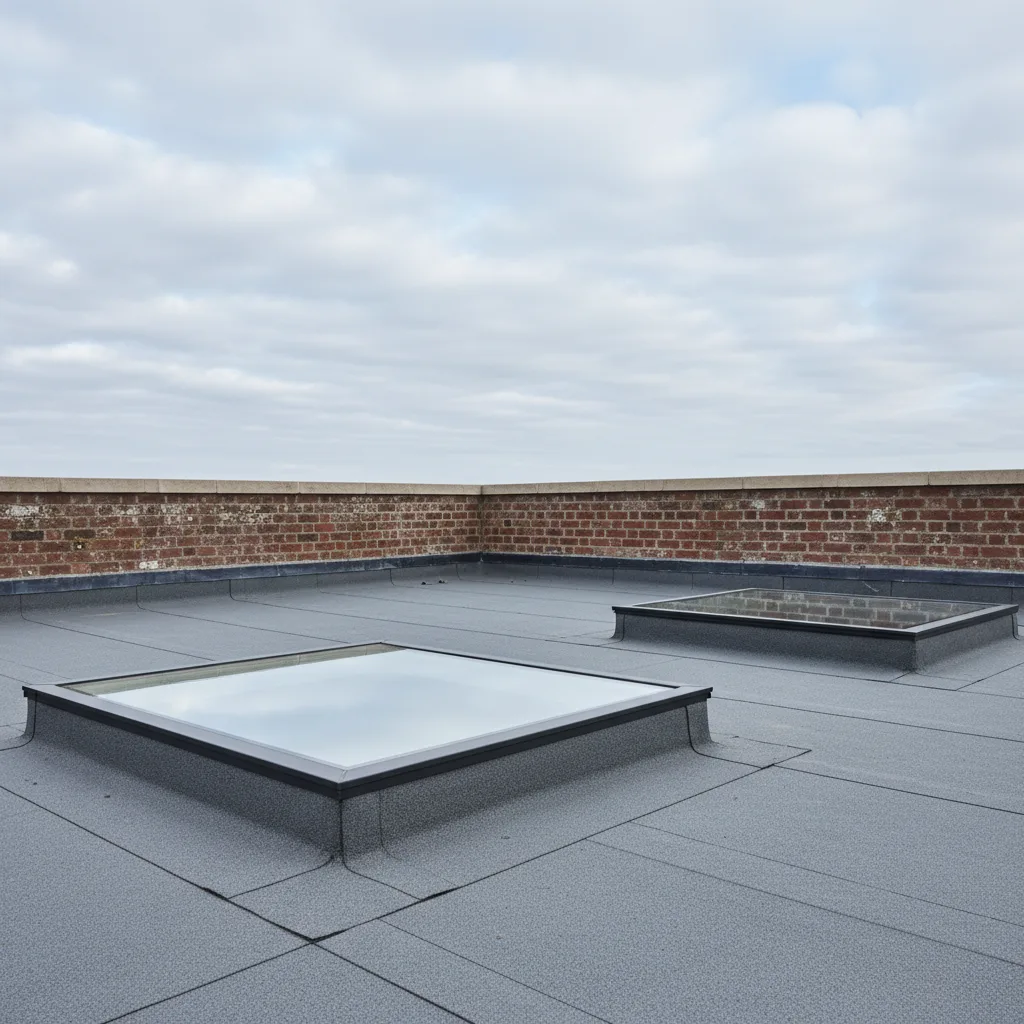
Water appearing around a lantern in cold weather without rain is condensation, not ingress. An uninsulated timber kerb runs cold on its internal face, and because it sits at the top of a warm humid room, moisture collects there.
It looks exactly like a leak and no amount of work on the roof will fix it. The remedy is insulating the kerb and sealing the vapour control layer to the frame.
The diagnostic is timing. After rain means water from outside. In cold weather regardless of rain means moisture from inside.
How to avoid the whole category
Get the falls right first. Build the kerb square, level and insulated. Survey to the finished kerb rather than ordering from a drawing. Dress the membrane into the unit in the correct sequence.
More on Roof Lantern Installation
Ready to bring the daylight in?
Tell us about your project and we’ll send a clear, fixed written quote, no pressure, no surprises.
- Fixed written price before any work starts
- No pressure, no obligation, no sales calls
- Flexible survey times that suit you
- A reply within one working day