Rooflight and skylight installation in Harwich
A historic port with a designated old town, and the most exposed position in the county.
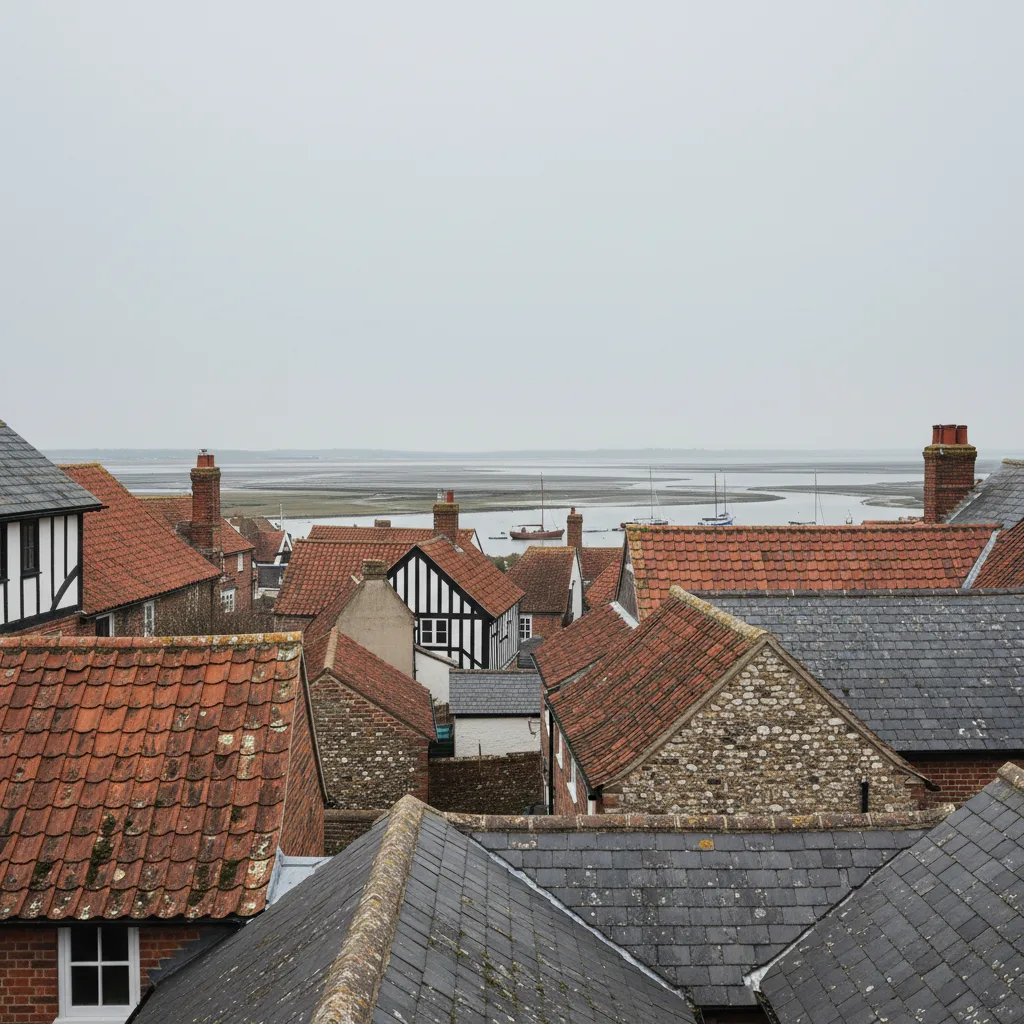
Rooflights we install in Harwich
Every job is surveyed first. The right unit depends on the roof you have, not on what we would rather sell.
 Roof Lantern Installation
Read more
 Flat Roof Rooflight Installation
Read more
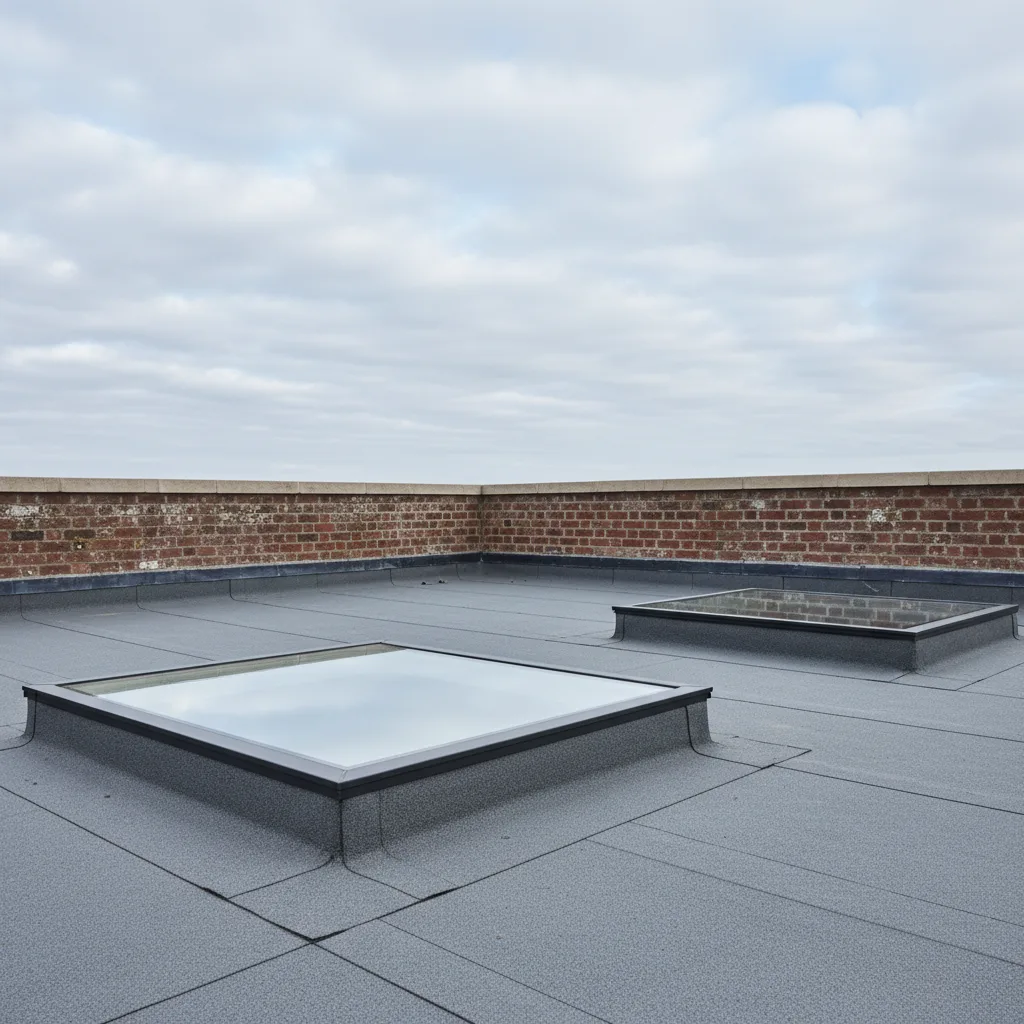 Roof Window Installation
Read more
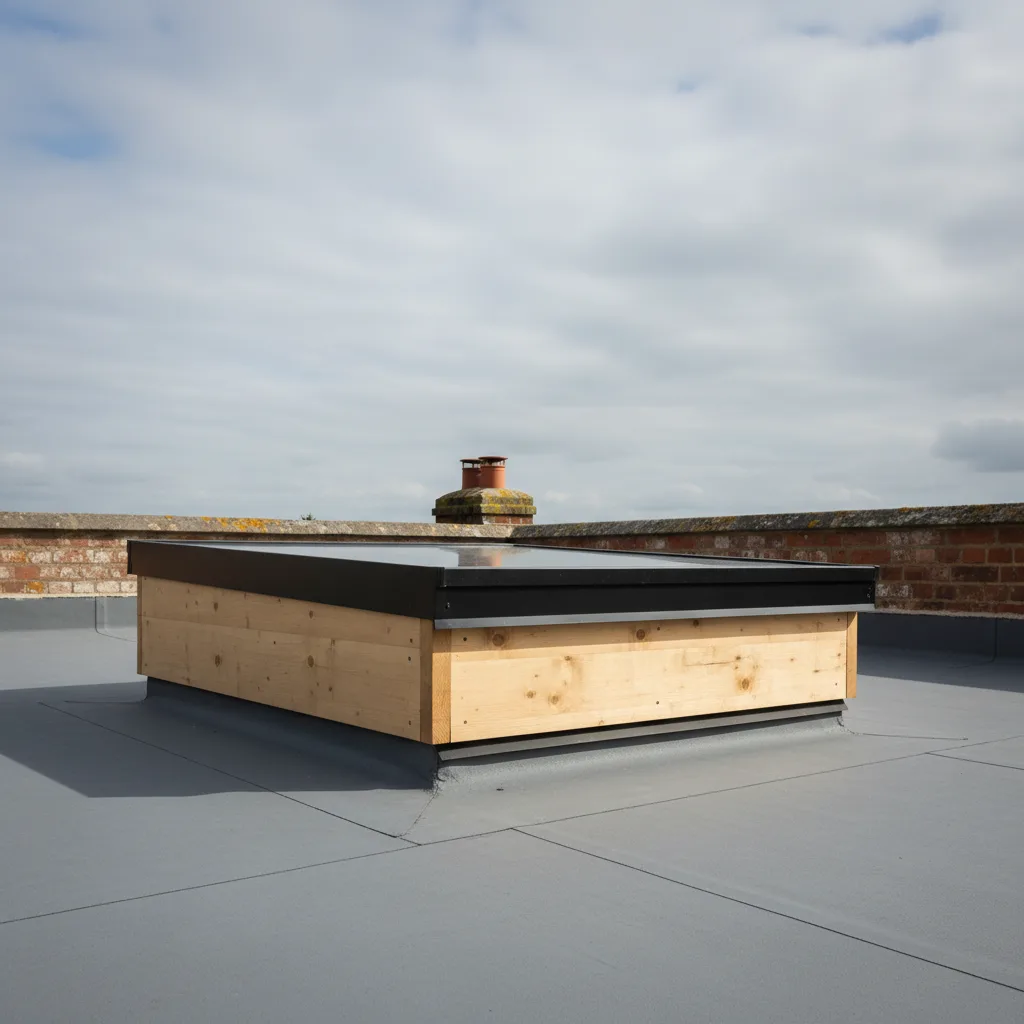 VELUX Window Installation
Read more
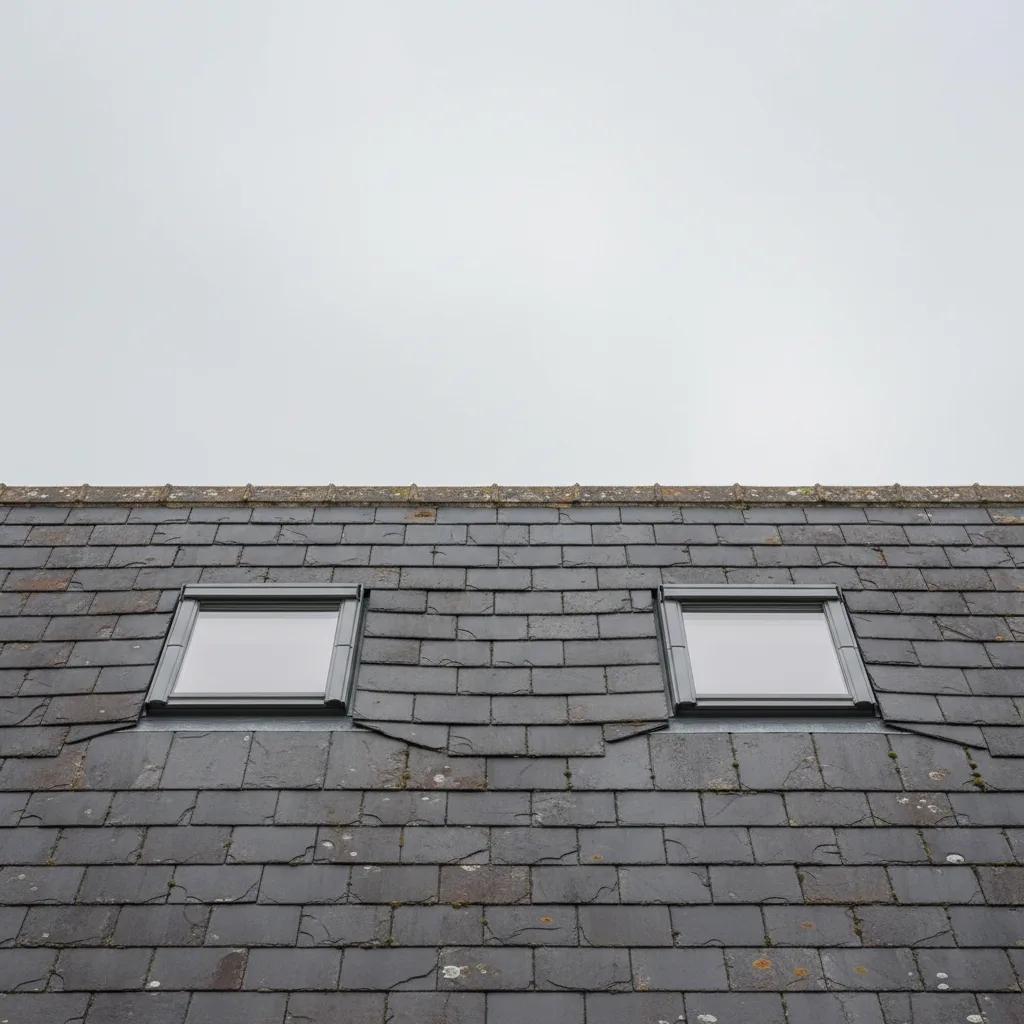 Electric and Opening Rooflights
Read more
 Energy Efficient Rooflights
Read more
 Replacing a Failed or Misted Rooflight
Read more
 Walk-On Rooflight Installation
Read more
 Conservation Rooflight Installation
Read more
 Sun Tunnel Installation
Read more
Harwich is a working port with a genuinely historic old town at its northern end, and it combines the two hardest constraints we deal with: conservation sensitivity and full marine exposure.
The old town

Tightly packed historic streets, listed buildings, and a conservation area over the core. Roofs are small, steep and closely overlooked, often in clay pantile.
A flush conservation rooflight is the only product likely to be agreed here, and on a listed building it is a listed building consent question, which is a different and slower process than permitted development. Access is genuinely difficult in the old streets and it belongs in the quotation.
Exposure

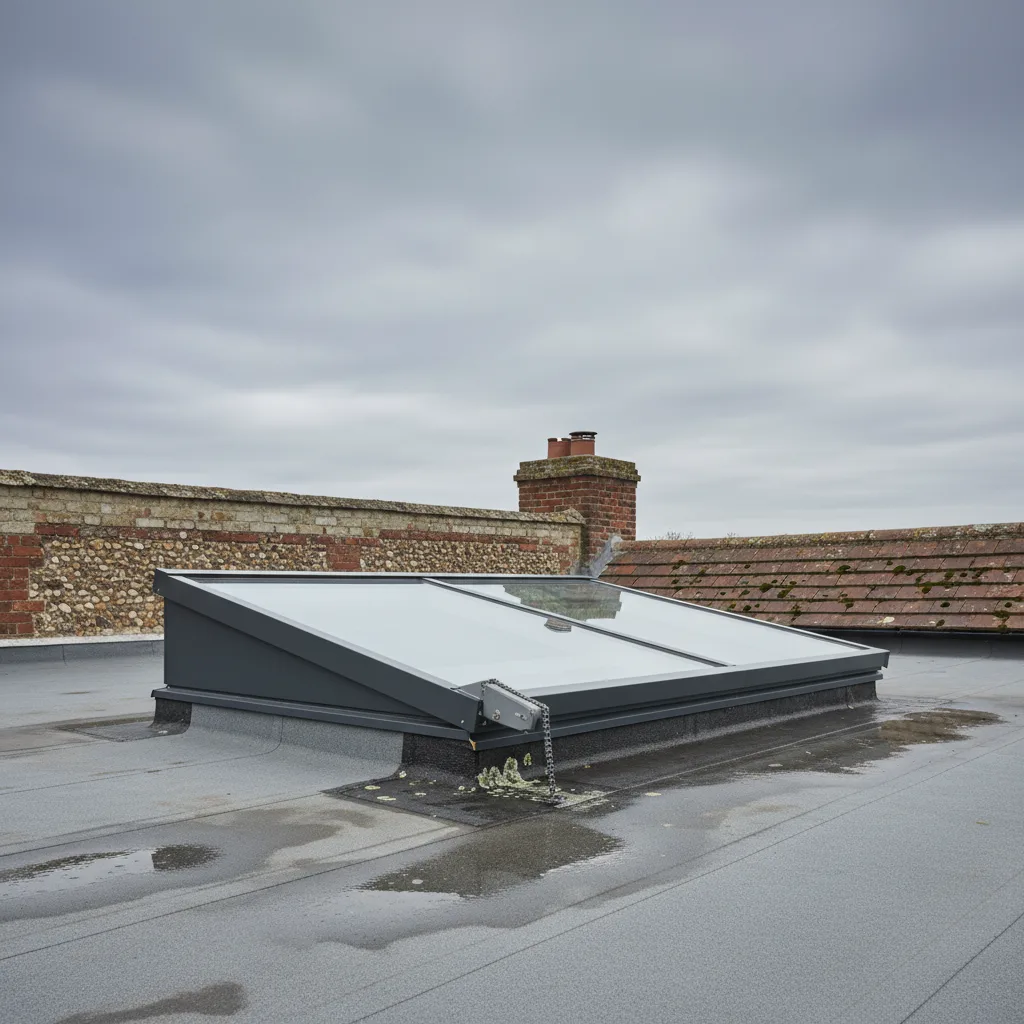
Harwich sits on a headland between the Stour and the Orwell with the North Sea beyond. Marine grade coatings, stainless fixings, and weathering details executed properly rather than adequately. Wind driven rain here tests everything.
The rest of the town

Beyond the old town and towards Dovercourt the stock is more ordinary: Victorian terraces, inter-war and post-war housing, and the usual rooflight and roof window work.
Skylight and rooflight work we cover in Harwich

Roof lanterns, flat roof rooflights, roof windows, VELUX replacements, conservation units and sun tunnels, all surveyed before they are quoted. We also work in Dovercourt, Walton-on-the-Naze and Manningtree.
Two towns, one name

Harwich divides sharply for our purposes. There is the old town on the peninsula, tight, historic and heavily designated, with some of the best surviving Georgian and earlier fabric on the Essex coast. And there is the twentieth century housing that runs back from it toward Dovercourt and Parkeston.
Both are exposed. The peninsula is one of the most weather beaten inhabited positions in the county, and that shapes specification as much as the designation does.
The old town
Conservation area coverage over most of it and a high concentration of listed buildings along Church Street, King’s Head Street and the lanes off them.
Listed building consent is required for a rooflight on a listed building on any slope, visible or not, because the listing covers the whole building inside and out. There is no small works threshold. In the conservation area, permitted development for rooflights on a house survives unless an Article 4 direction removes it, which in a town centre of this quality is worth confirming with the council rather than assuming.
What gets approved is a conservation rooflight: low profile so it sits close to the plane of the covering, upright rather than wide, central glazing bar, matt black. Include the manufacturer’s section drawing with the application, because how far the unit stands proud of the covering is the question that actually decides it.
The buildings themselves are demanding. Steep pitches, historic timber that is frequently irregular and sometimes significant in its own right, clay plain tile and slate coverings, and in the oldest properties no underlay at all. Modern weathering assumes a membrane to lap into; where there is none the detail is built around the opening instead. That is normal on a building of this age, it takes longer, and it belongs in the quotation rather than in a conversation on the day.
Exposure on the peninsula
Harwich takes weather from three sides and the specification should reflect it rather than repeat what would be fitted inland.
Stainless fixings throughout. Salt air corrodes plated fixings within a few years here, and a failed fixing is a loose flashing.
A high durability exterior finish. Aluminium clad timber suits exposed positions particularly well. On a steel conservation unit, check the powder coating every few years, because exposed steel corrodes fast in this air.
Weathering sized for driving rain. Wind driven water is pushed under a covering rather than running down it, so the underlay collar and the flashing kit carry almost the entire burden. A universal kit adequate in a sheltered position will let water past here within a couple of winters, and it is exactly where a low quotation saves money.
Wind loading checked against the site. Not assumed from a catalogue, particularly on larger units and anything that opens, because an open sash is a sail.
A rain sensor on a motorised unit earns its keep here more than almost anywhere we work.
The later housing
Away from the old town the work is ordinary. Concrete interlocking tiles, pitches around 30 to 35 degrees, cut roofs on the earlier properties and trussed rafters from the 1970s onward, off street parking on most roads and space to stand a tower.
Cut against trussed is the distinction that decides the price. A photograph looking up inside the loft answers it: rafters with a purlin and clear space between is cut, and a wide opening is ordinary carpentry; triangular frames with diagonal webs joined by flat steel plates is trussed, and width is limited to the 600mm spacing unless a designed trimmer is installed.
Flats
Worth stating plainly because Harwich has a good number of subdivided older properties. Flats and maisonettes have no permitted development rights at all, listed or not, in a conservation area or not. Any rooflight in a flat needs a planning application, and in practice it needs the freeholder’s consent as well. That is not a reason it cannot be done; it is a reason to start with the permissions rather than the product.
Access and travel
Tight in the old town: narrow streets, frontages directly onto the pavement, limited parking, and in places no side access to the rear. Scaffold on the highway needs a licence and time to arrange.
We cover Harwich from Colchester and plan it as full days rather than short visits, which suits larger jobs and multiple units better than a single small item. Access is a fixed cost shared across everything done on the same visit, so if there is more than one thing to do, say so at the enquiry stage.
| Local factor | In Harwich |
|---|---|
| Planning authority | Tendring District Council |
| Conservation position | An extensive conservation area over the old town |
| Typical roof covering | Clay pantile and slate |
| Roof structure | Cut roofs over timber frames |
| Exposure | Fully exposed coastal. Marine grade coating is not optional |
| Most common job here | Conservation rooflights and replacement |
Making an application that works

Conservation officers in a town like this see a great many vague applications. A precise one gets a faster and better answer, and most of the delay people experience is caused by material that was missing rather than by a proposal that was wrong.
Name the product. Manufacturer, model and size, not a description of a rooflight in general terms.
Include the section drawing. The manufacturer’s detail showing exactly how far the unit stands above the plane of the covering. This answers the question the officer actually cares about, and its absence is the single most common reason an application sits.
Show it on an elevation. Not only on a plan. Describe honestly what is visible from where. A rear slope screened by the ridge from every public vantage point is a much easier case than the same unit at the front, and saying so plainly helps rather than hurts.
Frame a replacement correctly. Where an existing modern rooflight or plastic dome is being swapped for a conservation unit, say so explicitly. That is a heritage improvement.
We prepare this material as part of the job: the survey, the product drawing and a clear written description. It is not a planning consultancy and we do not charge as one, but it covers most domestic applications in the old town.
Timescales
Consent is the long part, not the fitting. A listed building consent application runs to months, and a conservation rooflight in a non standard size is manufactured to order with several weeks on top. Start the application first, order the unit second, and book the fitting to the delivery date rather than hoping.
Specifying for the peninsula
Beyond the consent question, the specification here should reflect one of the most exposed positions in Essex rather than repeat what would be fitted five miles inland.
Stainless fixings throughout. Salt air corrodes plated fixings within a few years, and once a fixing has gone the flashing it held is loose. The cost difference is trivial and it cannot be corrected later without opening the work up.
A high durability exterior finish. Aluminium clad timber suits exposed positions particularly well, because the cladding takes the weather and the timber behind it stays dry. On a steel conservation unit, check the powder coating every few years.
Weathering sized for driving rain. Wind driven water is pushed under a covering rather than running down it, so the underlay collar and the flashing kit carry almost the entire burden. A universal kit adequate in a sheltered position will let water past here within a couple of winters.
Wind loading checked against the site, particularly on larger units and anything that opens, because an open sash is a sail.
Sealed unit life
Fifteen to twenty five years in an ordinary position, and toward the shorter end here. That changes one decision: where a frame is sound and under fifteen years old, replacing the glass alone can make sense, but over twenty years replacing the whole window is usually better value, because most of the cost is getting to the window rather than the component.
Any timber decay means replacing the window rather than the glass, always.
Maintenance
Clean the gasket annually so the sash seats properly. Rinse salt deposits off exposed finishes once or twice a year. Check fixings and flashing after storms for lifted edges or rust staining. Cycle motorised units fully a few times a year including in winter.
Blinds and shading
Worth deciding before the unit is ordered, because it affects which product to choose.
Mass market roof windows have a full accessory range of blinds that clip to the frame: blackout, pleated, venetian and external awnings. They fit exactly and cost far less than a made to measure blind fitted to a reveal. Steel conservation units, the sort required on listed and Article 4 properties in the old town, generally do not, so blinds become a separate made to measure item.
Internal blinds control light and privacy and do relatively little about heat, because the sun has already passed through the glass before the blind stops it. An external awning intercepts heat outside the glass and is far more effective in summer, though on this peninsula an external blind needs to be robust and properly fixed because of the wind.
Where a blackout blind is wanted over a bedroom, order it with the window.
What to send us
A photograph of the roof, one of the frontage showing the street and the access, and the address so we can check the listing and conservation position ourselves. For a replacement, photograph the data plate on the sash rather than measuring.
Tell us whether there is side access to the rear. In the old town that single fact changes the shape of the quotation more than the choice of unit does, because it decides whether scaffold and materials come down a side passage or through the house, and whether a highway licence is needed.
If the property is a flat, say so at the outset. Flats have no permitted development rights at all, so any rooflight needs a planning application and in practice the freeholder’s consent, and that is the first thing to settle rather than the last.
Asked by people in Harwich
Why is Harwich one of the harder places you work?
It combines the two hardest constraints in one town. The old town at the northern end is densely historic with a great deal of listed and conservation stock, and the whole place is fully exposed to the North Sea. Either alone is manageable; together they narrow the options considerably.
What does that mean for a listed building here?
Listed building consent is required for a rooflight, it covers the interior as well as the exterior, and carrying out the work without it is a criminal offence rather than a planning breach. The sequence is consent first, order second, always.
How exposed is it really?
Enough that coastal grade coatings, compatible fixings and careful flashing are not optional. Salt reaches the whole town, and a specification that would be adequate at Colchester will not last as long here.
Is the access difficult in the old town?
Narrow streets, limited scaffold positions, and in places a pavement licence needed for a scaffold, which takes lead time. We establish the access position at survey because it frequently decides the programme.
More areas we cover
Ready to bring the daylight in?
Tell us about your project and we’ll send a clear, fixed written quote, no pressure, no surprises.
- Fixed written price before any work starts
- No pressure, no obligation, no sales calls
- Flexible survey times that suit you
- A reply within one working day