Aluminium against timber lanterns near the coast
Two structural materials with different stiffness, different thermal behaviour and very different maintenance on a salt coast.
Part of our Roof Lantern Installation guide
Aluminium and timber are not two finishes on the same product. They are different structural materials, and on the Essex coast the difference matters more than it does inland.
Stiffness and sightlines

Aluminium is stiffer for a given section, so an aluminium lantern achieves the same structural performance with a slimmer bar. That is the whole argument for it visually: more glass, less frame, a lighter structure to look at.
Timber needs more section to do the same job. A timber lantern reads as heavier, which is not always wrong. On a period property, a Victorian rear addition or a barn conversion, a slim aluminium bar can look conspicuously modern and a timber one can look right.
Thermal behaviour
Aluminium conducts heat well, which is a problem in a window frame. Modern aluminium lanterns solve it with a thermal break: a low conductivity barrier separating the inner and outer parts of the frame.
A lantern without a thermal break will run cold at the frame in winter and condensation will form there first. It is worth asking directly whether a quoted unit is thermally broken, because it is not always stated.
Timber is a poor conductor to begin with, so it has no equivalent weakness.
The coast

This is where the answer changes for Mersea, Brightlingsea, Clacton, Frinton, Walton and Harwich.
Aluminium does not corrode in the way steel does, but the powder coat is what protects the surface finish, and a standard architectural coating exposed to salt will chalk within a few years: the surface goes matt and powdery and the colour lightens. A marine grade coating specification resists that, and it costs a little more at order. Fixings should be stainless rather than plated.
Timber on a coast is a maintenance commitment rather than a material problem. Modern factory finished timber lanterns are well protected, but the finish has a life and salt shortens it. Recoating a lantern at height is not a small job.
The practical recommendation
Within sight of the water, aluminium with a marine grade coating and stainless fixings, unless the building genuinely calls for timber. Inland, at Braintree, Witham or Halstead, standard architectural coating on aluminium is entirely adequate and specifying marine grade is spending money for nothing.
That judgement is made at survey rather than from a postcode, because exposure changes over a few hundred metres near an estuary.
Two ways to build a lantern

Roof lanterns come in two constructions, and on the Essex coast the choice matters more than it does inland.
Aluminium. Thermally broken extruded profiles, powder coated, with slim sightlines and long spans. The modern default and what most manufacturers now offer.
Timber, or timber and aluminium composite. A timber structure internally, frequently clad externally in aluminium so the weather never reaches the wood. Warmer to look at from inside and heavier in section.
Both work. The coastal question is about what happens to each over twenty five years in salt air.
What salt air actually does
Along the Blackwater and Stour estuaries, on Mersea, at Brightlingsea, Harwich, Walton and Tollesbury, salt is in the air most days of the year.
It does three things.
It attacks coatings where they are already damaged. A chip in a powder coat is an entry point, and salt accelerates what follows.
It corrodes exposed metal. Steel rapidly, aluminium more slowly and differently.
It attacks fixings. Plated fixings corrode within a few years in salt air, and once a fixing has failed whatever it held is loose.
How aluminium behaves

Well, and this is its strongest argument on the coast.
Aluminium forms its own protective oxide layer. Where a powder coat is chipped, the exposed metal dulls and does not rot: the damage is cosmetic rather than progressive.
That is fundamentally different from steel, which corrodes and where rust spreads under the surrounding coating and lifts it progressively from the damaged point outward.
What aluminium does suffer in marine conditions is pitting corrosion, a surface pocking that develops where salt sits on unprotected metal. It is slow, it is cosmetic in the first instance, and it is largely prevented by an intact coating.
Specify a higher durability or marine grade powder coating where the manufacturer offers one as a coastal option. It is a modest premium at the point of order and it may be a condition of the warranty on an exposed site.
How timber behaves
Also well, provided it never gets wet.
A timber core clad externally in aluminium is protected: the cladding takes the weather and the timber stays dry behind it. In that arrangement the timber is doing the insulating and the structural work while the aluminium does the weathering, and it is a good combination anywhere.
What is vulnerable is exposed timber. Where a lantern has visible external timber, in a coastal position it needs a maintained coating and it will need recoating on a cycle. Salt laden wind driven rain finds any breach in a finish quickly.
Internally, timber is unaffected by salt and is a genuinely nicer material to look at, which is the reason people choose it.
The fixings, which matter more than the frame

Stainless steel throughout rather than plated. Without exception, anywhere near the coast.
Plated fixings corrode within a few years in salt air. Rust staining runs down the roof, the fixing loses its grip, and whatever it was holding, a flashing, a trim, a bracket, becomes loose.
The cost difference is trivial and it cannot be corrected later without opening the work up.
This applies to everything: the lantern fixings, the kerb fixings, the flashing fixings and anything holding the covering down around the opening.
| Powder coated aluminium | Timber, or timber with an aluminium capping | |
|---|---|---|
| Behaviour in salt air | Good, provided the coating is a marine grade specification | The timber is fine; the exposed ironmongery is what suffers |
| Finish to specify on the coast | Marine grade coating, not standard architectural | Factory finish, with stainless fixings and ironmongery |
| Maintenance | Wash down. No recoating within the warranty period | Periodic recoating, more often on an exposed elevation |
| Slimmest sightlines | Yes, aluminium carries the load in a thinner section | Thicker sections for the same span |
| Suits a conservation setting | Only in a dark, matt, slim profile | Often the easier one to get accepted |
| Fixings | Stainless, always, within about a mile of the water | Stainless, always, within about a mile of the water |
Wind, which is the other coastal factor
A lantern is a raised structure on a flat roof in an exposed position, and wind loading should be checked against the site rather than assumed from a catalogue.
That matters most on two things.
The fixing of the lantern to the kerb, which is resisting uplift as well as carrying weight.
Any opening vent, where an open panel is a sail. The actuator and the stay have to hold it in gusts that inland properties never see, and a rain sensor earns its keep more here than anywhere because weather arrives quickly off the water.
Where external blinds or awnings are being considered, they need to retract automatically above a set wind speed. On a coastal roof that is essential rather than optional.
Driving rain

What matters on this coast is not how much rain falls but how it arrives.
Wind driven water is pushed against and under details rather than running down them, which puts more of the weathering burden on the kerb detail: the covering dressed up the full height and terminated properly before the lantern sits on it.
A termination that would be adequate in a sheltered inland position can let water past on an exposed estuary roof, and it is precisely the kind of detail that is invisible once finished.
What we would specify on the coast
An aluminium lantern with a thermally broken profile, in a higher durability powder coat where the manufacturer offers one, in a dark colour that hides weathering.
Stainless fixings throughout.
A generous kerb, at least 150mm above the finished surface with the deck falling away from it, insulated on the outer face, with the covering dressed up the full height and terminated properly.
Solar control glass on any south or west facing aspect, and an opening vent at the ridge with a rain sensor.
Wind loading checked against the site rather than assumed.
Maintenance that actually extends its life

Rinse the frame with fresh water once or twice a year to remove salt deposits. That single job does more for the life of a coastal powder coat than anything else, and it takes minutes.
Check the coating annually rather than occasionally, and touch up any chip promptly. A five minute job when spotted, a considerably larger one two years later.
Check the fixings and the kerb detail after storms for lifted edges or rust staining, which indicates a plated fixing that should have been stainless.
And clear the perimeter of the kerb and the internal drainage channels within the glazing bars, because debris there produces water appearing inside that gets mistaken for a leak.
What the coastal environment does to each
Salt laden air is the variable, and it attacks the two materials by different routes.
Aluminium does not rust, but salt attacks the interface between the powder coating and the metal. Once it gets a foothold at a cut edge, a fixing hole or a scratch, it works underneath the film and lifts it. The failure is visible as blistering and then flaking, and once it starts it spreads.
That is why marine grade specifications exist: a more thorough pretreatment of the aluminium and frequently a two coat system. Within reach of the estuaries and the coast they are worth the difference, and the prevailing wind carries salt further inland than people assume.
Timber does not care about salt chemically. What it cares about is the exposure that comes with the same locations: driving rain, constant wind, and more ultraviolet on an open coastal site than in a sheltered village.
The finish breaks down faster, so the redecoration interval shortens. And on a lantern that means working at height above a room, on a cycle, for the life of the building.
The hybrid, which is what most people end up with
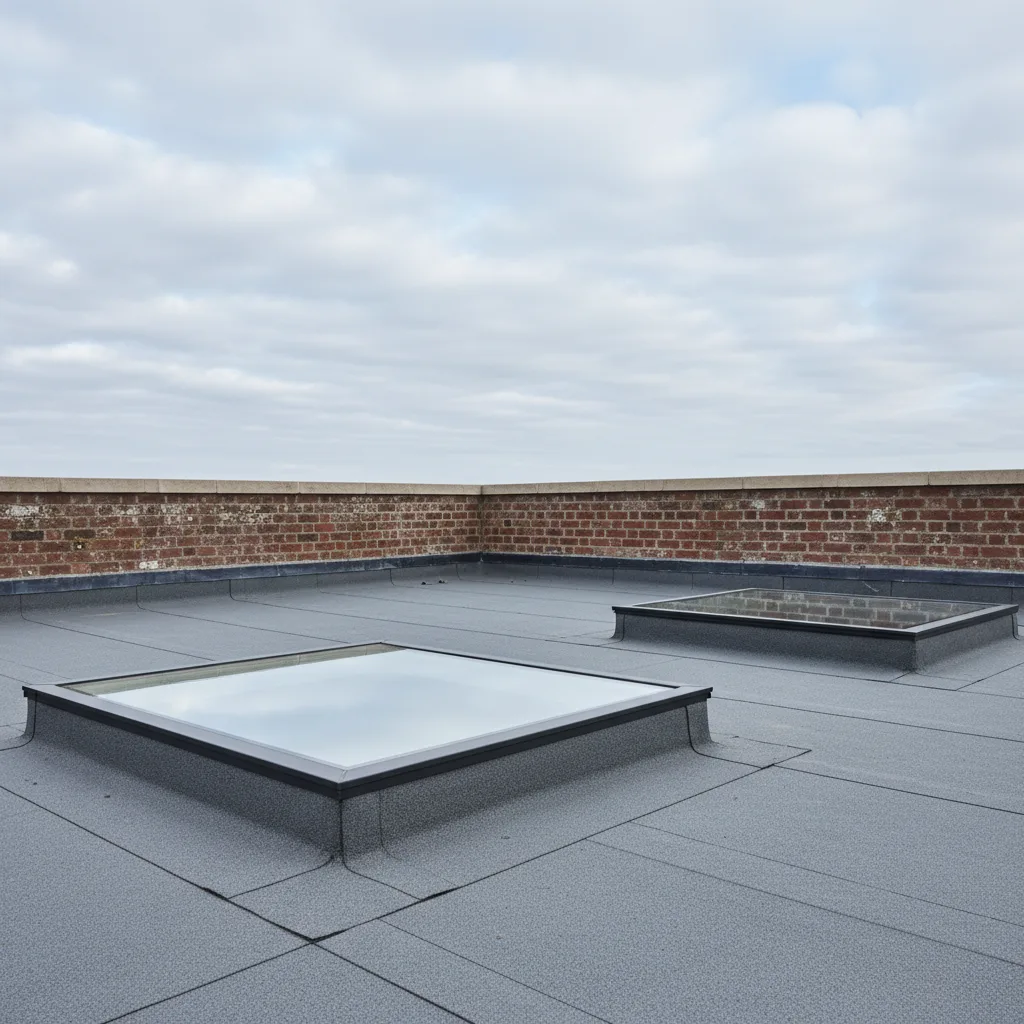
A timber structure internally with aluminium capping externally.
The timber gives the internal warmth and the appearance that suits a period building. The aluminium takes the weather, so there is no external redecoration.
Near the coast, specify the capping to a coastal grade. The internal timber is protected and only needs the maintenance any internal joinery needs.
Fixings and dissimilar metals
Worth naming because it causes failures that look like poor manufacture.
Dissimilar metals in a wet joint set up galvanic corrosion, and in salt air that process accelerates markedly. Fixings, brackets and flashings need to be compatible with the frame material rather than merely available.
Stainless fixings into aluminium, correctly isolated, is normal practice. Mild steel screws into an aluminium lantern near the water will streak and fail.
Glass and coatings
Salt film on glass is more tenacious than ordinary grime, and self cleaning coatings work less well against it because they rely on organic breakdown.
So expect to clean more often, and specify a pitch that sheds water properly, because a shallow lantern that holds water will hold salt deposits with it.
The recommendation
Coastal grade aluminium externally, whether the lantern is aluminium throughout or timber with capping. Compatible fixings. A pitch that sheds. And a washing regime that removes salt before it works, which is the single most effective thing an owner can do.
More on Roof Lantern Installation
Ready to bring the daylight in?
Tell us about your project and we’ll send a clear, fixed written quote, no pressure, no surprises.
- Fixed written price before any work starts
- No pressure, no obligation, no sales calls
- Flexible survey times that suit you
- A reply within one working day