Can you walk on a flat rooflight?
Only if it is a walk-on unit. A standard rooflight is not one, and the difference is not visible.
Part of our Walk-On Rooflight Installation guide
Only if it was specified as a walk-on unit. A standard flat rooflight is not, and it is not a smaller version of one.
Why not
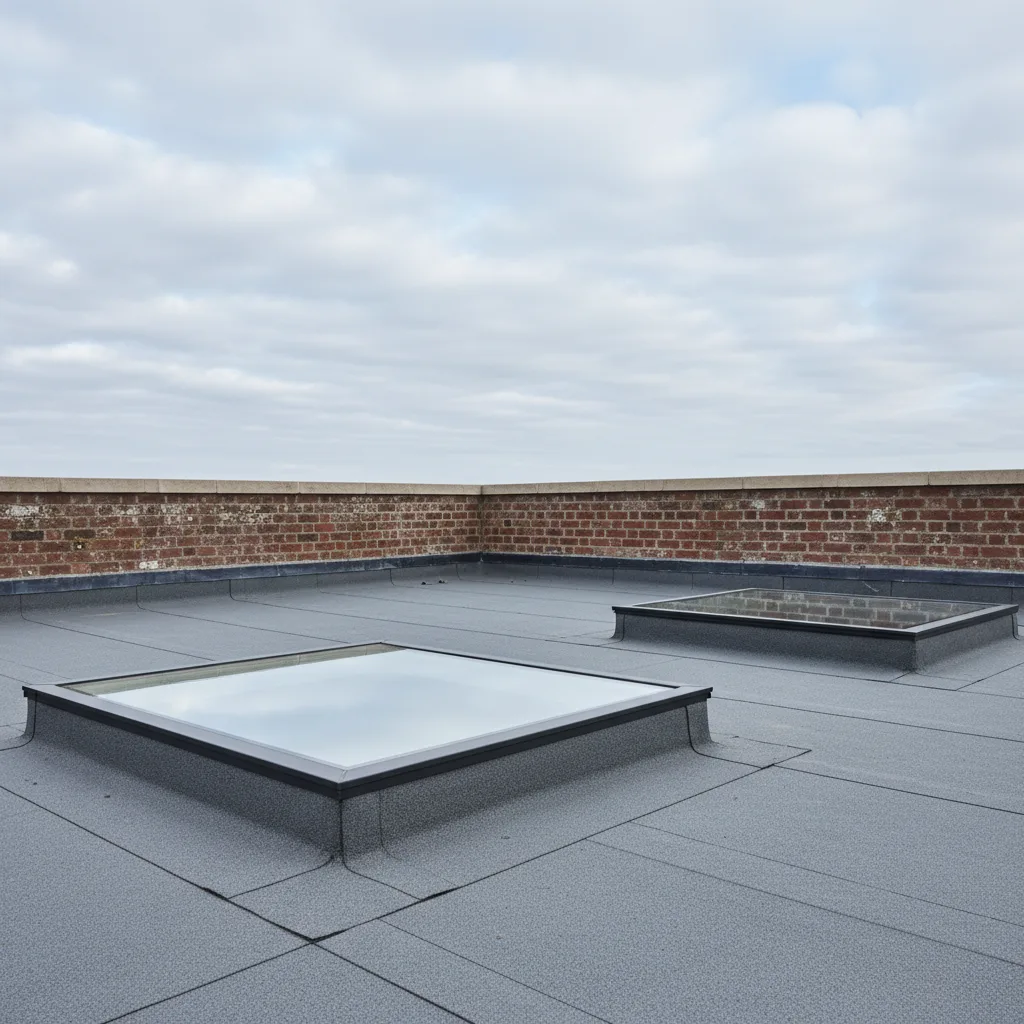
A standard unit is glazed for wind and snow, which are loads spread across the whole pane. A person is a concentrated point load, and glass is far more sensitive to that.
A walk-on unit is a laminated stack of several toughened plies, 40mm to 60mm thick, built so that if the top ply breaks the ones beneath still carry the load. A standard unit at around 28mm has no such redundancy.
How to tell
Not reliably by looking, which is the danger.
Indicators: a walk-on unit is visibly thicker at the edge, the top surface almost always has a frit or etched pattern for grip, and it sits flush with the surrounding surface rather than proud on a kerb.
If you do not know, assume it is not. The consequence of being wrong is severe.
What usually happens
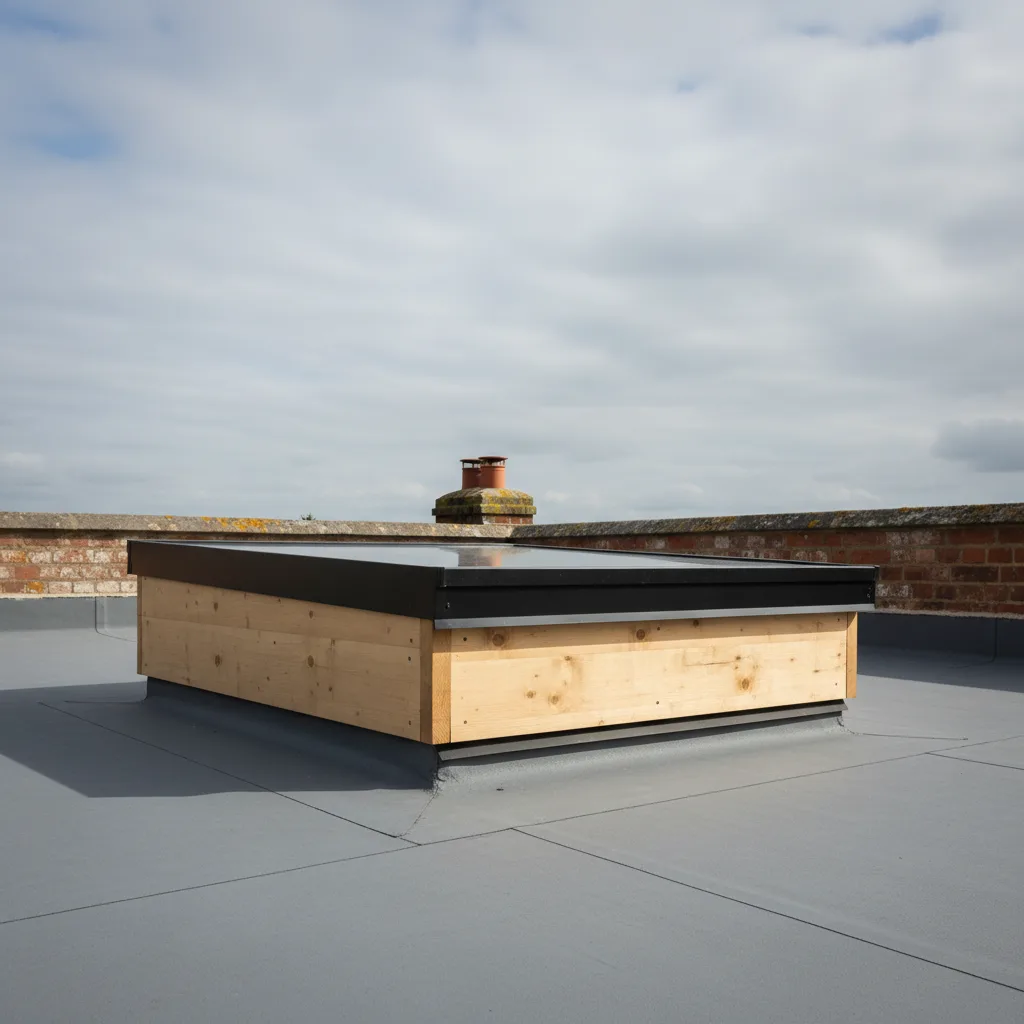
Usually nothing, which is exactly why people keep doing it. The failure, when it comes, is through the toughened outer pane, and the laminated inner will normally hold together and stop somebody going into the room.
That is a safety feature working as a last resort rather than a designed outcome.
Cleaning
From the roof beside it, not from on it. A water fed pole from the ground reaches most single storey units, and where one genuinely cannot be reached, self cleaning glass specified at order is the answer.
If you need to walk on it

Say so at survey. It changes the glass, the frame and the structure beneath, and it cannot be uprated afterwards.
Only if it is specified for it
There are three distinct specifications and they are not interchangeable. Knowing which one you have, or need, is the whole of this question.
Standard flat rooflight

Designed to keep weather out and let light in. It is not designed to carry a person and you should not stand on it, even briefly, even to clean gutters.
Most domestic flat rooflights are this. They are perfectly safe as rooflights and they are not a floor.
Non fragile
A safety specification rather than a traffic one. It means a person falling onto the unit will not go through it, which is a life safety requirement on any roof where somebody might work.
It is a much lower and much cheaper specification than walk on, and it is what most flat roof rooflights should be, particularly on a roof that gets visited for maintenance.
Non fragile does not mean you can use it as a step. It means it will not kill you if you fall on it.
Walk on

Designed for foot traffic: a laminated build up of three or more toughened plies bonded with structural interlayers, over a sealed cavity, with an anti slip treatment on the top surface.
This is what goes into a terrace over habitable space, and it is the most expensive rooflight per square metre in this trade because of the glass and the structure rather than the fitting.
How to tell what you have
Look for the manufacturer’s specification, not the appearance. A thick pane looks reassuring and tells you nothing.
A walk on unit will have a visible anti slip pattern on the top surface, either a fired ceramic frit or an etched texture, and it will read as slightly obscured from below. A clear pane with no surface texture is not a walk on unit.
Where you cannot establish it in writing, treat it as not walk on. We will not certify an existing unit as trafficable because it looks robust.
Which you actually need

Ask what the roof is for. A rooflight in a flat roof that is not a terrace, not a route and not accessible needs to be non fragile, and that costs a fraction of walk on glazing.
A roof visited twice a year for gutter clearance does not need a floor. It needs a non fragile unit and a safe way to work around it.
A terrace over habitable space with no other route for daylight is where walk on glazing earns its cost, and there it is worth every penny.
What we will not do
Fit a standard rooflight where somebody intends to walk on it. The specification is either there in writing from the manufacturer or it is not, and no amount of experience substitutes for it.
Only if it is a walk on unit

A standard flat rooflight is designed for wind, snow and its own weight. Those are distributed loads spread evenly across the pane.
A person is a point load concentrated on two feet, and it is a completely different calculation. The datasheet figure in kilonewtons per square metre does not answer the question.
The non fragile confusion
This is the misunderstanding that causes accidents.
Non fragile is a fall protection classification. It means the unit will not let a body fall through in an accidental one off event, which protects a roofer who steps back onto it while working. It is tested as a one off impact, not as repeated use.
It is not a permission to use the unit as a floor. A non fragile rooflight walked on regularly will fail, and it will fail at the seal or the frame long before the glass does.
What a walk on unit is instead

A laminated assembly with a sacrificial walking surface, structural plies bonded with interlayers, and a design based on a calculated load case for the actual use. It sits on a structure designed for the imposed load and to a deflection limit.
It is a different product, not a heavier version of the same one.
If you only want to clean it
A water fed pole with a soft head reaches most domestic flat rooflights from the ground, which is how professional cleaners do it, and it costs a tiny fraction of a walk on unit.
Where the roof genuinely needs to be a usable surface, specify a walk on unit from the start rather than discovering the limitation later.
More on Walk-On Rooflight Installation
Ready to bring the daylight in?
Tell us about your project and we’ll send a clear, fixed written quote, no pressure, no surprises.
- Fixed written price before any work starts
- No pressure, no obligation, no sales calls
- Flexible survey times that suit you
- A reply within one working day