Do you remove the old rooflight and dispose of it?
Yes, included. Sealed units need a specialist route rather than ordinary glass recycling.
Part of our Replacing a Failed or Misted Rooflight guide
Yes, and it is included in the price rather than being an extra. You are not left with a broken rooflight in the garden.
Why sealed units are awkward

A double glazed unit is not ordinary glass. Two panes bonded to a metal or composite spacer with sealant and desiccant, toughened or laminated on top of that.
Ordinary container glass recycling cannot take it, and contaminating that stream with toughened or laminated glass causes real problems downstream. It goes through a specialist route.
What happens to it
Units go to a facility that separates the components. Glass is crushed and recycled into aggregate or new flat glass, aluminium spacers and frames are recovered as metal, timber frames go to wood recycling, and sealant and desiccant to appropriate disposal.
Duty of care

Waste from a job is our responsibility to dispose of correctly, and we hold the appropriate registration and use licensed facilities.
That matters more than it sounds. Waste fly-tipped by a contractor remains traceable to the property it came from, and householders have been pursued over it.
Old polycarbonate domes
Recyclable as plastic where facilities accept it, though yellowed and crazed material is usually beyond reuse.
Asbestos

Occasionally relevant on older flat roofs, where some historic coverings and boards contained it. If we suspect it we stop and it is tested before anything is disturbed. That is not work we take on ourselves.
If you want to keep it
Reclaimed cast iron conservation rooflights have genuine value. Say so before the day and we will take it out carefully rather than efficiently.
Yes, and it is on the quotation

Removal of the old unit and disposal of it is included as standard on any replacement we do, and it appears as a named line rather than being assumed.
That matters because it is one of the lines that gets left off a cheap quotation, and a sealed glazing unit is not something you can put in a household bin or leave for the council.
What comes out
The old sash and frame, the old flashing kit, any broken tiles or slates, the old internal lining where it is being replaced, and the packaging the new unit came in.
On a like for like replacement that is a surprising volume of material, most of it awkward: a sealed unit is heavy and sharp, and old flashings are usually lead or aluminium.
Where it goes

To a licensed waste facility, with the recyclable elements separated. Glass, metal flashings and timber all have routes that are not landfill.
Lead flashings, where an old installation has them, have a scrap value. If we remove lead from your roof we will tell you and account for it rather than quietly keeping it.
What we leave
Sound tiles or slates that were lifted and are reusable stay on site if you want them kept as spares, and on an older covering that is frequently worth doing because matching weathered tile is difficult.
Otherwise the site is swept, the loft is left tidy, and floor coverings and dust barriers are removed at the end of the job rather than the following week.
Where asbestos may be involved

Worth mentioning because it occurs on older flat roofs. Some mid century rooflight kerbs and surrounds used asbestos cement, and some older flat roof coverings contain it.
If we suspect it, work stops and it is tested rather than guessed at. Removal is a licensed activity and it is not something we do ourselves. It is rare, it is not a reason to avoid the job, and it is a reason we survey rather than pricing from a photograph.
Skips
On a single replacement, no skip is needed and the material goes with us. On a larger job, or where an extension is being built at the same time, a skip may be the sensible answer and we will say so rather than quietly adding one.
Where a skip has to stand on the highway, that needs a permit from the council, and it appears on the quotation as a named line.
What we leave behind

The site swept, the loft tidy, floor coverings and dust barriers removed at the end of the job rather than the following week, and the making good finished ready for decoration.
Sound tiles or slates that were lifted and are reusable stay on site if you want them kept as spares, and on an older covering that is frequently worth doing because matching weathered tile is difficult.
Where we remove lead flashings, we tell you and account for the scrap value rather than quietly keeping it.
And the paperwork: the specification, the Building Control certificate where the work was notifiable, and the workmanship guarantee, handed over on the day rather than posted later.
Yes, and it should be a line on the quotation
Removal and disposal is part of the job, and it is not free. Where a quotation does not mention it, establish whether it is included or whether you are expected to deal with a broken sealed unit and a timber frame afterwards.
What actually leaves the site
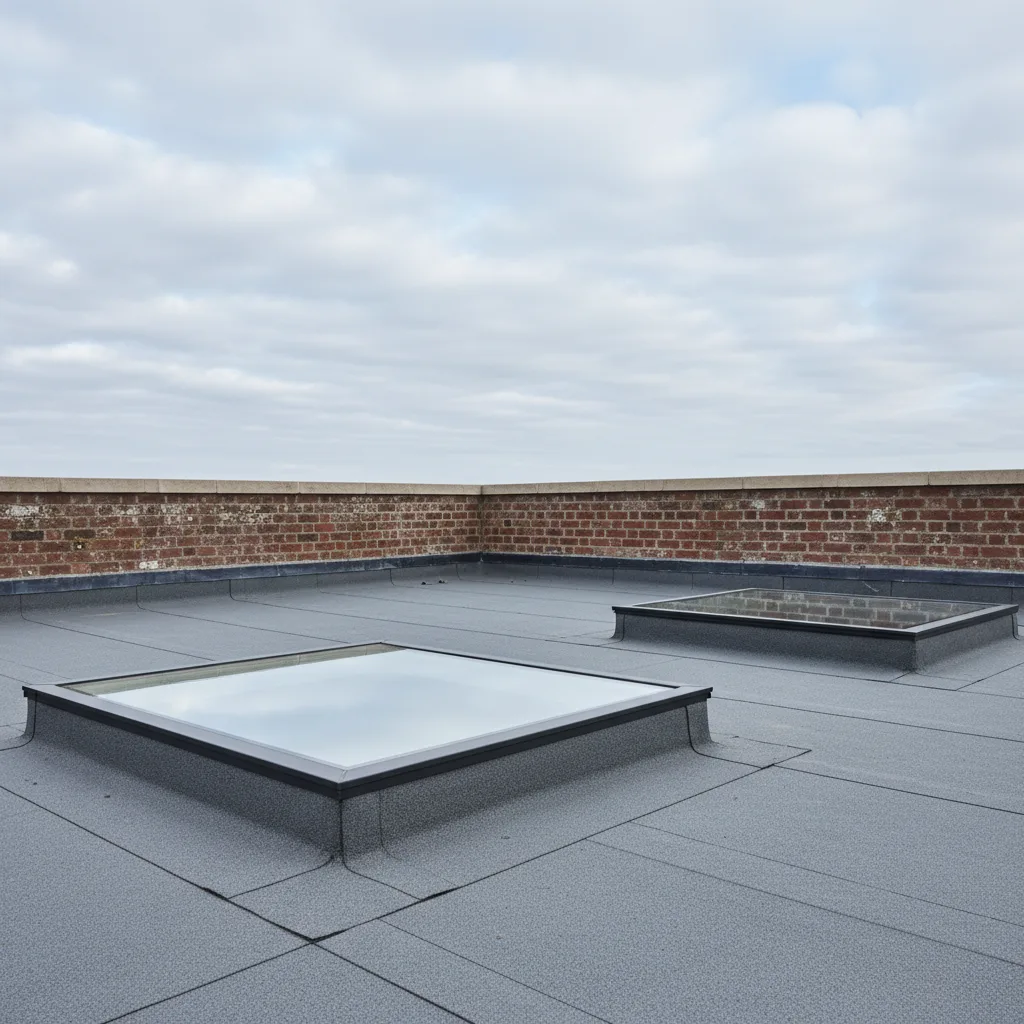
The sealed unit. Glass laminated or bonded with a metal spacer, sealant and desiccant. It is not ordinary glass and it does not go in a household recycling stream.
The frame, which may be timber, aluminium, PVCu or a combination, frequently with a coating.
The old flashing, which is metal and genuinely recyclable.
Broken covering, tiles or slates that did not survive removal.
Old insulation and plasterboard from the reveal.
The one that needs care
On a building of a certain age, material around a roof opening may contain asbestos, particularly in older flat roof build ups and some mid century boards. Where that is suspected, work stops and it is tested rather than removed.
Any competent contractor raises this rather than discovering it with a saw. It is worth mentioning at survey if the building dates from the relevant period.
What we do with it
Segregate what can be recycled, and take the rest to a licensed facility with the appropriate waste transfer documentation.
That documentation is a legal requirement rather than a courtesy, and it protects you as much as us. Waste from your property remains connected to you if it is fly tipped.
What we can leave
Sound tiles or slates that came off and were not needed, if you want a stock for future repairs. Worth keeping on an older roof where matching material is hard to source.
More on Replacing a Failed or Misted Rooflight
Ready to bring the daylight in?
Tell us about your project and we’ll send a clear, fixed written quote, no pressure, no surprises.
- Fixed written price before any work starts
- No pressure, no obligation, no sales calls
- Flexible survey times that suit you
- A reply within one working day