Specifying glass by which way the slope faces
The same rooflight wants different glass on a north slope and a south one, and specifying the same for both wastes money twice.
Part of our Energy Efficient Rooflights guide
Orientation should drive the glass specification, and it frequently does not: a quotation arrives with the same glass on every unit regardless of which way each faces.
That wastes money in two directions at once, paying for solar control where it is not needed and omitting it where it is.
South

The most sun, through the middle of the day when it is strongest. Solar control is not optional. On a large area consider external shading as well.
Also the best case for winter gain, so do not over-specify to the point of losing that entirely.
West
Often worse in practice than south. Late afternoon sun is low and arrives when the building has already been warming all day, so peak internal temperature is later and higher.
Solar control, and low angle sun is where internal blinds struggle most, which makes the glass specification matter more again.
East

Morning gain, shorter and cooler. Fine in a kitchen, where warming a cold room early is welcome. Difficult in a bedroom, where the issue is light rather than heat and blackout blinds are the answer.
Moderate solar control if at all.
North
No direct sun. Even, cool, glare free light all day, and it is the best light in the building for a studio, a kitchen work surface or anywhere colour matters.
No solar control at all. Specify for U-value alone and spend the saving elsewhere. Fitting solar control glass on a north facing rooflight makes a good room slightly darker and delivers nothing.
Mixed roofs

A lantern faces four ways at once, so the compromise is usually solar control throughout, weighted to the south facing panes. Some manufacturers will specify different glass on different faces, which is worth asking about on a large lantern.
The mistake this guide exists to prevent
Quotations frequently arrive with identical glazing on every rooflight in a project, regardless of which way each one faces. That wastes money in both directions at once: you pay for solar control where it delivers nothing, and you go without it where the room will be unusable in July.
Orientation is the single most useful thing to specify by, and it costs nothing to get right at the point of order. It costs a great deal afterwards, because the labour and the access to change glazing are the same as replacing the unit.
South, and the winter gain people forget

The most sun, arriving through the middle of the day when it is strongest and at a high angle in summer.
Solar control glass is not optional here. On anything above a modest size, a south facing rooflight without it produces a room that is uncomfortable on a July afternoon, and a large one produces a room nobody uses.
On a substantial area, consider external shading as well. An awning intercepts the sun outside the glass and stops the great majority of solar gain, where an internal blind stops it after it has already entered the room.
The compensation is that south facing glazing is genuinely useful in winter, when a low sun reaches deep into a room. That is real and it is why the answer is solar control glass rather than less glazing.
West, and why it is worse than south
Frequently worse in practice than south, and it is the orientation people underestimate.
Late afternoon sun is low, so it strikes at a shallow angle and penetrates further into a room. It also arrives at the end of the day, when the building has already been warming for hours, so it lands on a structure that has no capacity left to absorb it.
Low angle sun is also where internal blinds struggle most, because there is no angle at which a horizontal slat or a partial blind intercepts it without blocking the room entirely.
Specify solar control as standard, and on a kitchen or living space consider an opening vent at the highest point so the accumulated heat can leave overnight.
East, and the bedroom exception

Morning gain: shorter, cooler, and arriving when the building is at its coolest.
Over a kitchen or a breakfast room that is welcome, and standard glazing is usually fine. The heat arrives when there is capacity to absorb it and it is gone by midday.
Over a bedroom it is a different problem, and it is a light problem rather than a heat one. An east facing rooflight admits daylight from very early on a June morning, and the answer is a blackout blind with side channels rather than solar control glass.
Order the blind with the window: it clips into channels built into the sash, fits exactly, and costs far less than a made to measure blind fitted to a plaster reveal.
North, where more glass costs nothing
No direct sun at all, at any time of year.
What that gives you is even, cool, glare free daylight through the whole day, with no moving patch of brightness across a work surface and no need to close anything at a particular hour. It is the best working light in any building, which is why studios have always used north lights.
Specify for thermal performance alone: a good whole unit U-value, a warm edge spacer, and a properly insulated kerb or collar.
Do not specify solar control glass. There is no direct sun to control, and the coating reduces visible light transmission from around 75 to 80 percent down to 60 to 70. On a north facing rooflight it makes a good room slightly darker and delivers nothing at all.
This is one of the commonest wasted upgrades we see on quotations, and spotting it is a fair test of whether the glazing was specified or simply repeated across the schedule.
Flat roofs and lanterns, which have no orientation

A near horizontal pane faces straight up. It has no aspect to shelter behind, so it collects the midday sun directly whichever way the house faces.
Treat any substantial flat rooflight or lantern as if it were south facing: solar control glass as a baseline, and an opening vent at the highest point so heat can leave.
A lantern is slightly different again, because its sloping faces do have orientation. The south and west faces are doing the work, and where a manufacturer allows different glazing on different faces it is worth using, though on most domestic lanterns it is simpler and not much dearer to specify solar control throughout.
The two numbers to compare
The g value, or solar factor: the proportion of solar energy that gets through, on a scale of 0 to 1. A clear double glazed rooflight is around 0.6 to 0.7; a solar control unit 0.3 to 0.4. Lower stops more heat.
Light transmission: the proportion of visible light that gets through. Clear glazing around 75 to 80 percent, solar control around 60 to 70.
Read them together. A unit with a very low g value and poor light transmission is stopping heat by being dark, which defeats the purpose of putting glass in a roof. A good selective coating separates the two, which is why modern solar control glass does not darken a room the way older bronze tinted glass did.
Ask for both figures in writing on the quotation, alongside the whole unit U-value.
The other specifications worth matching to position

Acoustic laminate, where the rooflight is over a bedroom or a study. Rain on a roof window is louder than people expect, and a specialised interlayer damps it substantially. Not worth it over a kitchen or a hallway.
Obscure glazing, in a bathroom overlooked from higher ground, and on any side elevation facing a boundary where permitted development requires it.
Self cleaning glass, on a pitched unit where rain sheets off and carries deposits away. It does very little on a near flat unit where water sits rather than runs, so it is worth specifying on a lantern and rarely worth it on a flat rooflight.
How to write the schedule
Go round the project unit by unit and write down which way each slope faces before choosing any glass. On a hipped roof, or any property with slopes facing more than one way, you frequently have a genuine choice about which slope to use, and that is worth making on the merits rather than defaulting to whichever faces the garden.
Put the working light on the north. Put solar control on anything facing south or west. Put the blackout provision over the bedrooms. And spend what you save on the north facing units on the kerb insulation, which is where the heat is actually going.
Orientation should drive the specification, and usually does not
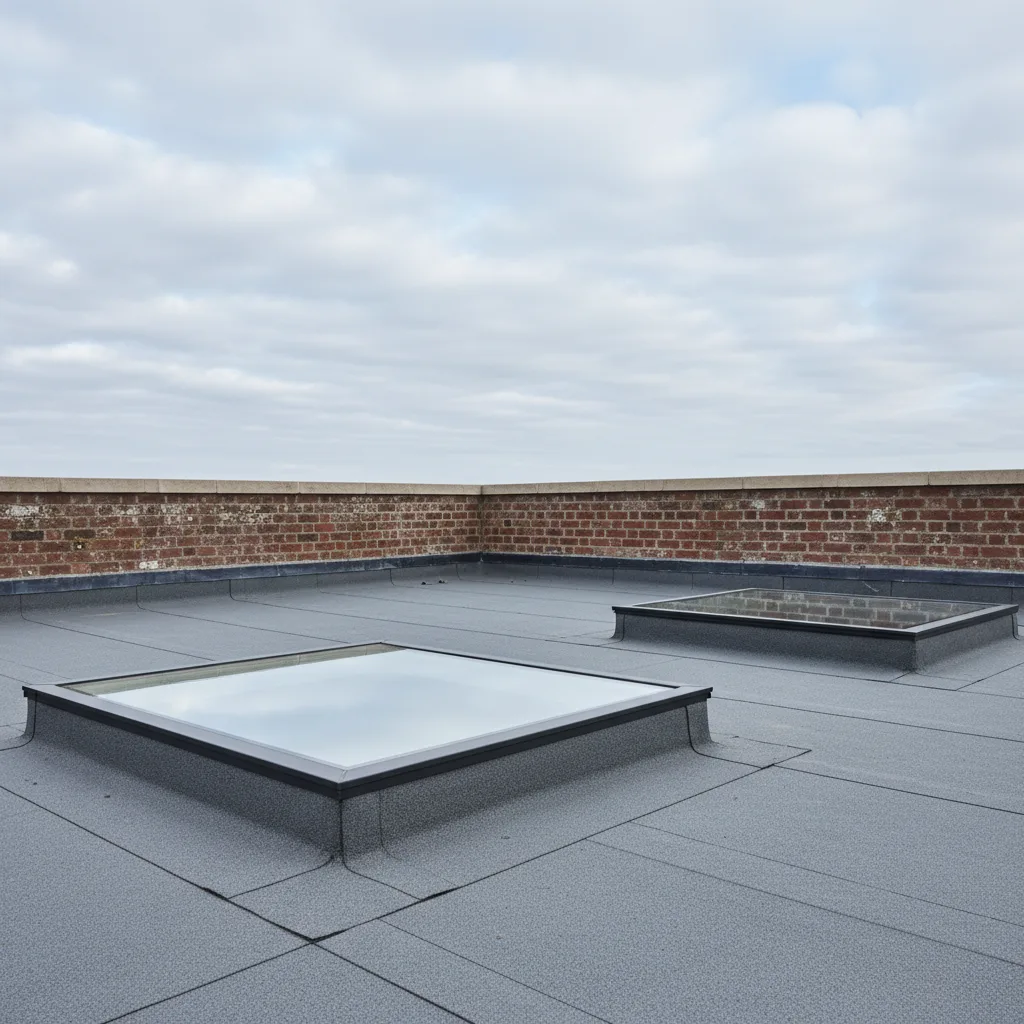
People choose glazing from a datasheet and fit the same specification to every rooflight on a house. That is a wasted opportunity in one direction and an active mistake in the other.
A north facing rooflight and a south facing one want different glass, and the difference is not marginal.
North, and why it needs no solar control
No direct sun, ever. What arrives is diffuse skylight: even, steady, cool toned, with no glare and no moving patches of sun.
Overheating is simply not a concern, so specifying solar control here makes the room darker for no benefit. Prioritise light transmission and a good whole unit U value, because the heat loss is not offset by any solar gain.
It is also the orientation where going larger, or adding a second unit, is a straightforward gain with no penalty.
South, and the two seasons
The highest solar gain, in summer and in winter.
Winter gain is genuinely useful free heat. Summer gain is the most common regret people report with rooflights.
Solar control glazing is the control, and the g value is the number. On a south facing slope, and on any horizontal lantern, it is nearly always worth taking, accepting the modest reduction in light.
Add ventilation at high level and, where the room genuinely overheats, external shading, which stops the energy before it reaches the glass.
West, and the evening problem
The difficult one, and the one people underestimate.
West facing glazing takes low afternoon and evening sun at a shallow angle, when the building fabric has already absorbed a day of heat. It produces the worst discomfort of any orientation, and the glare is at eye level rather than overhead.
Treat west at least as seriously as south, and more so in a room used in the evening.
East, and morning gain
Morning sun, which most people welcome. The building is cool, the gain is useful, and by afternoon the sun has moved off.
The exception is a bedroom, where early summer sun through an unshaded rooflight is what makes a blackout blind essential rather than optional.
Mixing on one roof
Perfectly reasonable, and frequently correct. Solar control on the south facing units, clear on the north facing ones, from the same range so the external appearance matches.
The only caution is that solar control glass has a slight tint, so units seen side by side from inside may differ subtly. Where that matters, keep each elevation consistent.
More on Energy Efficient Rooflights
Ready to bring the daylight in?
Tell us about your project and we’ll send a clear, fixed written quote, no pressure, no surprises.
- Fixed written price before any work starts
- No pressure, no obligation, no sales calls
- Flexible survey times that suit you
- A reply within one working day