VELUX blinds fitted at installation against later
The brackets are designed into the frame, so doing it at the same time is neater and usually cheaper.
Part of our VELUX Window Installation guide
Blinds are an accessory rather than part of the window, and they are designed to locate into brackets in the frame. That single fact drives the whole answer.
At installation
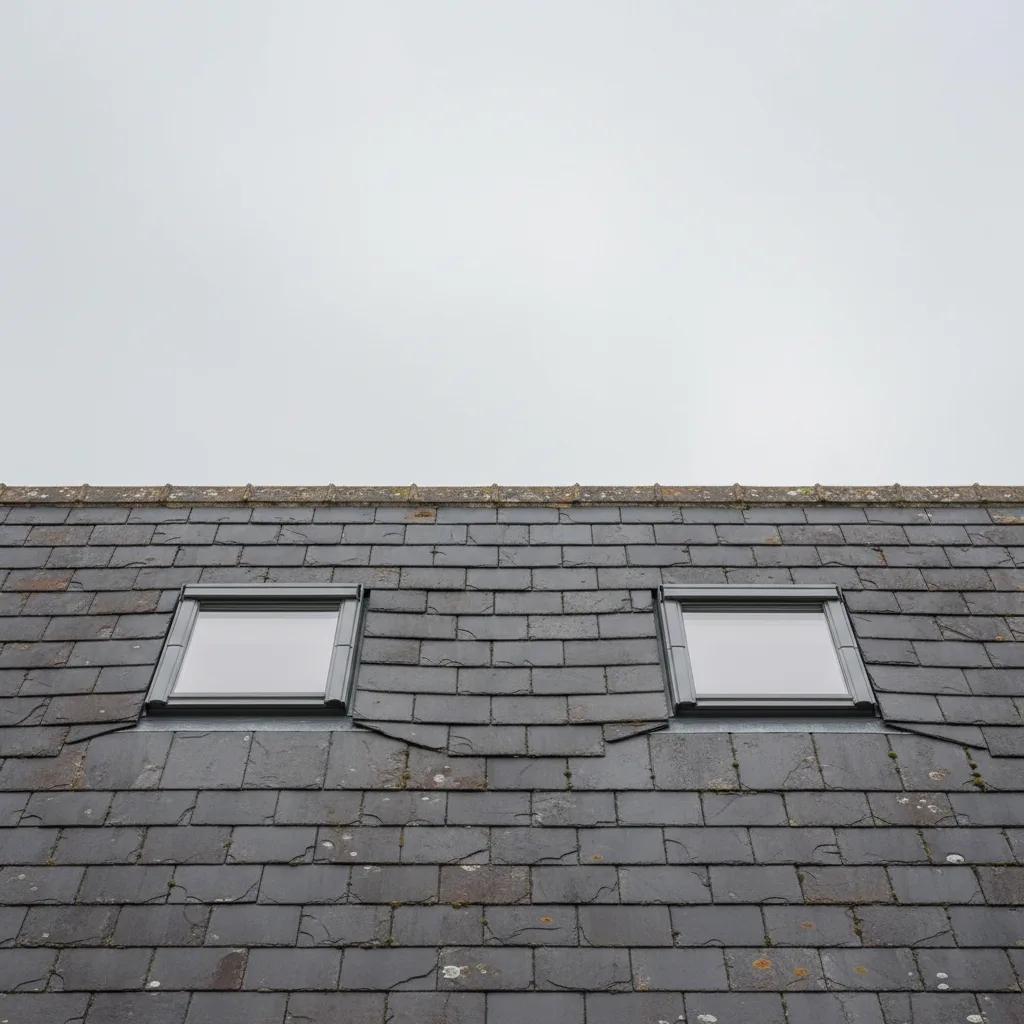
Brackets clip into pre-formed points in the frame while the window is accessible and before the reveal is finished. It takes minutes.
If the blind is electric and the window is above reach, the power feed is run at first fix with the rest of the wiring. That is the largest single saving available, because doing it afterwards means lifting boards or surface trunking.
Suppliers also discount accessories ordered with the window.
Later
Perfectly possible. The brackets are still there and a manual blind is a straightforward retrofit that most people can do themselves.
The difficulty is only with electric blinds on an inaccessible window, where the wiring is the job rather than the blind.
Which room decides urgency

Bedroom: fit blackout at installation. An east facing loft window is light before five in June, and this is not a decision to postpone.
Bathroom: often nothing needed, or a pleated blind for privacy where overlooked.
Living space or study: can wait until you have lived with the light and know whether glare is a problem.
Blackout means side channels
A blackout blind only blacks out if the fabric is held against the glass at the edges by side channels. A roller blind hanging in front of a sloped window leaks light down both sides and sags away from the glass.
Ask specifically about side channels. It is the difference between a blackout blind and a dark blind.
Not a heat solution

Internal blinds do not stop overheating: the energy has already passed the glass. Specify solar control glass for that, then add blinds for privacy, glare or blackout.
The short version
Fit them at installation if you know you want them. It costs less, it works better, and the alternative involves working at height in a finished room.
The only good reason to defer is genuine uncertainty about what the room will be used for.
Why blinds on a roof window are a different product

A vertical window blind hangs. Gravity does the work, the fabric stays flat against the glass, and a roller at the top with a weighted bottom bar is all that is needed.
A roof window is raked. A blind on a raked surface cannot simply hang, because it would fall away from the glass. So a roof window blind runs in side channels that hold the fabric against the glazing at every point along its travel.
Those side channels are the whole story. They are what makes the blind work on a slope, and they are also what makes a purpose made blind so much better than an improvised alternative.
What the side channels get you
Blackout that actually blacks out. The fabric is captured at the edges, so light cannot leak down the sides. A blind that merely covers the glass without sealing the perimeter leaves two bright vertical strips, and in a bedroom on a June morning that is the difference between sleeping and not.
Position holding. The blind stays where you put it anywhere along the travel, rather than running back to the top.
A real thermal contribution. A blackout blind pulled down traps a layer of still air against the glass. It is not a substitute for good glazing, but it measurably reduces heat loss on a cold night and heat gain on a hot afternoon.
The fit advantage

A manufacturer blind is made to the exact size code of the window and clips to brackets on the frame. No drilling, no measuring, no tools in most cases. It goes on in minutes and it fits perfectly because it was designed for that specific frame.
A generic blind fitted to the plaster reveal instead has to be measured, made to order, and screwed into position. It costs more, it takes longer, it does not seal at the edges in the same way, and it obstructs the window when it opens.
That last point is worth dwelling on. A centre pivot window rotates on its axis to open. A blind fixed to the reveal rather than the frame does not rotate with it, so opening the window means the blind is in the way. A frame mounted blind travels with the sash and stays functional whether the window is open or shut.
The cost argument
A blind ordered with the window and clipped on while the fitter is already there and already at height adds a modest amount to a job that is happening anyway.
The same blind ordered later means either doing it yourself from a ladder in a finished room, or paying somebody to attend specifically for that one task, with the call out cost that implies.
On a job with several windows the gap widens further, because the marginal cost of the second, third and fourth blind at installation is small.
The access argument

This is the one people underestimate.
At installation the fitter has access equipment, the room is a building site, and dust and disruption are already priced in.
Afterwards the room is decorated. Fitting a blind means a ladder on a finished floor, working overhead above furniture, and the risk of marking a fresh ceiling or reveal. In a stairwell or a room with a high vaulted ceiling it may need a tower rather than a ladder, and at that point a simple accessory has become an event.
Choosing the type
Blackout. Opaque fabric in side channels. The default for any bedroom, and the only sensible choice for a room used for sleeping. Also the best performer thermally.
Roller. Light filtering fabric, softens the light without eliminating it. Right for a landing, a study or a bathroom where privacy matters more than darkness.
Pleated. Concertina fabric that can be positioned from either end, so you can cover the lower half and leave the top open or the reverse. Useful where you want light without a view in, or where the window is large.
Awning. Mesh fitted on the outside. Blocks solar gain before it reaches the glass, which is far more effective thermally than any internal blind, because heat stopped outside never enters the room. Right for a south or west facing window in a room that overheats. Not a light control device.
Venetian. Slats, adjustable angle. Right in a bathroom or kitchen where humidity would eventually affect fabric.
Manual, solar or mains

Manual is operated with a rod for a window out of reach. Cheapest, no power, nothing to fail.
Solar has a small panel on the blind, a battery, and a remote. No wiring, so it can be added at any point. The right choice for a window that is out of reach and where wiring is impractical, which is most retrofits.
Mains powered is the choice where the window is already wired for a powered opener, because the blind runs off the same supply and can be grouped with it on one control.
That grouping is the argument for deciding about blinds before installation on a powered window. Running the cable while the roof is open costs almost nothing. Adding it later means opening up a finished ceiling.
Where deferring is reasonable
Where the use of the room is genuinely undecided, because the right blind for a bedroom and the right blind for a study are different products.
In that case, fit the window and add a solar blind later. It is more expensive than doing it at the time, and it is a legitimate trade against buying the wrong thing.
What is not reasonable is deferring a blind on a bedroom window to save money. That blind is going on eventually, and it will cost more when it does.
What a blackout blind is worth thermally

More than people expect, and it is a reason to fit one even in a room where darkness is not the priority.
A blind held against the glass in side channels traps a layer of still air between fabric and pane. Still air is a genuine insulator, and the effect is measurable: less heat lost through the rooflight on a cold night, and less gained on a hot afternoon.
It does not replace good glazing and it is not accounted for in any U value. But over a winter, a blind drawn every evening on a large rooflight is doing real work.
The side channels are what makes this true. A blind that merely hangs near the glass leaves the air free to circulate and achieves very little.
External against internal, for heat
The distinction that decides which product solves which problem.
An internal blind stops light and glare and traps some air. But the solar energy has already passed through the glass and entered the room, and the blind absorbs it and re-radiates much of it inward.
An external awning blind stops the energy before it reaches the glass, so it never enters the building at all. For summer overheating on a south or west facing rooflight, nothing internal comes close.
The complete answer in a hot bedroom is both: an awning outside for heat, a blackout blind inside for darkness. They solve different problems and neither substitutes for the other.
Getting the order right
Blinds are made to the window size code and clip to brackets on the frame, so the code has to be correct. Photograph the data plate rather than transcribing it.
Check the blind is for that specific range. Blinds are not interchangeable between manufacturers, and a generic blind fitted to the plaster reveal will not seal at the edges and will obstruct a centre pivot window when it rotates.
Powered blinds and the cable
Where a mains blind is even a possibility, run the cable at installation. It costs almost nothing while the ceiling is open and it means opening a finished ceiling afterwards.
Where that has not been done, solar is the answer: a small panel, a battery and a remote, addable at any time. The trade is a battery with a service life of a few years.
On a window already wired for a powered opener, a mains blind can be grouped with it on one control, which is worth planning before the runs go in.
The access argument, restated plainly
The blind itself is not expensive. Getting to the window in a finished room is.
A ladder on a finished floor, overhead work above furniture, and in a stairwell or a vaulted room a tower rather than a ladder. That is what makes deferring expensive, not the hardware.
Colour and the room
Blackout fabrics come in a range of colours, and the choice affects the room more than people expect, because the blind is a large area of colour on the ceiling plane.
A pale fabric bounces daylight when partly drawn. A dark one absorbs it and reads as a hole in the ceiling.
More on VELUX Window Installation
Ready to bring the daylight in?
Tell us about your project and we’ll send a clear, fixed written quote, no pressure, no surprises.
- Fixed written price before any work starts
- No pressure, no obligation, no sales calls
- Flexible survey times that suit you
- A reply within one working day