What happens to the plaster around the opening?
On a like for like swap, usually very little. On anything that changes size, the reveal is reformed.
Part of our Replacing a Failed or Misted Rooflight guide
A fair question, because internal disruption is what people actually mind about.
Like for like

Usually minimal. The new unit goes into the same opening and the existing reveal is untouched. There may be some making good where the frame meets the plaster, typically a fresh line of filler and a bead of decorator’s caulk.
You will want to repaint the reveal afterwards. Most people do anyway, because the old paint line will not match once the frame changes.
Where the size changes
If the opening is adapted to suit the nearest current size, the reveal is cut back or packed out on the affected sides and reboarded. That means plaster, drying time and decoration.
Where the opening is enlarged, the reveal is reformed entirely: new framing, new board, skim, and decoration.
What we include

Making good to a decorator-ready finish. That means the reveal is boarded, filled and skimmed where necessary, ready to paint.
Painting is not included unless it is quoted, and we will say so on the quotation rather than leaving it ambiguous.
Splaying
Where the reveal is being reformed anyway, it is worth splaying it: vertical at the head, horizontal at the cill. It throws noticeably more light into the room than a square reveal and it costs very little extra while the work is already happening.
If your existing reveal is square and the opening is not changing, splaying it is a separate job and usually not worth it on its own.
Dust

Cutting plaster makes dust. We sheet up and clean up, and it is worth clearing the room beneath before we start.
It comes off and goes back
On any rooflight replacement or new opening, the internal lining is disturbed. There is no way to change a window without touching the plaster around it, and the making good is a real part of the job rather than an afterthought.
It is also where most of the mess comes from, which is why floors are covered, furniture is moved or sheeted and a dust barrier goes at the door before anything else happens.
What the reveal is

The lining between the window frame and the room. On a pitched roof window in a thick insulated roof it can be surprisingly deep, and its shape decides how much of the collected light actually reaches the room.
Square or splayed
The decision worth making before the work starts.
A square boxed reveal runs perpendicular to the window on all four sides. It throws a narrow beam straight down and blocks a surprising amount of light.
A splayed reveal is cut back at an angle, usually at the head and the sill, so the opening widens into the room. It opens the beam out, distributes light better, and can make a modest window feel considerably larger.
Splaying costs a little more in plastering and it is the best value upgrade available on any rooflight installation. In a period room it also reads correctly where a square box does not.
The insulation collar

Fitted before the lining goes back, closing the gap between frame and structure. Without it the reveal runs cold enough for room air to condense on it, which shows as water on the plaster months later and gets reported as a leak.
It is a separate order line, it is the first thing dropped from a cheap quotation, and it is why we name it rather than assuming it.
How it is finished
Plasterboard cut to the reveal, taped and skimmed, or on some installations a timber lining. Either way it is left ready for decoration rather than decorated, unless decoration is specifically included.
Where a room has Artex or lath and plaster, the work needs more care and the repair is harder to disguise. That is worth flagging at survey rather than discovering.
Drying time

New plaster needs to dry before it is painted, and in a cold house that takes longer. The room is finished but not decorated at the end of the job, and we say so at booking rather than leaving it as a surprise.
What is included
Making good to a plastered finish ready for decoration is included as standard on our quotations, and it is a named line. Decoration is not, unless you ask for it.
Cheap quotations frequently stop at the plasterboard, which leaves you with a taping and skimming job to arrange yourself.
It comes off, and that is unavoidable

Removing a rooflight disturbs the plaster where the reveal meets the frame, every time. The lining is fixed to the frame or hard against it, and it cannot be separated cleanly.
So a replacement always involves making good the reveal, and any quotation that does not mention it has either included it silently or is leaving it to you. Worth establishing which.
How far it extends
On a like for like replacement, usually the reveal itself: the four faces of the tunnel from the frame to the room, plus a margin onto the ceiling where the reveal meets it.
On a change of size, all four sides are rebuilt rather than patched, which means more plastering and a longer drying period.
Either way, a patched ceiling rarely disappears into an existing painted surface. Realistically the ceiling gets repainted wall to wall, and that is a decorating job rather than a touch up.
What should happen before the plasterboard
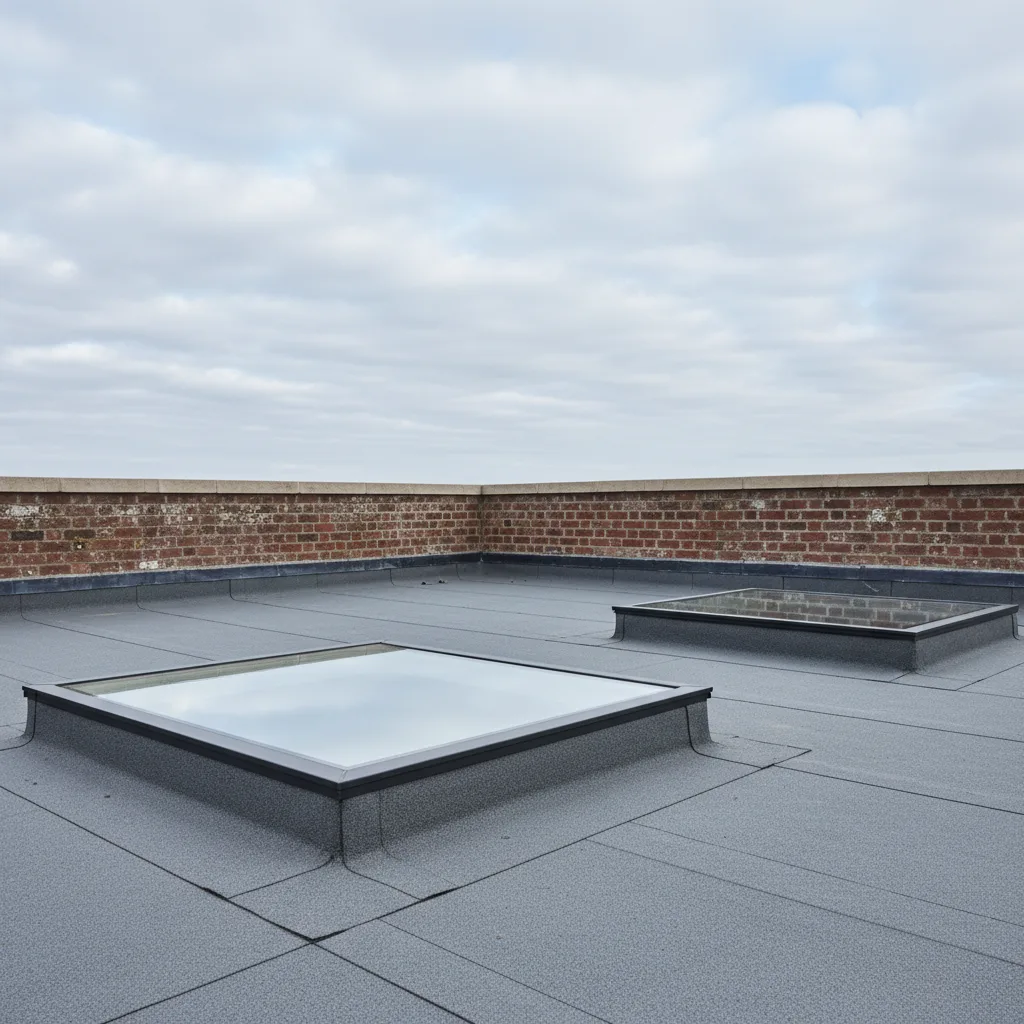
This is the part that matters and it is invisible afterwards.
Insulation carried continuously around the reveal, meeting the frame without a gap.
The vapour control layer taped to the frame, continuous, all the way round.
Then plasterboard, then skim.
Ask for photographs at that stage. It is the only record that will exist, and a bridged or unsealed reveal produces condensation and staining within a couple of winters.
Splaying the reveal
Cutting the reveal at an angle so it opens out towards the room spreads light better and gives more room to carry insulation around the tunnel without pinching it at the frame. Worth asking for on a deep reveal.
Drying
Fresh plaster needs to dry before decoration, and the room will be usable but not finished on the day.
More on Replacing a Failed or Misted Rooflight
Ready to bring the daylight in?
Tell us about your project and we’ll send a clear, fixed written quote, no pressure, no surprises.
- Fixed written price before any work starts
- No pressure, no obligation, no sales calls
- Flexible survey times that suit you
- A reply within one working day