Can a rooflight be moved to a different part of the roof?
Yes, and it is two jobs rather than one: a new opening and a proper closure of the old.
Part of our Replacing a Failed or Misted Rooflight guide
Yes, and it is worth understanding that it is two separate pieces of work priced accordingly.
The new opening

A normal installation: opening formed, structure trimmed, unit and flashing fitted, reveal formed and finished inside.
Closing the old one

The part people underestimate. Done properly it means reinstating the structure, the insulation, the vapour control layer, the membrane and the covering, and making good the ceiling below.
On a pitched roof, matching tiles or slates into the closed area is its own exercise. New material beside weathered material is visible for years, and on an older roof matching reclaimed stock may be difficult.
On a flat roof, the covering has to be made continuous across the closed opening, and on GRP that joint is harder to make durably than on single ply or felt.
When it is worth doing

Where the original position was genuinely wrong: over a partition rather than a room, lighting a corner nobody uses, or set where it ponds.
Where the roof is being recovered anyway, in which case both halves are much cheaper.
Where an internal layout has changed and the rooflight now lights the wrong space.
When it is not

Where the aim is more light rather than better placed light. A second rooflight in the better position, leaving the first, is usually cheaper than moving one and it gives more light.
That is the honest recommendation more often than not.
Building Regulations

Both halves are notifiable structural work. We handle the notification.
Yes, and it is two jobs rather than one

Moving a rooflight means forming a new opening in the new position and closing up the old one properly. Both are real pieces of work, and the closing up is the part people underestimate.
Forming the new opening

The same job as any new rooflight: trimming the structure, dressing the underlay collar, fitting the correct flashing kit for the covering, reinstating the covering over the flashing, and fitting the insulation collar and lining.
Whether it is straightforward depends on the structure. In a traditional cut roof, trimming is ordinary carpentry. In a trussed rafter roof, a unit narrow enough to sit between trusses at 600mm centres needs no structural work, and anything wider needs a designed trimmer.
Making good the old opening
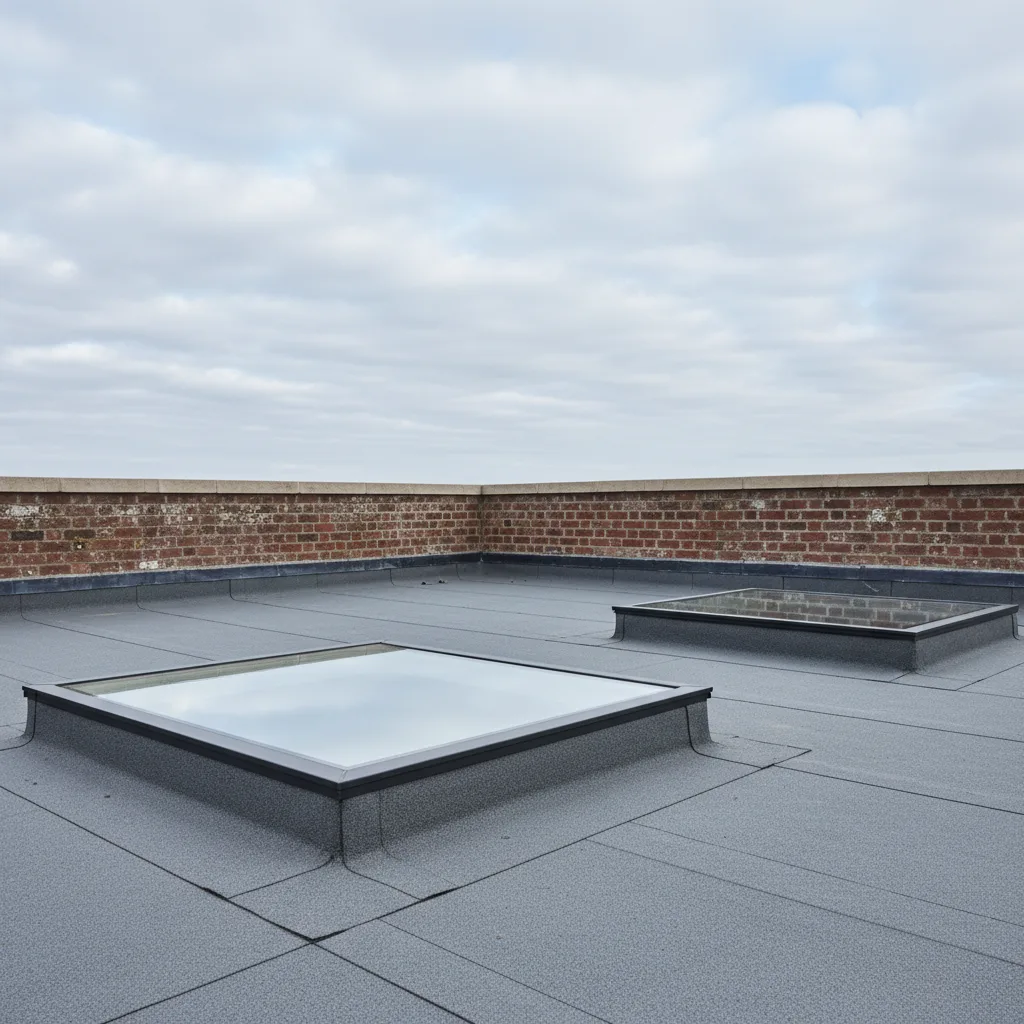
More involved than it sounds and it has to be done properly, because a badly closed opening is a leak in a position nobody is watching.
The structure is made continuous again, the underlay is patched and lapped correctly so water runs past rather than into the repair, battens are made good, and the covering is reinstated with matching tiles or slates.
Matching is the difficult part on an older roof. A patch of new tiles in the middle of a weathered slope is visible from the ground for years, and the usual answer is to take sound tiles from a hidden slope for the visible repair.
Inside, the ceiling or the sloping lining is closed, insulated to match the surrounding roof, the vapour control layer is made continuous, and the surface is plastered and decorated.
Reusing the unit
Possible where it is in good condition and comes out without damage, which is not guaranteed on an older installation.
The flashing kit should not be reused. It is size specific, it has been weathered and formed to a particular position, and reusing it is where the next leak comes from.
Where the unit is over fifteen years old, moving it means paying to reinstall something already well into its life. At that point a new window in the new position and a proper closure of the old one is frequently better value.
Is it worth it
The honest comparison is against fitting a new rooflight in the new position and leaving the old one where it is, which is cheaper than moving and gives you two rooflights.
Moving makes sense where the old position is genuinely wrong: overheating a bedroom, spoiling an elevation, or sitting where a new wall or a new room layout puts it in the wrong space.
Permission
A new opening in a new position is a new rooflight for planning purposes. On a listed building consent is required, and in an Article 4 area an application may be. Closing the old one on a listed building also needs consent.
It is two jobs, not one
Forming a new opening, and closing the old one properly. People price the first and forget the second, and closing an opening well is not trivial.
Closing the old opening
The trimmers come out or stay depending on the structure, new rafters or infill timbers go in, the underlay is made continuous, and the covering is reinstated.
The visible risk is the covering. Reinstating tiles or slates across a former opening means matching the surrounding material, and on a roof of any age new material next to weathered material is obvious. Reclaimed material sourced in advance is the answer, and on a hand made clay tile roof that takes time.
Inside, the ceiling is made good, insulated and reboarded, and that patch will need the whole ceiling redecorating rather than a touch up.
Forming the new one
Ordinary work, with the usual questions: which bay, how close to the ridge, what the purlin allows, and whether it stays between the rafters or needs a rafter cut.
Moving it up or down the same slope, between the same rafters, is the cheapest version by a wide margin.
Whether it is worth it
Where the current position genuinely does not work, and where the roof needs attention anyway, yes.
Where the motivation is a modest improvement in where the light lands, consider instead enlarging the existing opening up the slope, or adding a second unit in an adjacent bay and leaving the first. Both are usually cheaper than moving, and adding light beats relocating it.
More on Replacing a Failed or Misted Rooflight
Ready to bring the daylight in?
Tell us about your project and we’ll send a clear, fixed written quote, no pressure, no surprises.
- Fixed written price before any work starts
- No pressure, no obligation, no sales calls
- Flexible survey times that suit you
- A reply within one working day