Why does my rooflight drip in winter?
Condensation, nearly always. It is a cold surface problem rather than a water ingress one.
Part of our Replacing a Failed or Misted Rooflight guide
Because winter is when the glass is coldest and the house is at its most humid: windows shut, heating on, cooking and drying washing indoors.
Almost every winter drip is condensation.
Confirming it

Three questions.
Does it happen when it has not rained? Then it is condensation.
Is it worst first thing? Overnight is when the glass gets coldest and moisture accumulates. Condensation.
Does it get worse when you cook or dry washing? Condensation.
A leak follows rain, is worse in driving rain from a particular direction, and does not care about the temperature.
The quick check first

The ventilation filter behind the flap at the top of the frame. It clogs with dust, background ventilation drops to nothing, and humidity in the room climbs.
It takes two minutes to clean and it is the most common cause of condensation appearing on a window that was previously fine.
Then the specification

If the filter is clear, look at where the water forms. A band around the glass edge points to an aluminium spacer. Water on the frame points to a cold frame or an uninsulated kerb. Damp plaster at the reveal points to an unsealed vapour control layer, and that one is worth acting on because it wets the structure.
What you can do without replacing anything

Use the extractor when cooking and showering, and leave it running afterwards. Dry washing outside or in a vented tumble dryer. Leave the ventilation flap open, including in winter: the heat lost is small and the condensation prevented is not. Keep heating reasonably steady rather than letting the room swing cold and warm.
When it is the unit

If the misting is between the panes, the seal has failed and it needs replacing. Nothing you do in the room will change that.
Almost certainly condensation

Water dripping from a rooflight in cold weather, with no rain, is warm moist air condensing on a cold surface. It is the commonest thing reported to us as a leak and it is not one.
How to be sure

Condensation appears on cold mornings, is worst in deep winter, forms evenly across the inner face of the glass, and has nothing to do with whether it rained. It clears as the day warms up.
A leak follows rain, usually rain driven from one particular direction, arrives at one point rather than spread evenly, and leaves a mark that is still there when everything has dried.
If it drips after a bath on a still January evening but stays dry through a September downpour, it is condensation.
Why the rooflight rather than the walls
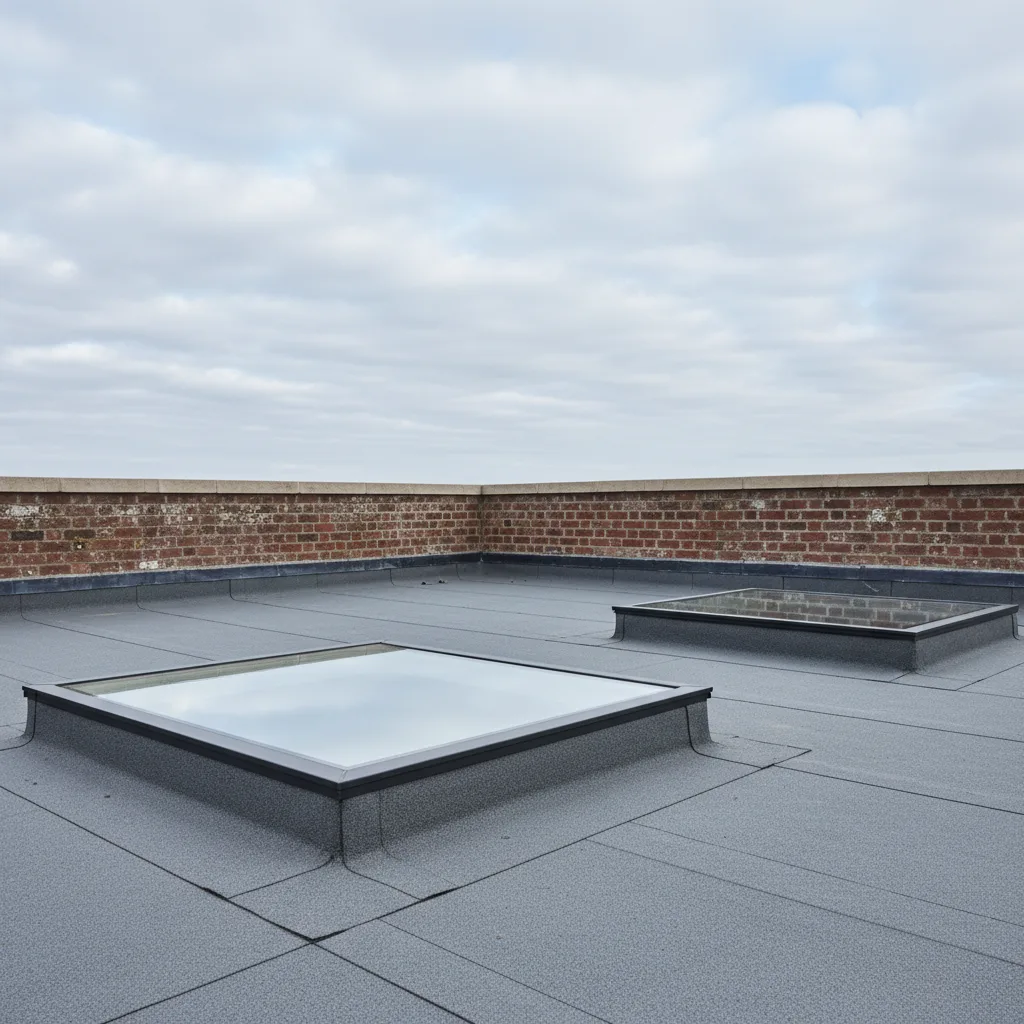
Two reasons. It faces the open sky, which on a clear night is the coldest thing available, so its surface temperature drops further than any wall. And warm air rises, so the air touching it is the warmest and wettest in the room.
The rooflight is not causing the moisture. It is showing you where the coldest surface is.
The one case where it is a fault
Water forming on the plaster reveal rather than on the glass. That usually means a missing insulation collar, the component that closes the gap between frame and structure. Without it the reveal runs cold enough to condense.
It is a separate order line, it is the first thing dropped from a cheap quotation, and the symptom does not appear until the first cold spell months after the work. If we fitted it, that is covered by our workmanship guarantee.
On a flat roof, the equivalent is an uninsulated kerb.
What fixes it
Ventilation, above everything. An opening at the highest point of the room lets warm moist air leave and draws drier air in through anything open lower down. It only works if something at low level is open too.
Extract fans that actually run. In a kitchen or bathroom, sized for the room, on an over run timer or humidity sensor, ducted to outside rather than into a loft.
Reducing the source. Lids on pans, drying clothes outside or in a vented tumble dryer, and running the extract during and after a shower.
Warmer glass, which means a better whole unit U-value and a warm edge spacer. On an old unit with an aluminium spacer, replacing it makes a visible difference.
What to send us
A photograph of where the water forms and a note of whether it follows rain or cold mornings. Two of the four possible answers do not need anybody to come out at all.
It is almost certainly condensation
The season is the clue. A leak follows rain. Condensation follows temperature, and winter dripping without rain is the classic signature.
Warm moist air in the room rises to the ceiling, meets the coldest surface up there, and gives up its moisture onto it. The rooflight is that surface.
Which part is wet tells you what to fix
The middle of the glass. Glazing performance and room humidity. A better unit raises the internal surface temperature; better ventilation lowers the moisture load.
A band at the glass edge, middle clear. The spacer is chilling the inner pane at its perimeter. A warm edge spacer would have pushed that back.
The frame or the kerb reveal, glass clear. A thermal bridge. The kerb is uninsulated, or the insulation does not run continuously to the frame. This is the most common cause on flat rooflights and it is a construction fault, not a glazing one.
Between the panes. The sealed unit has failed and nothing about the room will change it.
The one that matters most
Damp appearing in the ceiling around the opening rather than on the unit. That is interstitial condensation inside the construction, from a vapour control layer that was never sealed to the frame.
It is the damaging one, because it wets timber where nobody can see it.
What to do now
Increase ventilation in the room as an immediate measure, particularly if it is a kitchen or bathroom. Then get the kerb and reveal detailing looked at, which is where the permanent fix is.
Sealing round the outside on the roof will not help and will make the eventual diagnosis harder.
More on Replacing a Failed or Misted Rooflight
Ready to bring the daylight in?
Tell us about your project and we’ll send a clear, fixed written quote, no pressure, no surprises.
- Fixed written price before any work starts
- No pressure, no obligation, no sales calls
- Flexible survey times that suit you
- A reply within one working day