Opening vents at the ridge of a lantern
The most effective ventilation you can put in a room, and the reason is stack effect.
Part of our Roof Lantern Installation guide
An opening vent at the ridge of a lantern is the single most effective ventilation opening you can put in a room, and the reason is physics rather than product design.
Stack effect

Warm air is less dense and rises. In a room with an opening at its highest point, that warm air leaves, and as it does it draws cooler air in through any lower opening: a door, a window, a trickle vent.
That creates a continuous flow driven by temperature difference rather than by wind. It works on a still day, when an open window does almost nothing.
The ridge of a lantern is the highest point in the room by definition, so it is the ideal place for the outlet. A single ridge vent will cool a kitchen that two open windows cannot.
Manual or electric
A lantern is above reach. Manual means a pole with a hook and somewhere to stand, and over an island there generally is not. Manual vents on lanterns tend to be opened once and then left.
Electric means a chain actuator with a remote or a wall switch, and it is the version that gets used daily. On a lantern this is not a luxury, it is what makes the vent functional.
Rain sensors

A sensor closes the vent when it detects water. It reacts to the first drops rather than predicting rain, so the vent is closing as the rain starts.
Over a kitchen where you might open it and go out, it is worth having. It is the difference between a small mistake and a wet floor.
Size and number
One vent is enough on a domestic lantern. Two is worth considering on a long lantern in a large open plan space, and it gives redundancy if a motor fails.
Decide before the kerb

An opening lantern is heavier and needs power. Running a cable at first fix costs almost nothing; running it after the ceiling is finished is disruptive. Even if you fit a fixed lantern, a capped cable to the position is cheap insurance.
More on electric and opening rooflights.
Why the ridge is the right place
Warm air rises and collects at the highest point of a room. In a room with a lantern, the highest point is the ridge of the lantern, so an opening there is doing the most useful work available.
It lets accumulated heat leave directly. As it goes, it draws cooler air in through anything open lower down, and the room clears in minutes where a wall window on its own takes hours.
A vent lower in the lantern, or a separate flat rooflight alongside, still helps and does less, because it is not at the point where the warm air actually is.
The three ways to do it

An opening panel within the lantern. One or more of the glazed sections hinged and motorised, opening in the plane of the slope. The neatest solution: it keeps the outline of the lantern intact, and it puts the aperture where it does most good.
A dedicated ridge vent. Some ranges offer a section at the ridge itself that lifts, which is the most effective position of all and the most specific to the product.
A separate opening rooflight elsewhere on the roof. Where the lantern is fixed, a modest opening flat unit does the ventilation. Frequently cheaper, and it lets you put the vent where it is easiest to reach and to wire.
The trade is that it is lower than the lantern ridge, so it is working against the geometry rather than with it.
Night purge, which is what it is really for
Through a summer day a building absorbs heat: through the glazing, through the fabric, and from cooking and occupancy. A kitchen with a lantern absorbs a great deal.
By evening the structure is warm and will radiate that heat back into the room all night.
Open the ridge vent late, with a door or window open at low level, and the accumulated heat leaves the building overnight while the outside air is cool. Close it in the morning before the outside air warms.
On a south or west facing extension that is the difference between a room used in July and one avoided, and it is the strongest argument for specifying a vent at all.
Manual is not realistic

A lantern sits above a flat roof and therefore above a room with at least normal ceiling height. A vent at the ridge is well out of reach.
A pole operated vent at that height is a chore, and a vent that is a chore stays shut. Within a year you have paid for an opening and are using it as a fixed panel.
Motorised is the answer, and the cost is in the cable route rather than the motor. During a build or an extension, a cable to the lantern position at first fix is trivial. Retrofitting it into a finished room means lifting flooring or chasing a ceiling.
Where the lantern is going onto an existing roof and wiring would be disruptive, a solar powered vent carries its own panel and battery and needs no connection at all.
The rain sensor is not optional here
More important on a lantern vent than almost anywhere.
The vent is high, it is out of reach, and its whole purpose is to be left open unattended overnight. A vent you have to close manually before rain is a vent you will not leave open.
A rain sensor closes it automatically, which is what makes night purge possible at all.
Specify a local sensor wired to the unit rather than one depending on an internet weather service. You want the window to close because it is raining on it.
Free open area, and why the figure matters

Where the room is habitable, Part F purge ventilation is calculated on free open area rather than on the size of the vent panel.
Ask for the figure for the specific vent at the specific stroke, in writing. A panel that appears generous may give a modest free area depending on how far and in what manner it opens.
That is worth establishing at design stage rather than discovering it at Building Control.
Weathering the vent
The vent is the one part of a lantern with a moving joint, so it is the part that needs the detail to be right.
A compression gasket seals the opening panel against the frame when closed. Grit and debris on that gasket stop the panel seating, water gets past, and it is reported as a leak.
Because a lantern vent is at the ridge, it is exposed to everything falling out of the sky and it is awkward to reach for cleaning. That is an argument for including it in a periodic lantern service rather than hoping.
A well made lantern also drains water that gets past an outer gasket into internal channels within the glazing bars, which carry it out at the eaves. Those channels collect debris over years and blocking them makes water appear inside at the bars.
How many vents

One is usually enough on a domestic lantern.
Stack ventilation needs an outlet at the top and an inlet lower down, and the inlet is normally a door or a window rather than a second rooflight. Adding a second vent at the same height does not double the effect, because the constraint is the inlet rather than the outlet.
Where the lantern is very large, or the room is long, two vents at opposite ends of the ridge give more even clearance, and that is a genuine reason rather than a default.
What to specify
An opening panel at the ridge or the highest point available. Motorised, because a pole operated vent at lantern height does not get used.
A rain sensor, wired locally, as standard rather than an option.
A wall switch beside the light switches at the room entrance rather than only a remote, because a remote is permanently in another room.
The free open area figure in writing, where the room is habitable.
And a manual override, demonstrated at handover, with whatever it requires supplied. On a vent that high, that means confirming a pole exists rather than assuming.
Why the ridge is the right place to vent
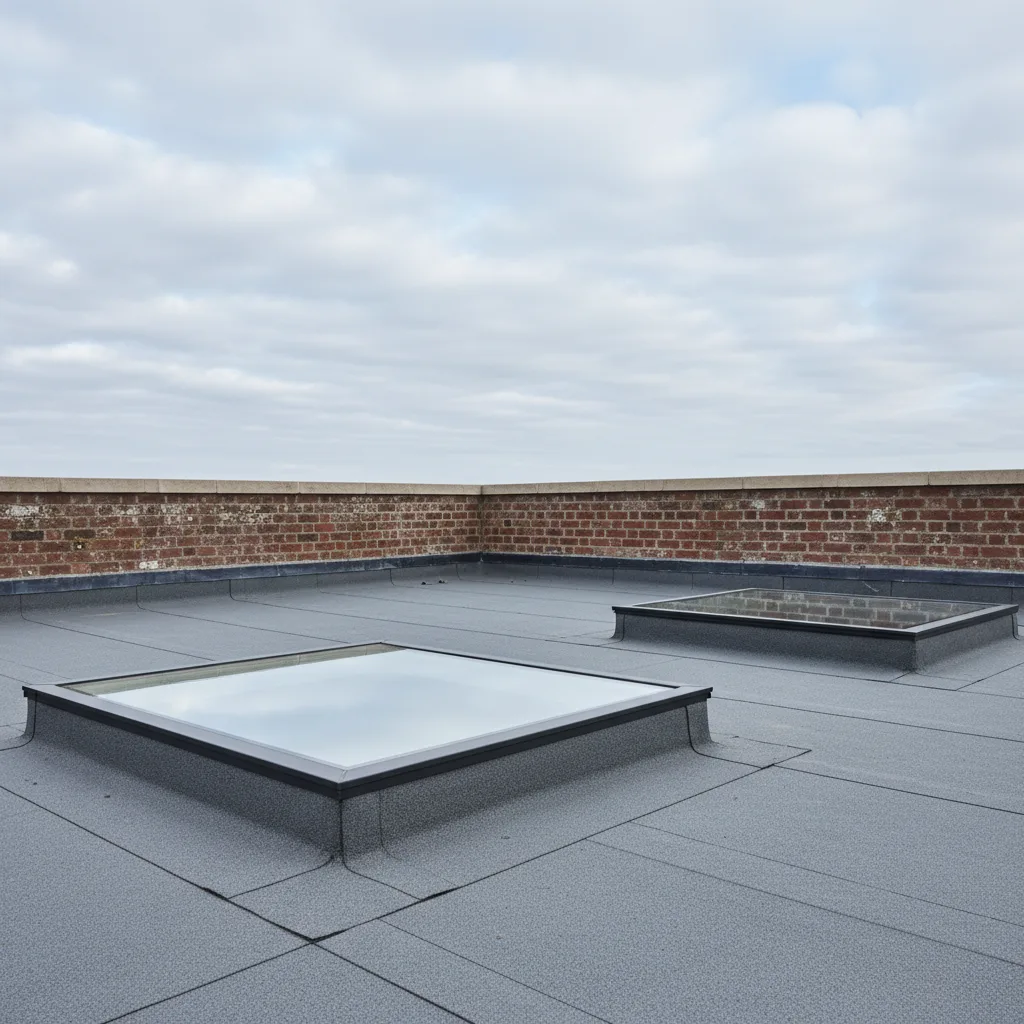
Warm air rises and collects at the highest point in a room. In a room with a lantern, that highest point is inside the lantern itself.
A vent at the ridge removes air from exactly where the heat has gathered. Combined with an opening at low level elsewhere, a door or a window, it produces stack ventilation: warm air leaves at the top and cool air is drawn in at the bottom, driven by the temperature difference rather than by wind.
That is a genuinely effective cooling mechanism and it is the single most useful thing an opening vent does. A vent low in the lantern, or a window in a wall, cannot achieve it because it is not at the top of the volume.
The configurations
A hinged pane within the lantern slope, lifting on an actuator. The most common arrangement, giving a substantial opening.
A ridge vent, a section at the apex that lifts. Elegant, effective, and specified at order because it is part of the lantern structure.
A comfort vent, a small flap giving background ventilation without opening a large aperture.
Manual operation by pole is possible where the lantern is within reach, which on a single storey extension it frequently is. Powered operation with a rain sensor is the usual specification.
What it needs
A power supply, which is straightforward while the roof is open and awkward afterwards, so this is a decision made before installation.
A rain sensor, close to essential, because a lantern over a kitchen open in a downpour is a real problem.
A compression gasket that seals when shut, which becomes an annual maintenance item.
And thought about the control position and grouping, so the vent can be operated from where somebody would naturally reach for it.
The weathering point
An opening pane in a lantern introduces a moving joint at a position where water runs down the glass towards it.
A well designed system handles that with a drainage channel below the vent that takes water past the opening and out. It is worth asking how the vent is drained rather than assuming, because a vent that simply sits in the slope with a gasket is relying entirely on that gasket for the life of the lantern.
Whether it is worth the cost
On a south or west facing extension, yes. Overheating is the most common regret with lanterns and ventilation is half the answer, the other half being solar control glazing.
On a north facing lantern in a room with other openings, a fixed lantern is a reasonable economy.
More on Roof Lantern Installation
Ready to bring the daylight in?
Tell us about your project and we’ll send a clear, fixed written quote, no pressure, no surprises.
- Fixed written price before any work starts
- No pressure, no obligation, no sales calls
- Flexible survey times that suit you
- A reply within one working day