Maintenance a VELUX actually needs
Ten minutes a year, and four of the five jobs cost nothing.
Part of our VELUX Window Installation guide
There is no service interval and nobody to book. There are five things worth doing once a year, and they materially extend the life of the window.
1. The filter
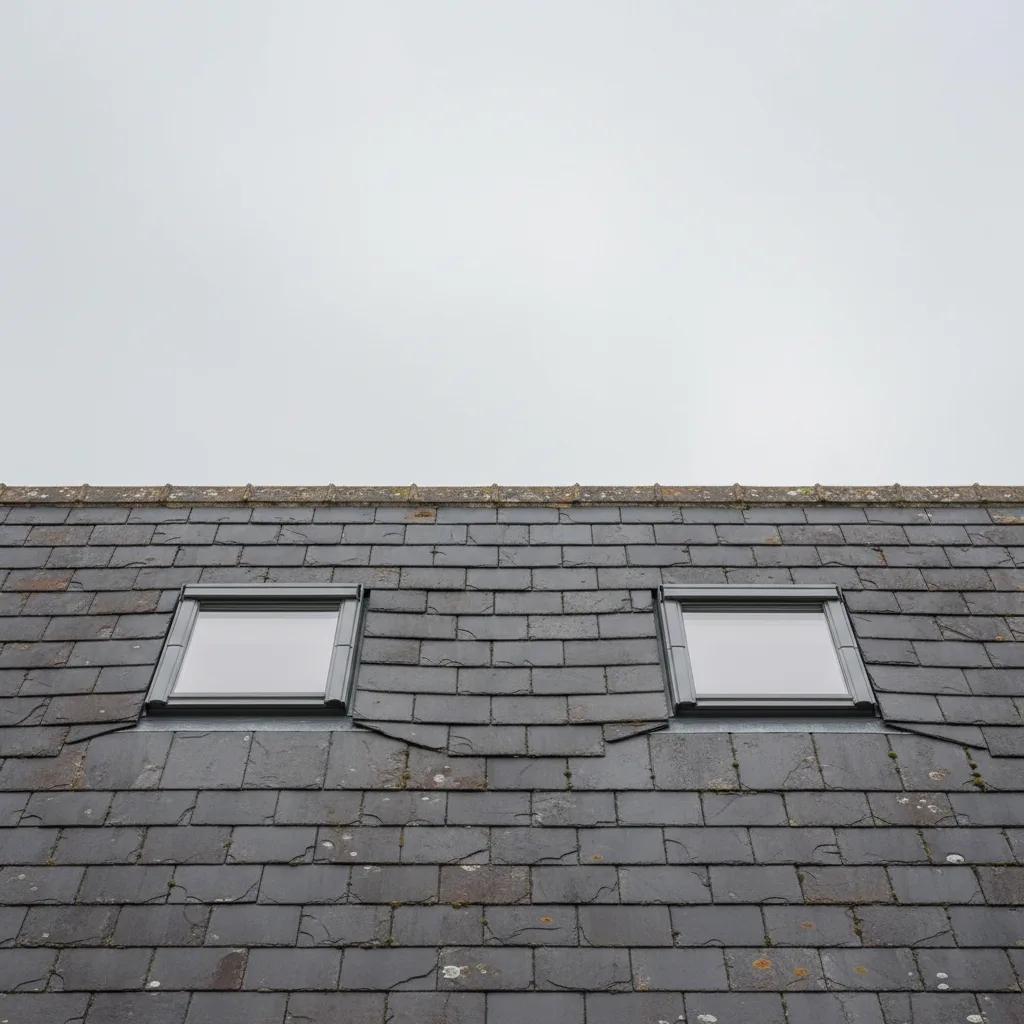
Behind the ventilation flap at the top of the frame. It clogs with dust and pollen, which cuts background ventilation to nothing and shows up as condensation on cold mornings that never used to happen.
It pulls out on most models. Vacuum it or rinse and dry it. Two minutes, and it is the most neglected part of the window.
2. The seals
Wipe the gaskets around the sash. Grit stops them compressing, which lets draughts and eventually water past. If a seal has gone hard or is splitting, it is a replaceable part rather than a new window.
3. Hinges and stays

A drop of light oil. A stiff window gets forced, and forcing is what breaks handles and catches rather than the mechanism failing on its own.
4. The timber finish
Look at the inside of the frame, particularly the bottom of the sash where condensation runs. Recoating a sound frame every five years or so is straightforward; replacing a rotten one is not.
Sooner in a bathroom or kitchen. Not applicable to polyurethane frames, which need nothing.
5. Clear the head flashing

Leaves and moss build up against the flashing above the window, particularly under trees. That dam holds water where it should be flowing away, and it causes a class of leak that gets blamed on the window.
Clear it from the roof or with a pole.
Electric units
Add wiping the rain sensor. A dirty sensor either fails to detect rain or reads permanent rain and refuses to let the window open.
What not to do

Pressure wash it. Use solvents on the frame or the external cladding. Or paint over the seals, the hinges or the data plate, which is the label you will need when it comes to replacement.
Ten minutes a year
That is genuinely it for a manual roof window, and about half an hour for a motorised one. Done, it is the difference between a sealed unit lasting twenty five years and one lasting fifteen, and between an actuator lasting fifteen years and one lasting eight.
There is no scheduled service in the way a boiler has one. There is a short routine, and almost nobody does it.
1. Clean the gasket

The single most useful thing on this list and the one that pays for itself several times over.
The compression seal runs around the sash and it is what makes the window watertight when closed. Grit, leaves, moss and general debris collect on it, and when they do the sash cannot seat properly.
Two consequences follow, and both get misdiagnosed.
Water gets past. It is reported as a leak, a roofer is called, and the flashing is inspected. The flashing is fine; the sash is being held a fraction open by a piece of moss.
On a motorised unit, the actuator strains. A person closing a window by hand feels resistance and clears whatever is in the way. A motor does not: it simply pushes harder and keeps going, on every cycle, for years. That is the biggest single determinant of how long an actuator lasts.
Open the window fully, wipe the seal all round with a damp cloth, and check it is not split, hardened or displaced from its channel. Five minutes.
2. Clean the filter
Behind the removable strip at the top of the sash sits the trickle ventilator and, on most designs, a filter.
It clogs with dust over a few years. When it does the background ventilation stops working, the room gets damper, and condensation appears on the glass. People then report a problem with the window.
Remove the strip, take the filter out, vacuum or rinse it depending on the type, dry it and refit. A minute.
While you are there, check the ventilation flap actually opens. On a redecorated room it has frequently been painted shut.
3. Clean the glass

Ordinary glass cleaner inside. Warm water and a soft cloth outside.
On a centre pivot window, rotate the sash fully and lock it in the cleaning position. That is what the feature exists for, and it is the main reason centre pivot remains popular on high level windows.
On a top hung unit you may be able to reach the outer face by leaning out on a first floor slope, safely and without putting weight on the sash. Higher than that you need a pole system with a soft head.
Avoid abrasives and scouring pads, which mark glass and destroy self cleaning and solar control coatings. Avoid pressure washing at close range, which damages coatings and drives water into the perimeter seal.
4. Look at the outside
Every few years and after any storm, from the ground or from a window with a view of the roof.
Lifted flashing edges. Slipped or broken tiles around the unit. Rust staining, which indicates a plated fixing corroding rather than a stainless one. Moss building up against the head flashing where water runs.
Catching a lifted flashing costs nothing. Not catching it costs a ceiling.
Motorised units, two extra

Wipe the rain sensor. A sensor caked in grime either misses rain, which means a wet floor, or reads permanent moisture from the grime and refuses to let the window open at all. The second looks exactly like a motor fault and produces a surprising number of unnecessary callouts.
Cycle it fully, several times a year, including in winter. Mechanisms that sit unused seize, and a seized actuator is considerably harder to override manually than a well used one.
Listen while it runs. A motor that is straining, slower than it used to be, or stopping partway and needing a second command is telling you it is approaching the end of its life. That is useful warning rather than a fault.
Light oil or a dry PTFE spray on the chain where it extends from the housing, once a year. Not grease, which collects grit and turns into an abrasive paste.
Flat roof units, one extra
Keep the perimeter clear.
Leaves and silt collect around a kerb and there is nowhere for them to go on their own. Standing water against a perimeter seal is what kills a flat roof unit early, and a blocked outlet produces exactly the same pond as a roof with no fall.
Twice a year on a plot with trees, annually otherwise, and check the outlet the roof drains to at the same time.
What wears out, and when

The sealed unit, at fifteen to twenty five years, toward the shorter end on a coastal or exposed roof. The perimeter seal gives up after decades of daily thermal cycling. That is end of life rather than a fault.
The actuator on a motorised window, at ten to fifteen years. The shortest lived component, and a serviceable part that unbolts and is swapped from inside the room in under an hour for a fraction of the cost of a new window.
Gaskets, at fifteen to twenty years, and their life depends almost entirely on whether they were kept clean.
The battery on a solar unit, good for several years and replaceable. It does not fail suddenly: the unit becomes slower and less able to cope with a run of dull days.
Nothing else, on an installation that was detailed properly. Frames, flashings and glass have no moving parts and no reason to fail early.
What is not maintenance
Anything involving the flashing kit, the underlay collar or the covering.
Those are installation details rather than serviceable parts. If water is getting past them, it is a fault rather than a maintenance lapse, and on work we did it is what the ten year workmanship guarantee is for.
Similarly, condensation on the inner face of the glass on cold mornings is a ventilation matter rather than a maintenance one, and misting between the panes is a failed sealed unit at end of life.
What to keep
The manufacturer, model and size code, the glazing specification, the Building Control certificate and the workmanship guarantee, with the house paperwork rather than in a drawer.
On a motorised unit, add the actuator model and the position of the control unit. Identifying a fifteen year old actuator from a photograph is possible and it is much quicker with the specification to hand.
The annual half hour, in order
Open the window fully in daylight and work through it.
The gasket. Wipe it and look at it. It should be soft, seated in its channel, and unbroken. A gasket that has hardened, flattened or come out of its groove is why a sound window starts draughting.
The sill drainage channel. Clear it. Debris here holds water against the bottom edge of the unit and attacks the seal from outside, and it is the single commonest reason a window that behaved for fifteen years starts letting water in.
The ventilation filter. Behind the flap at the head of the sash. It lifts out, gets washed, and goes back. Once blocked, the background ventilation stops working and there is no symptom at all.
The hinges and friction. The sash should move evenly and hold position. Stiffness or a sash that swings on its own means adjustment before it means replacement.
The external cladding and flashing, looked at from the ground with binoculars if nothing else. Lifted or slipped material is far cheaper to deal with early.
The timber, if it is timber
A lacquered or painted timber window needs its finish maintained on a cycle, and the interval is far shorter in a bathroom or kitchen than on a landing.
Inspect the bottom corners of the sash and every joint. Catching a finish before it fails is the whole point; once water has reached bare wood it is a different job.
A polyurethane encased frame needs wiping and nothing else, which is why it is the sensible choice in a wet room.
What to keep away from it
No general purpose oil on the mechanism, which attracts grit and accelerates wear. Use what the manufacturer names, sparingly, at the stated points.
No abrasive pads on the glass, which haze it permanently and destroy any self cleaning coating.
No pressure washer near the gasket or the flashing.
No paint on the gasket, the drainage channel or the mechanism during decorating. Masking properly is most of the work of decorating around a roof window.
Cleaning safely
Rotate a centre pivot sash to bring the outer face inside, and engage the barrel bolt before touching the glass. That catch exists because a rotated sash that swings back with your hands and head through the opening is a serious injury.
Show anyone else in the house who might clean it, because it is not obvious.
More on VELUX Window Installation
Ready to bring the daylight in?
Tell us about your project and we’ll send a clear, fixed written quote, no pressure, no surprises.
- Fixed written price before any work starts
- No pressure, no obligation, no sales calls
- Flexible survey times that suit you
- A reply within one working day