Rooflights out of reach, and why they suit motors
A manual opening you cannot comfortably reach is an opening that stays shut.
Part of our Electric and Opening Rooflights guide
The most useful thing on this page is a plain observation: people do not use manual openings they cannot reach, and after a year they stop trying.
What pole operation is actually like

A telescopic pole with a hook engaging an eye on the sash. It works, and it involves fetching the pole, finding somewhere to stand, engaging the hook overhead, and doing it again to close.
Over a kitchen island, or a stairwell, there is often nowhere sensible to stand at all. The pole ends up in a cupboard.
When a rooflight is out of reach
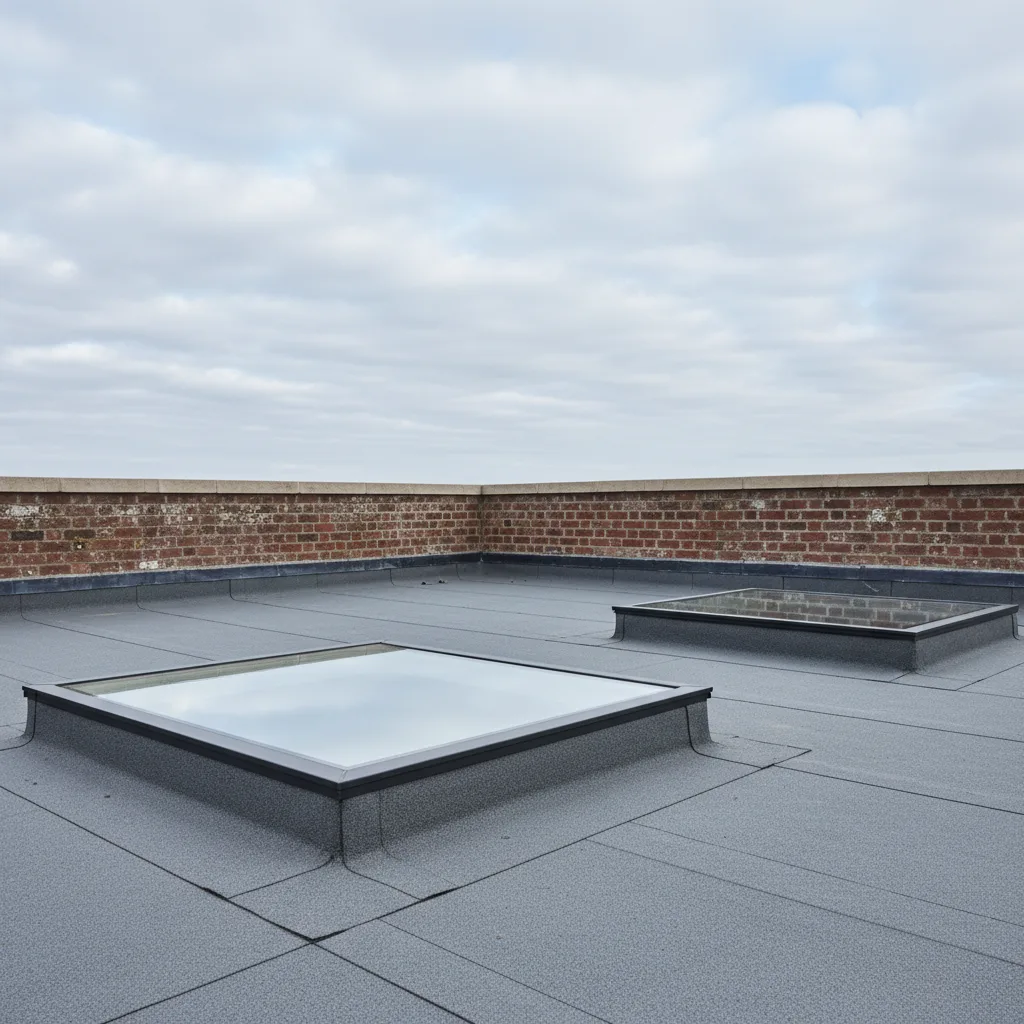
Any flat roof rooflight, by definition. The unit is above a ceiling with no wall beside it.
A lantern, where the vent is at the ridge, higher again.
A roof window high in a slope, particularly in a room with a raised or vaulted ceiling.
Anything over a stairwell, where there is no floor beneath to stand on.
Why it matters

Because ventilation from the highest point of a room is the most effective ventilation available, and an unused opening delivers none of it.
A motorised rooflight gets opened daily. A pole operated one gets opened twice.
The cost argument
During a build, the electric premium is modest and the cable is trivial at first fix.
Afterwards, the wiring costs more than the upgrade would have, which is the single most common regret in this trade. Even if you fit manual, run a capped cable to the position.
The compromise

Where budget is genuinely tight, solar openers can be retrofitted later with no wiring. It is more expensive per unit than mains but it keeps the option open at no cost now.
The behavioural problem, not the mechanical one
A rooflight that is awkward to open does not get opened. That is the entire case for motorising a high level unit, and it has nothing to do with luxury.
A window that never opens is a window that never ventilates. A room that never ventilates accumulates moisture, and moisture condenses on the coldest surface available, which in a room with a rooflight is frequently the rooflight. The complaint that follows is condensation, and the cause is a window that has been shut since the day it was fitted.
So the question is not whether you could reach it with a pole. It is whether you will, twice a day, for twenty five years.
Where the threshold sits

Roughly two and a half metres to the handle.
Below that, a manual window operated by hand or with a short pole is perfectly good, and the premium for a motor is hard to justify. In a loft room where you can reach the handle standing up, manual is the sensible answer.
Above that, a pole becomes a chore. It lives in a cupboard, it has to be fetched, it is awkward to engage with the handle, and on a windy day closing the window with it is genuinely difficult. Within a year the window stays shut.
Above about three and a half metres, over a stairwell or in a double height space, a pole stops being realistic at all.
What the motor is actually buying
Not the motor. The rain sensor.
A rain sensor closes the window automatically when it starts raining, and it is the feature that changes how a room is used. A window you have to remember to close before rain is a window you leave shut, because the risk of coming home to a wet floor outweighs the benefit of ventilation.
A window that closes itself is a window you leave open, and that is a different building.
The useful version is night purge. Open it late, let the heat accumulated through the day leave the building overnight, close it in the morning before the outside air warms up. On a rain sensing motorised unit that happens without anybody thinking about it. With a pole it happens when somebody remembers, which is not often.
On a south or west facing extension, that is the difference between a room used in July and one avoided.
Which rooflights are always out of reach

Lantern vents. A lantern stands above a flat roof and therefore above a room with at least normal ceiling height. Any vent within it is high, and a pole operated lantern vent is not a realistic proposition.
Rooflights over stairwells and double height spaces. Frequently the ones that would do most good, because warm air collects at the top of a tall space and an opening there clears the whole volume.
Units high in a steep slope. Where the window has been positioned for the view or for even light distribution, it is frequently above comfortable reach even in a room of ordinary height.
Anything in a room with a vaulted ceiling, where the rooflight follows the rafter line up toward the ridge.
Mains or solar
The cost is in the cable route, not the motor, and that decides which makes sense.
During a build or a conversion at first fix, a cable to the rooflight position is a few metres clipped to a joist before the plasterboard goes on: twenty minutes. At that point mains is cheap, it is faster in operation at fifteen to thirty seconds against thirty to sixty, and it allows a hard wired wall switch.
Into a finished room, the same cable means lifting flooring above or ceiling below, chasing a wall, making good and redecorating, plus an electrician. A day and a half plus decoration, and frequently several times the price of the motor.
That is where solar earns its place. A solar powered opener carries its own photovoltaic panel and rechargeable battery, needs no connection at all, and fits in a couple of hours with no disruption below.
It works better than people expect: the panel needs daylight rather than direct sun, so it functions on a north facing slope through an English winter, and the energy to open a window a few times a day is small. It is also unaffected by a mains power cut.
The wall switch, which people skip

A handheld remote comes with most systems and is permanently in another room.
A wall switch is always in the same place, anyone can use it without being shown, and it works when a remote battery is flat. On a high level rooflight that is the difference between a window the household uses and one only the person who knows where the remote lives ever operates.
It belongs beside the light switches at the room entrance rather than under the rooflight itself, which is where people instinctively reach.
On a mains system it needs a cable, which is why the position is decided at first fix. On a solar system a wireless switch achieves most of it and is worth fitting rather than relying on a remote.
Cleaning, which is the other reach problem
Worth settling at the same time, because a high window that cannot be cleaned is a different kind of nuisance.
A centre pivot unit rotates fully so the outer face turns inward and can be cleaned from inside the room, with a catch holding it in position. On a high level window that is the most useful feature a roof window can have.
A top hung unit cannot, and where it is carrying a means of escape duty top hung may be compulsory. Dual action units open top hung for use and pivot for cleaning, which removes the trade off entirely and is frequently worth the premium at height.
Fixed units and lanterns have no mechanism, so external cleaning means a pole system or access from outside. Self cleaning glass helps on a pitched unit where rain sheets off and carries deposits away, and does very little on a near flat one.
Maintenance on a unit you cannot reach

The routine is the same as any motorised rooflight and getting to it is harder, which is an argument for making it easy at the design stage.
Clean the gasket once a year, because grit on the compression seal both lets water past and makes the actuator work against an obstruction on every cycle. Wipe the rain sensor, because a dirty one either misses rain or refuses to let the window open at all. Lubricate the chain with light oil or a dry PTFE spray. Cycle the unit fully a few times a year including in winter.
Where the unit is genuinely inaccessible, that argues for a centre pivot or dual action design so the gasket and the sensor can be reached from inside.
The manual override
Find out at handover how it works, demonstrated rather than described, and whether it can be reached from floor level or needs a pole.
A chain actuator holds its position mechanically, so a power cut leaves the window exactly where it was. The scenario to plan for is open when the power goes and then it rains, and on a rooflight above reach the crank needs a pole that you should confirm you actually own.
The advice for anyone building
Run a capped cable to every rooflight position at first fix, even where you are fitting manual or solar units.
It costs almost nothing then, it is terminated in an accessible enclosure, and it covers a future motor, a future blind and a future rain sensor. Photograph where it is before the ceiling closes.
The single most common regret in this trade is fitting a manual unit high in a slope to save the premium, and wanting a motor two years later when the room has spent a winter condensing.
The window that never gets opened
A rooflight positioned high on a slope, above a stairwell, or in a room with a vaulted ceiling is frequently beyond comfortable reach.
What happens then is predictable. It gets opened once, on a warm day when somebody fetches the pole, and then it stays shut for years.
An unopened ventilator is an expensive fixed light. The room loses the ventilation it was designed to have, moisture accumulates and condenses on the coldest surface available, and the summer overheating the opening was meant to relieve happens anyway.
That is the case for a motor, and it is a stronger one than convenience.
What powered operation actually restores
Stack ventilation. Warm air collects at the top of a room, and a high rooflight is exactly where it should be vented from. Combined with an opening at low level, that produces genuine air movement rather than a token open window.
Purge on a schedule. An early morning purge in summer, before anybody is awake, cools a house far more effectively than opening something in the afternoon when the outside air is already hot. That only happens reliably if it is automated.
Safe closing. A rain sensor shuts the unit when the shower arrives, which manual operation on an unreachable window cannot.
Getting power to it
The real cost, and the reason to decide before installation.
While the roof is open and the ceiling is off, a cable is trivial. Afterwards it means surface trunking or opening up a finished ceiling.
On a retrofit, solar removes the problem entirely: a panel, a battery and a handset, with no cable at all. Operation is slower and the battery lasts a few years, and on an unreachable window those are easy trades.
The related problem
A window out of reach is also a window that does not get cleaned or maintained.
Specify self cleaning glass, which extends the interval considerably on a pitched unit where rain sheets off.
And on a centre pivot unit, the rotating sash brings the outer face inside the room, which is the feature that makes an otherwise inaccessible window maintainable. On a high window that is worth more than it sounds.
More on Electric and Opening Rooflights
Ready to bring the daylight in?
Tell us about your project and we’ll send a clear, fixed written quote, no pressure, no surprises.
- Fixed written price before any work starts
- No pressure, no obligation, no sales calls
- Flexible survey times that suit you
- A reply within one working day