Solar powered rooflights without a mains run
The answer for a finished room, and it works in this country better than people expect.
Part of our Electric and Opening Rooflights guide
A solar powered opener carries a small photovoltaic panel on the outside of the sash, charging a battery in the frame that drives the actuator. No mains connection at all.
Why it exists
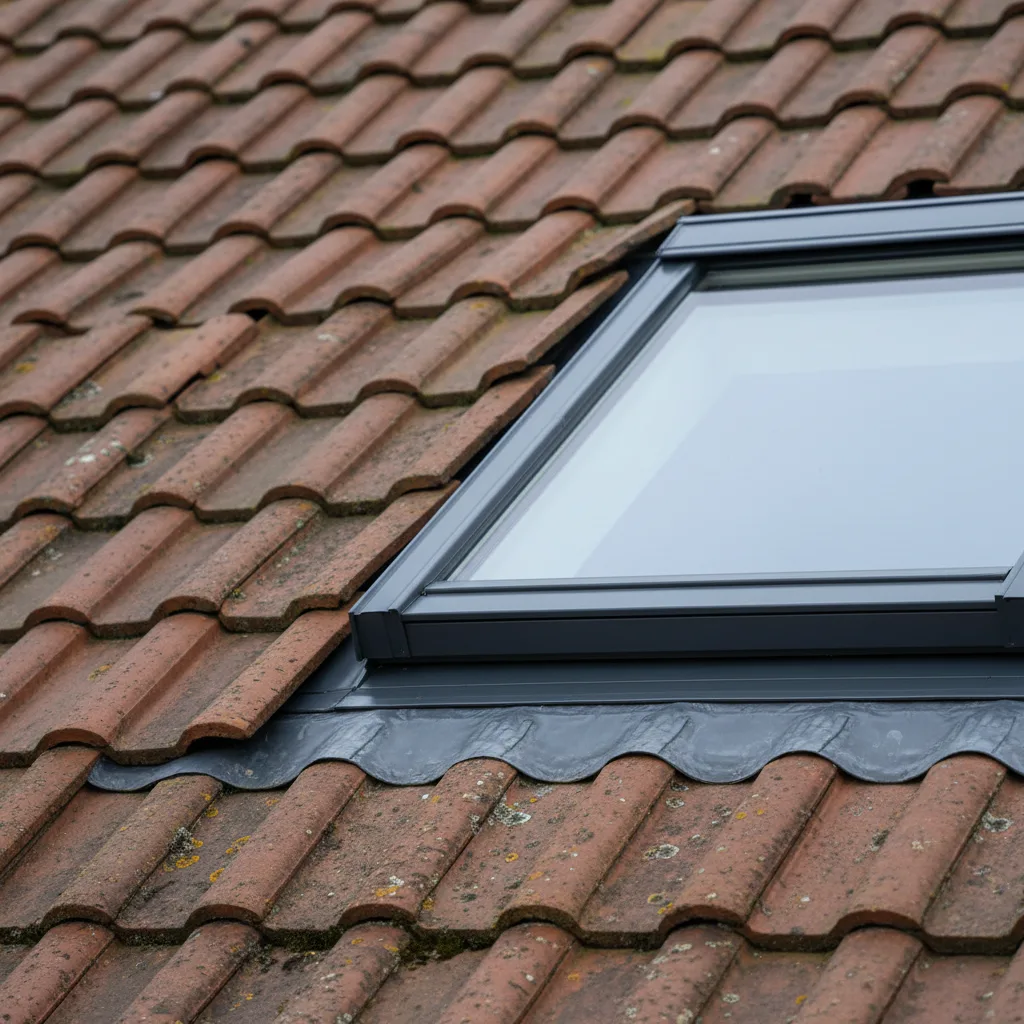
Because getting a cable to a rooflight in a finished room is disruptive and expensive. Lifting flooring or ceiling, chasing for a switch drop, making good and redecorating.
Solar removes all of that. Fitting is a couple of hours with no disruption below.
Does it work here
Yes, and better than people assume. The panel needs daylight rather than direct sun, and the energy required to open a window a few times a day is small.
It works on a north facing slope. It works through an Essex winter. The battery buffers days of poor light.
The trade-offs
Speed. Slower than mains, typically thirty to sixty seconds rather than fifteen to thirty. Not a problem in use.
Cost. More than manual, and more than the unit cost of mains, though usually less than mains once wiring is included on a retrofit.
Battery life. Several years, and replaceable. Budget for it in a decade.
Heavily shaded positions. Under a dense mature canopy, output drops. Worth mentioning at survey.
Where mains still wins
New build and extensions, where the cable is trivial at first fix. Mains is faster, cheaper as a unit, and has no battery to replace.
The rule: cable easy, choose mains. Room finished, choose solar.
Retrofit kits

Many manual windows accept a solar opener kit rather than needing replacement, which is much cheaper. Whether yours does depends on the model, and the data plate tells us.
The problem solar solves
Motorising a rooflight is not expensive. Getting electricity to it frequently is, and the difference between those two facts explains almost everything about how these products are specified.
During a build or a loft conversion at first fix, a cable to the rooflight position is a few metres clipped to a joist before the plasterboard goes on: twenty minutes of work and almost no cost.
Into a finished room it means lifting flooring above or ceiling below, chasing a wall for a switch drop, making good and redecorating, plus an electrician’s time and certification. A day and a half plus decoration, and that can exceed the premium on the unit itself several times over.
Same window, same actuator, completely different job. A solar powered opener removes the second scenario entirely.
How it works

A small photovoltaic panel, integrated into the frame or the flashing rather than bolted on separately, charges a rechargeable battery housed within the unit. The battery drives the same chain actuator a mains unit would use.
There is no connection to the household supply at all. No spur, no control unit in the loft, no cable, no electrician and no making good. Fitting is a couple of hours with no disruption to the room below.
Control is by handheld remote, and on most systems a wireless wall switch can be added, which sticks to the wall and needs no cable.
Does it actually work in this country
Yes, and better than most people expect. The two reasons are worth understanding, because the scepticism is reasonable and misplaced.
The panel needs daylight rather than direct sun. Photovoltaic output falls on an overcast day and it does not stop. A panel on a north facing slope in December is generating, just less.
The energy required is tiny. Opening a window a few times a day is a very small amount of work. The battery buffers the difference between a bright week and a dull one, so a run of grey days does not empty it.
In practice we fit these on north facing slopes and through East Anglian winters and they run.
What is different in use

Speed. Thirty to sixty seconds to open, against fifteen to thirty for a mains unit. In use nobody notices; it is a difference you observe once and then forget.
Power cuts. Solar units are unaffected, which mains units are not. On a rural property with an unreliable supply that is a quiet advantage.
The battery. A consumable, good for several years and replaceable. It does not fail suddenly: the unit becomes slower to respond and less able to cope with a run of dull days, which is clear enough warning.
Rain sensors
Included on most solar systems and running from the same panel, so there is no separate wiring question.
This is the feature that actually makes a motorised rooflight worth having. A window you have to remember to close before rain is a window you leave shut. A window that closes itself is a window you leave open, and that changes how a room behaves through a summer.
The useful version is night purge: open it late, let the heat accumulated through the day leave the building overnight, and close it in the morning before the outside air warms up. On a rain sensing unit that happens without anybody thinking about it.
Where solar is clearly the right answer

Retrofit into a finished room, which is the majority of cases. The cable route is the cost, and solar removes it.
Period and listed property. Chasing a wall in a listed building is an alteration to protected fabric and may not be permitted without consent. Lifting floorboards in a period house means dealing with boards that were not laid to be lifted. Solar avoids both, and it is why it is our default recommendation on older buildings.
Any position where the cable route would be genuinely disruptive: across a vaulted ceiling, through a tiled bathroom wall, or under a finished floor.
Rural property with an unreliable mains supply.
Where mains is better
During a build or a conversion, at first fix. At that point the cable is trivial, mains is faster in operation, and it allows a hard wired wall switch.
Where several units are being grouped. A mains control unit handles a group cleanly, and each window still needs its own cable back to it, so the wiring is being done anyway.
Where a wall switch matters a great deal. A wireless switch works and it has a battery in it; a hard wired one does not.
The wall switch, which people underrate

A handheld remote comes with most systems and is permanently in another room.
A wall switch is always in the same place, anyone can use it without being shown, and it works when a remote battery is flat. It belongs beside the light switches at the room entrance rather than under the rooflight itself, which is where people reach for it.
On a mains system it needs a cable, which is why the position is decided at first fix. On a solar system a wireless switch achieves most of it, and it is worth fitting rather than relying on a remote.
Smart control
Most solar systems integrate with app control and scheduling in the same way mains ones do, and the same caution applies.
A rooflight that opens by app is a rooflight that does not open when the hub is down, the network is out, or a manufacturer changes something in an update. Over a twenty five year life none of those is unlikely, and roof windows outlast consumer electronics comfortably.
Treat app control as an addition rather than as the means of operation, and keep a physical control alongside it.
The advice that saves the most money

If any work is happening near a rooflight position, run a capped cable to it even if you are fitting a manual or a solar unit.
It costs almost nothing at first fix, it is terminated in an accessible enclosure, and it covers a future motor, a future blind and a future rain sensor. Photograph where it is before the ceiling closes, because nobody will find it again by guesswork.
The single most common regret in this trade is saving the electric premium during a build and wanting a motor two years later.
Maintenance
The same as any motorised unit, plus keeping the panel reasonably clean.
Clean the gasket once a year, because grit on the compression seal stops the sash seating and makes the actuator work harder on every cycle. Wipe the rain sensor. Lubricate the chain with light oil or a dry PTFE spray, not grease. And cycle the unit fully a few times a year including in winter, because mechanisms that sit unused seize.
The actuator is the shortest lived component at ten to fifteen years, and it is a serviceable part that unbolts and is swapped in under an hour.
What is in the unit
A small photovoltaic panel on the outside of the frame, a rechargeable battery, an actuator, a receiver, and a handset. Everything the unit needs is on board.
The panel is deliberately modest, because it is not powering anything continuously. It trickle charges the battery, and the battery supplies short bursts of current when the window is operated.
That is why a British winter does not defeat it. The energy demand is tiny and spread over a day.
Checking the panel position before you order
The one thing that genuinely defeats a solar unit is permanent shade.
A chimney stack, a tree, a neighbouring roof or a dormer that keeps the panel in shadow through most of the day will slow charging to the point where the unit becomes unreliable.
Look at the actual position at different times of day before committing. It takes ten minutes and it is the only failure mode worth worrying about.
Note that the panel needs daylight rather than direct sun, so a north facing slope is perfectly workable. Deep permanent shadow is not.
The advantage nobody mentions
In a mains power cut, a solar unit keeps working, because its power source is on board.
A mains unit without battery backup cannot close, and its rain sensor cannot function, precisely when a storm has taken the power out. That is the scenario people worry about, and solar answers it inherently rather than through an add on.
The battery, honestly
A service life of a few years, and it is a replaceable item rather than a failure of the window.
Establish how it is accessed before you buy. A battery reached from inside with the sash rotated is fine. One requiring the unit to be partly dismantled at height is a poor design and it will not get changed.
The symptom of a tired battery is slower operation and fewer cycles before it stops, which gives you warning rather than a sudden failure.
Where mains is still the better choice
New work where the roof is open and the cable costs almost nothing.
Several units to be grouped on one control, or a blind sharing the same supply.
And units operated several times a day, where the cycle count is high enough that battery replacement becomes a recurring nuisance.
On new work the sensible move is to run the cable even if you fit solar or manual, because it costs very little then and keeps the option open for thirty years.
More on Electric and Opening Rooflights
Ready to bring the daylight in?
Tell us about your project and we’ll send a clear, fixed written quote, no pressure, no surprises.
- Fixed written price before any work starts
- No pressure, no obligation, no sales calls
- Flexible survey times that suit you
- A reply within one working day