Rooflight and skylight installation in Braintree
A market town with a historic centre, a large modern edge and no coastal exposure at all.

Rooflights we install in Braintree
Every job is surveyed first. The right unit depends on the roof you have, not on what we would rather sell.
 Roof Lantern Installation
Read more
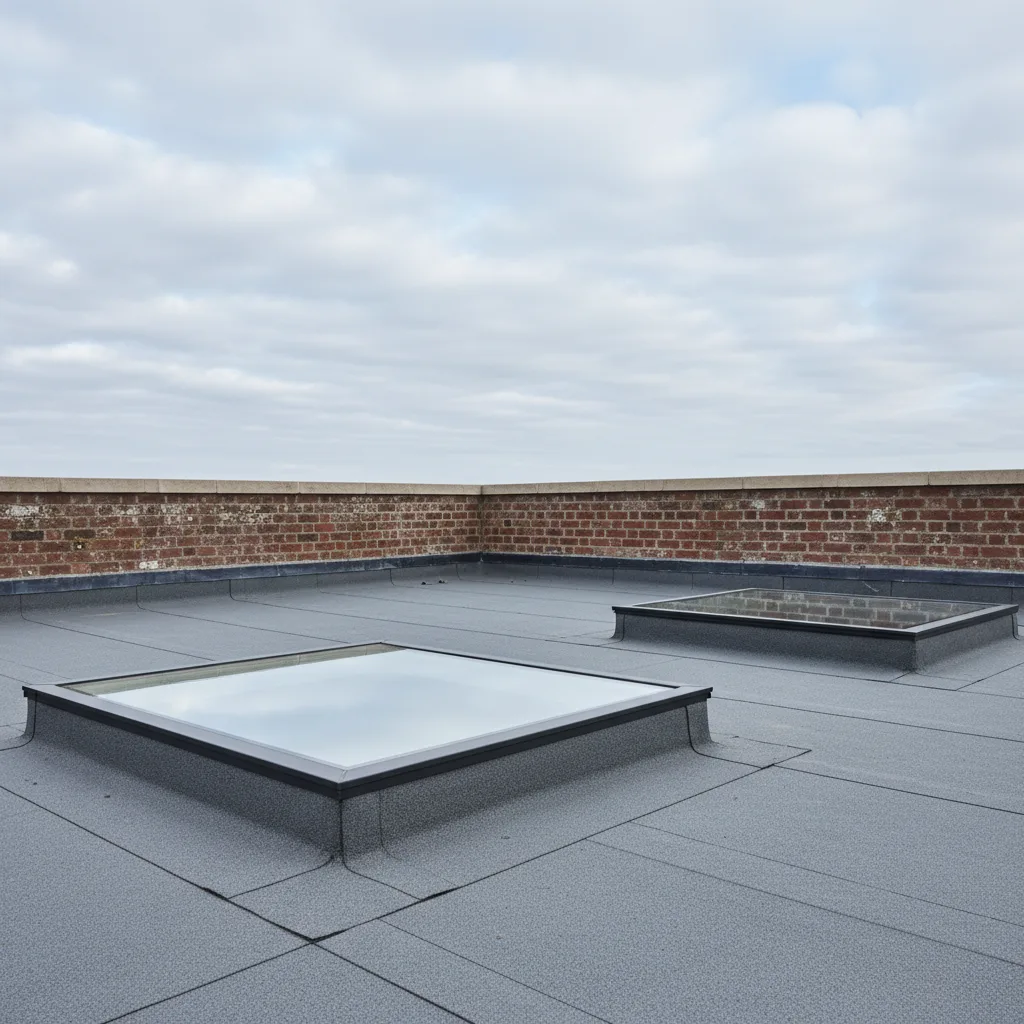
 Flat Roof Rooflight Installation
Read more
 Roof Window Installation
Read more
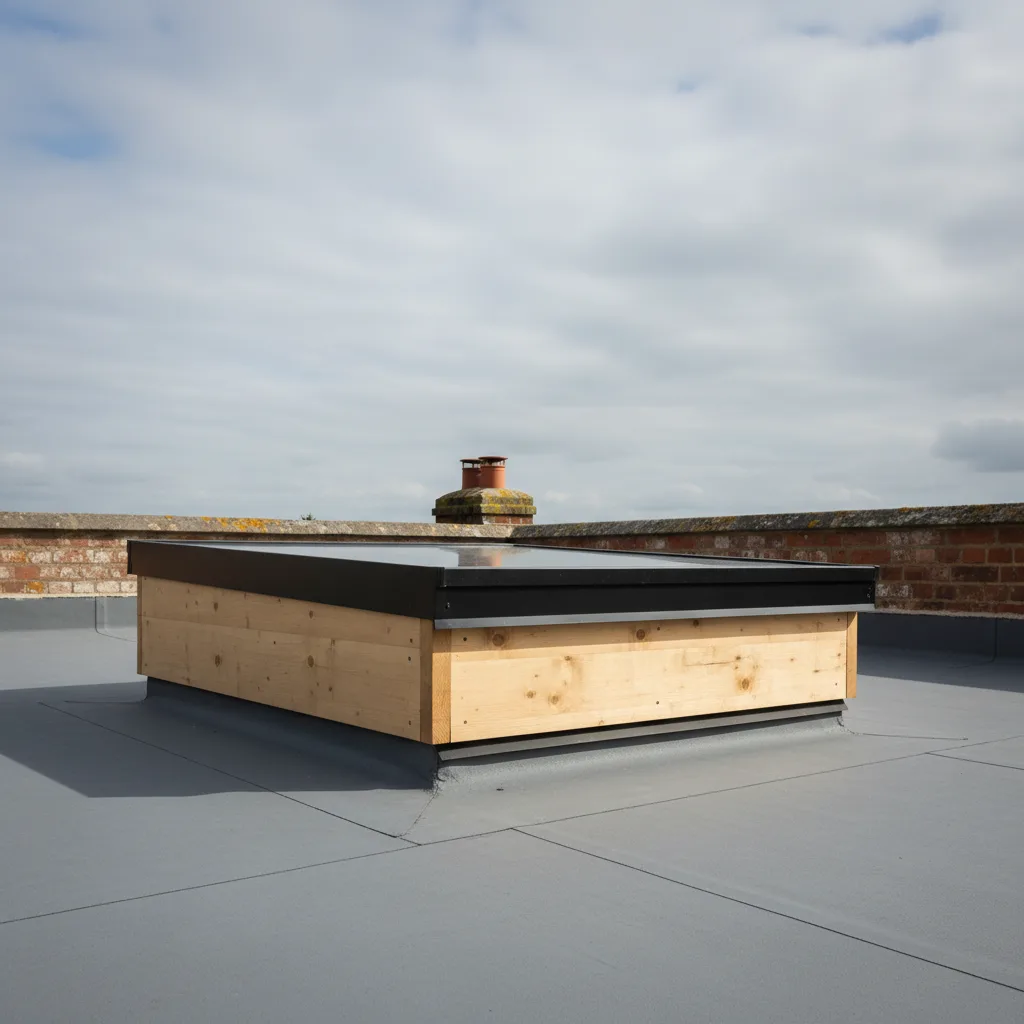 VELUX Window Installation
Read more
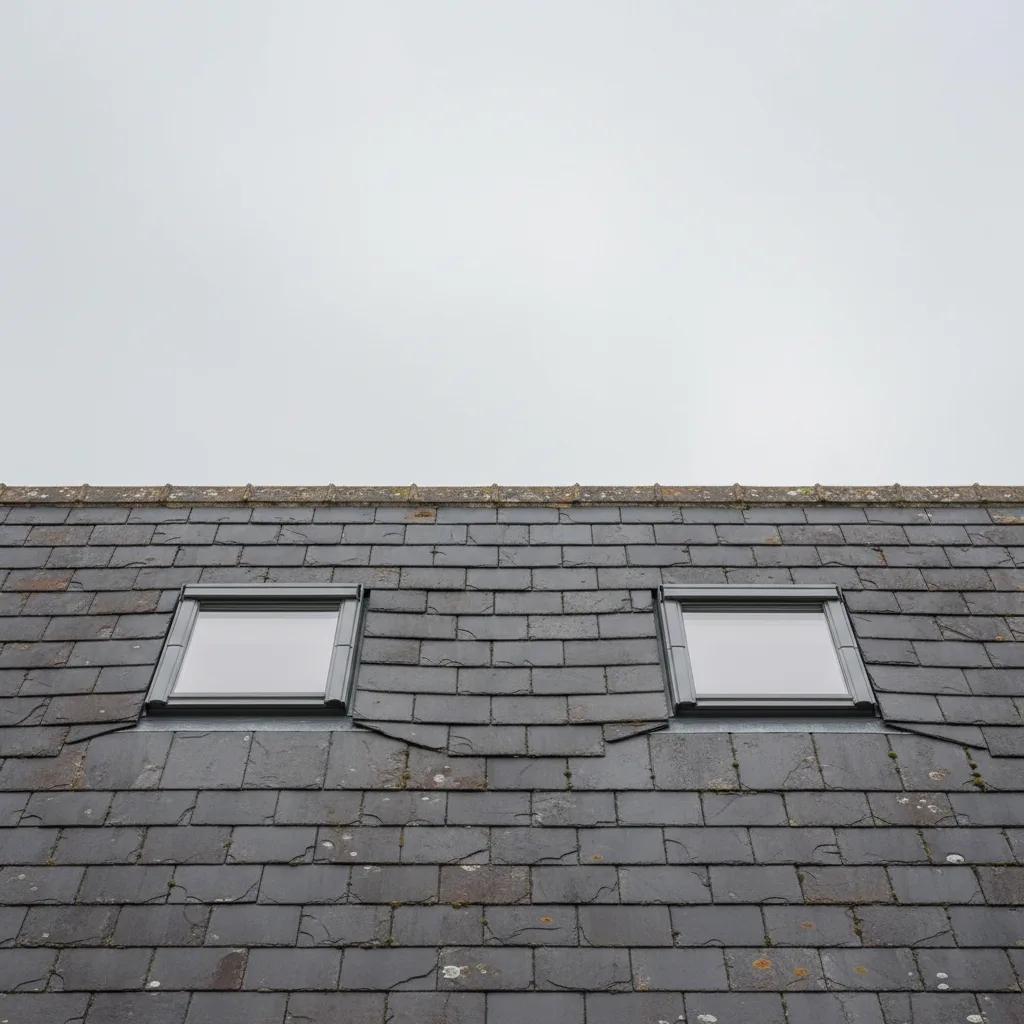 Electric and Opening Rooflights
Read more
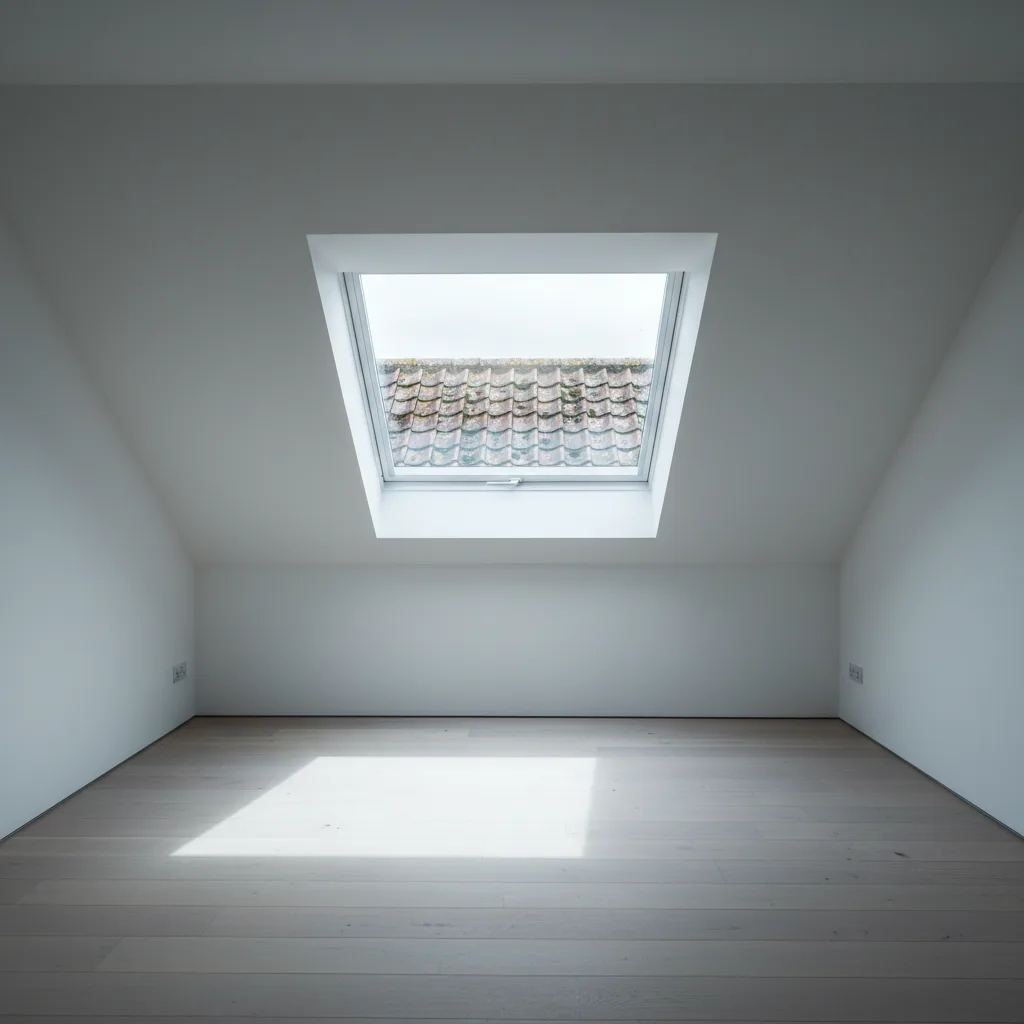 Energy Efficient Rooflights
Read more
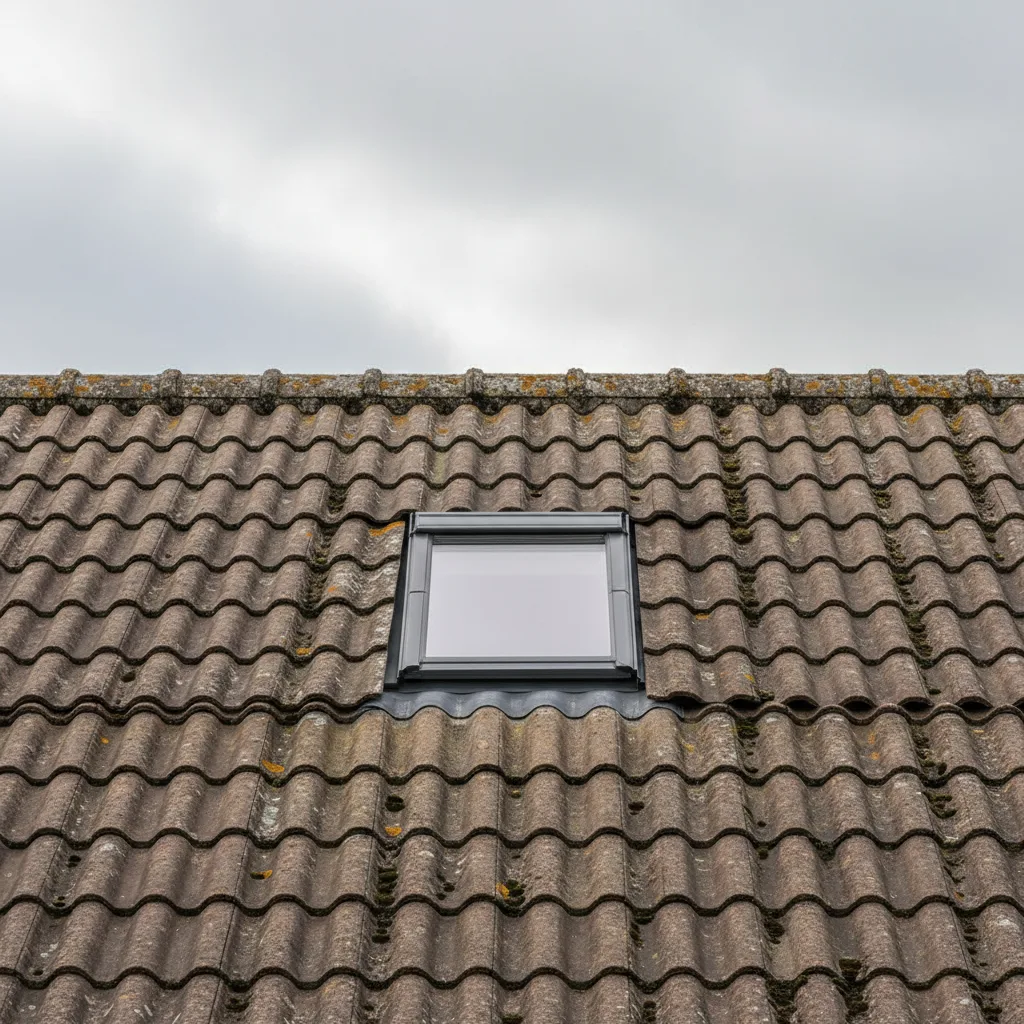 Replacing a Failed or Misted Rooflight
Read more
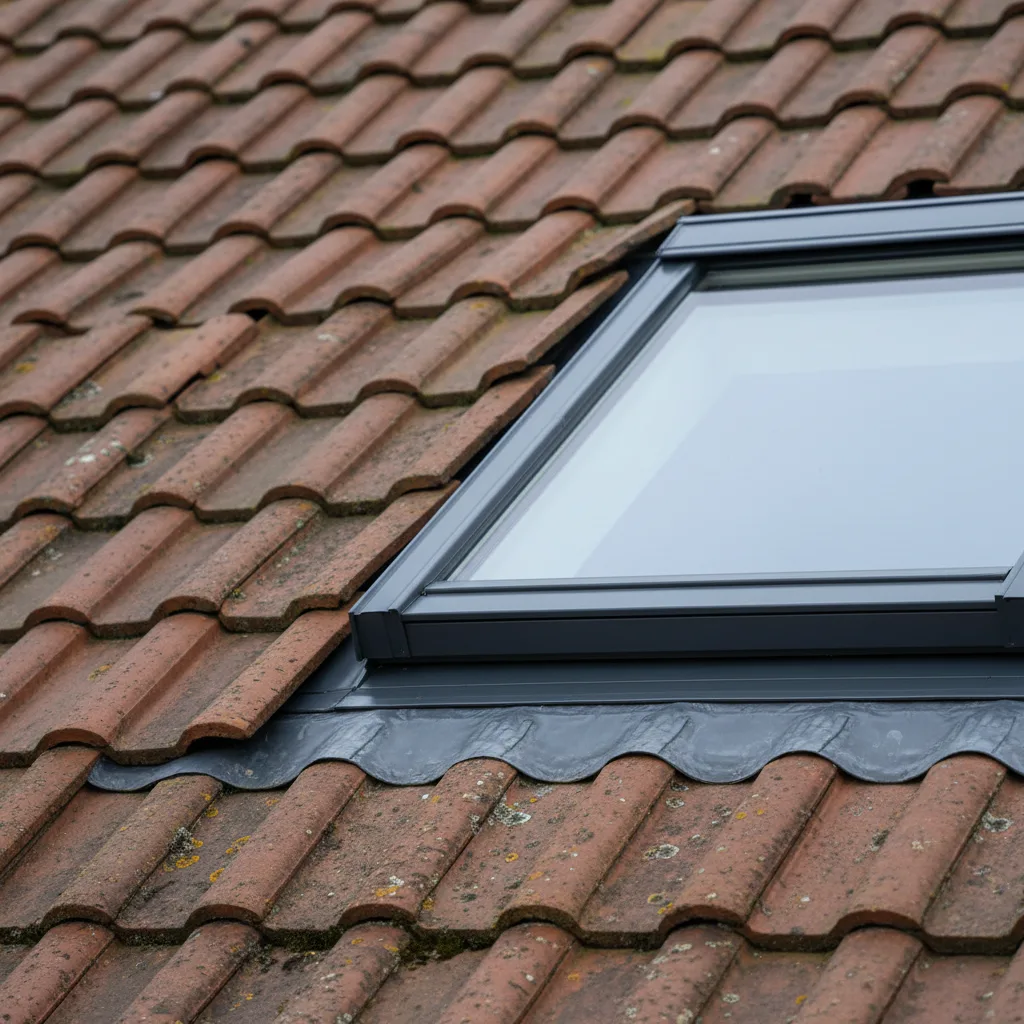 Walk-On Rooflight Installation
Read more
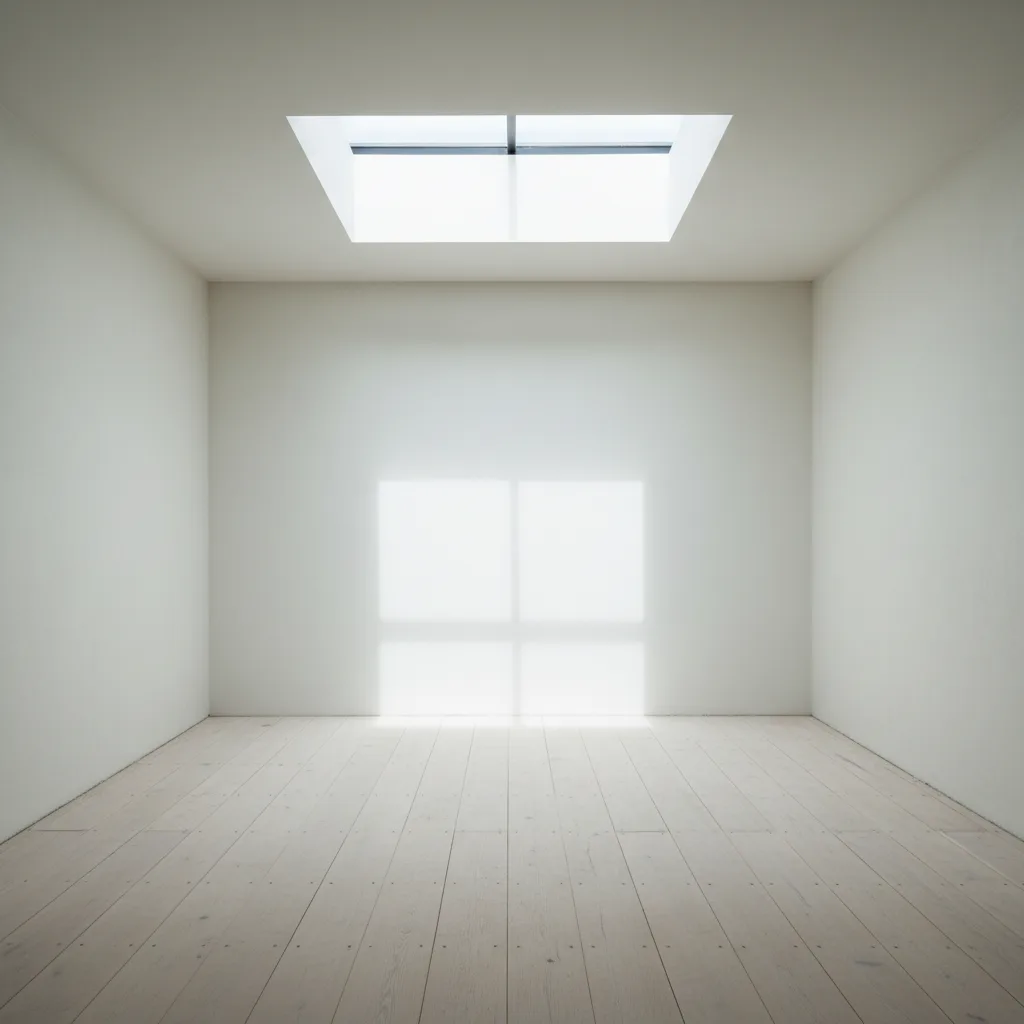 Conservation Rooflight Installation
Read more
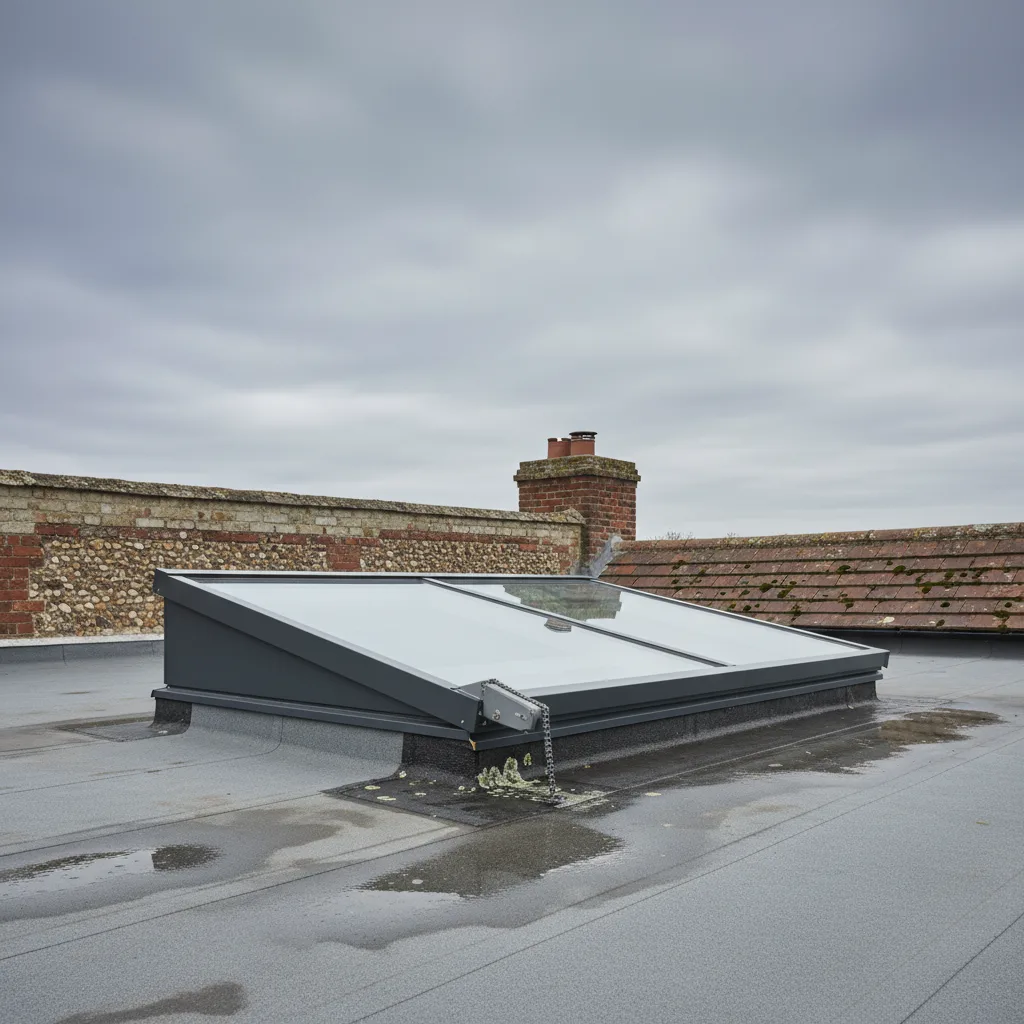 Sun Tunnel Installation
Read more
Braintree is the largest town on the western side of our patch, an old market and weaving town with a historic centre and a great deal of modern development around it.
Properly inland

This is the one part of our area where salt is a non-issue. Standard architectural powder coat is entirely adequate here, and specifying marine grade would be spending money for nothing.
That matters because it is the clearest example of why the survey decides the specification rather than the catalogue: the same unit costs less here than on Mersea, correctly.
The historic centre

Conservation coverage over the old core, timber framed and Georgian buildings, some listed. Flush conservation rooflights on visible slopes, consent first on listed stock.
The modern edge

Large areas of estate housing from the 1970s onwards. Trussed roofs almost throughout, profiled concrete tiles, and the two rules that always follow: deep profile flashing kits for roof windows, and no cutting trusses without a structural design.
Rear extensions are common on the older suburban stock and take the usual flat roof rooflight decisions.
Skylight and rooflight work we cover in Braintree

Roof lanterns, flat roof rooflights, roof windows, VELUX replacements, conservation units and sun tunnels, all surveyed before they are quoted. We also work in Bocking, Great Notley and Halstead.
A market town with a very mixed roofscape

Braintree covers a wide range of building periods in a small area. There is a historic centre with listed buildings and conservation designation, substantial Victorian and Edwardian expansion from the textile years, interwar and post war housing, and a large amount of modern development around the edges.
Because we cover Braintree from Colchester, we are usually asked two things first: whether we actually come out here, and whether the price is different. Yes, and no. Distance affects how we plan a day rather than what appears on the quotation.
The Victorian and Edwardian stock
Steep pitches, traditional cut roofs with rafters and purlins, and slate or clay plain tile coverings. These are good roofs to work on. The pitch means gravity does much of the weathering work, the structure allows a proper opening without a trimmer in most cases, and the headroom gain from a roof window is generous.
What varies is what is underneath. A roof that has never been stripped may have no underlay at all. Modern rooflight weathering assumes a membrane to lap into, and where there is none the detail is built around the opening instead. Entirely normal, more work, and it should appear in the quotation rather than on the day.
Slate is the easiest covering in this trade for a skylight installation, because the flashing arrangement is a straightforward soaker and apron and individual slates can be lifted and replaced without damaging their neighbours. Old clay plain tiles are the opposite: brittle, small, double lapped, and a proportion will break however careful the work.
The historic centre
Conservation area coverage and a good number of listed buildings, and the two are separate regimes that stack rather than replace one another.
A conservation area does not by itself remove permitted development for rooflights on a house. An Article 4 direction does, and directions are common on street facing elevations in town centres. Whether one applies is a question for the council rather than a judgement call.
A listing is absolute: listed building consent is required for a rooflight on any slope, visible or not, because the listing covers the whole building. Flats and maisonettes, meanwhile, have no permitted development rights at all regardless of designation.
Where an application is needed, a conservation rooflight is the design that gets through. Low profile so it sits close to the plane of the covering, upright rather than wide, a central glazing bar, matt black. The profile matters more than the other three combined.
Post war and modern housing
Concrete interlocking tiles, pitches around 30 degrees, cut roofs on the earlier properties and trussed rafters from the 1970s onward.
The cut against trussed distinction decides more about the price than the choice of window does. A photograph looking up inside the loft answers it: rafters with a purlin and clear space between is cut, and a wide opening is ordinary carpentry. Triangular frames with diagonal webs joined by flat steel plates is trussed, and opening width is limited to the 600mm truss spacing unless a designed trimmer is installed.
Profiled tiles need a deep flashing kit rather than a flat one. Ask any quoting installer which kit is specified for your covering by name.
What we fit most in Braintree
Loft conversion roof windows in the older housing, where the pitches and the cut roofs make conversions work well. Flat roof rooflights and lanterns over rear extensions across all periods. Replacement of units fitted in the 1990s, which is now a large share of the work everywhere. And sun tunnels into internal bathrooms in the terraced stock, where there is no external wall and no available slope.
Access and travel
Variable. The modern estates and the interwar roads are easy, with driveways and space for a tower. The town centre terraces are tight, with no off street parking, narrow frontages onto the pavement, and sometimes no side access to the rear, which means scaffold needs a highway licence and materials may need to come through the house.
We plan Braintree work as full days rather than as short visits, which suits larger jobs and multiple units better than a single small item. If you have more than one thing that needs doing, mention it, because access is a fixed cost shared across everything done on the same visit.
Condensation, and telling it apart from a leak
A good share of the callouts we take in Braintree turn out not to be leaks at all. The older housing here has been insulated, draught proofed and double glazed over the decades without gaining any ventilation strategy, so it holds moisture, and moisture condenses on the coldest surface in the room.
In a room with a rooflight that is very often the glass or the plaster around it. Water forms, it runs, and it looks exactly like a leak from below.
Condensation appears on cold mornings, is worst in deep winter, forms evenly across the inner face of the glass, and bears no relation to whether it rained. It clears as the day warms.
A leak follows rain, and usually rain driven from one particular direction. It arrives at one point rather than spread evenly, and it leaves a mark that is still there when everything has dried.
Misting inside the sealed unit is neither. If the moisture is between the panes and cannot be wiped off either face, the perimeter seal has failed. That is a unit at the end of its life, which happens at fifteen to twenty five years, rather than an installation problem.
There is one case where internal water genuinely is a fault. If it forms on the plastered reveal rather than on the glass, the usual cause is a missing insulation collar, the component that closes the gap between frame and structure. Without it the reveal is cold enough to condense. It is a separate order line, it is the first thing dropped from a cheap quotation, and the symptom does not appear until months later when nobody connects the two.
Ventilation is the fix
Where condensation is the diagnosis, nothing done to the window solves it. Moving air does.
An opening at the highest point of a room lets warm moist air leave and pulls drier air in through anything open lower down. That clears a room in minutes where a wall window alone takes hours. It only works if something at low level is open as well.
Where the unit is above easy reach, a motorised opener with a rain sensor is worth the premium, because a window that closes itself when it starts raining is a window that actually gets left open. Where running mains cable through a finished ceiling would mean lifting floors and chasing walls, a solar powered opener needs no connection at all and goes in within a couple of hours.
What we will tell you before charging for a visit
Send a photograph of where the water appears and, if you can do it safely, one of the outside of the unit. Say whether it follows rain or cold mornings. Between those we can usually tell you which of the four situations above you are in, and two of them do not need anybody to come out at all.
Sun tunnels in the terraced stock
The Victorian terraces here have narrow plans, and a good number have an internal bathroom, WC or hallway with no external wall and no available roof slope. There is no rooflight answer for a room like that, but there is a tunnel answer wherever there is a loft above.
A rigid mirrored tube runs from a small dome in the roof down to a diffuser in the ceiling and brings genuine daylight into a room that has never had any. It is the cheapest daylight in this trade by a wide margin, and the roof component is small and low enough to be effectively invisible from the street, which matters where a conservation area applies.
Three things decide whether it works properly.
Rigid rather than flexible. A rigid mirrored tube reflects 98 percent or better at each bounce. A flexible foil concertina reflects perhaps 80 percent and scatters light at every fold, and over a run from a terrace roof down to a ground floor ceiling that difference is most of the light.
Diameter. Output goes with area rather than width, so a 350mm tube passes roughly twice the light of a 250mm one. 250mm suits an internal WC, 350mm a landing or a decent bathroom, 530mm a room you actually live in.
Insulation and sealing. The tube is insulated where it crosses the cold loft and the ceiling ring is sealed airtight, or warm moist room air gets into the tube, condenses on the cold metal, and arrives at the diffuser looking exactly like a leak.
It is not a rooflight and we will not pretend otherwise: no view, no ventilation, no sense of sky, and nothing after dusk. Most units take an optional light fitting inside the diffuser so the same ceiling opening does both jobs. What it gives you, on a dull afternoon in a windowless bathroom, is enough daylight not to reach for the switch.
| Local factor | In Braintree |
|---|---|
| Planning authority | Braintree District Council |
| Conservation position | Conservation area over the town centre |
| Typical roof covering | Clay plain tile and concrete interlocking |
| Roof structure | Mixed cut roofs and trussed rafters |
| Exposure | Inland, standard coatings |
| Most common job here | Flat roof extension rooflights |
Timescales and lead times
A like for like replacement into a sound opening is a single day. A new opening in a tiled roof with making good runs to three or four days depending on the plastering. A lantern on an existing extension, including structural work, is usually a week.
What lengthens a programme is the order rather than the work. Stock size roof windows are quick; made to measure units and lanterns run to several weeks. Where a structural engineer is involved, their drawing comes before the order rather than alongside it. Where listed building consent is needed in the historic centre, that is measured in months and it comes first.
The sensible sequence is survey, permission where needed, structural check where needed, order, then book the fitting to the delivery date. Booking the fitting first and hoping the unit arrives is how jobs slip.
We plan Braintree work as full days rather than short visits, which suits larger jobs and multiple units better than a single small item.
Asked by people in Braintree
Is Braintree's town centre protected?
The historic centre carries conservation designation, while the considerable modern development around the town does not. Braintree District Council will confirm the position for a specific address.
What is the usual job on the modern housing?
Trussed rafters, concrete interlocking tile, deep profile flashing, and a unit sized to sit between two trusses so nothing structural is needed. It is predictable work and quotations rarely move after survey.
Is there any coastal exposure here?
None. Braintree is the largest town on the western side of our patch with no coastal exposure at all, so the standard specification applies and there is no marine coating conversation.
Do you cover Bocking and Great Notley too?
Yes, and the villages around them. Braintree, Bocking, Great Notley, Gosfield and the Hedinghams are all within our patch.
More areas we cover
Ready to bring the daylight in?
Tell us about your project and we’ll send a clear, fixed written quote, no pressure, no surprises.
- Fixed written price before any work starts
- No pressure, no obligation, no sales calls
- Flexible survey times that suit you
- A reply within one working day