Can two roof windows share one flashing?
They need a combination kit, which is a specific product. Two single kits butted together will leak.
Part of our Roof Window Installation guide
Two windows side by side are weathered with a combination flashing kit, which is a specific product rather than two single kits used together.
What it does differently
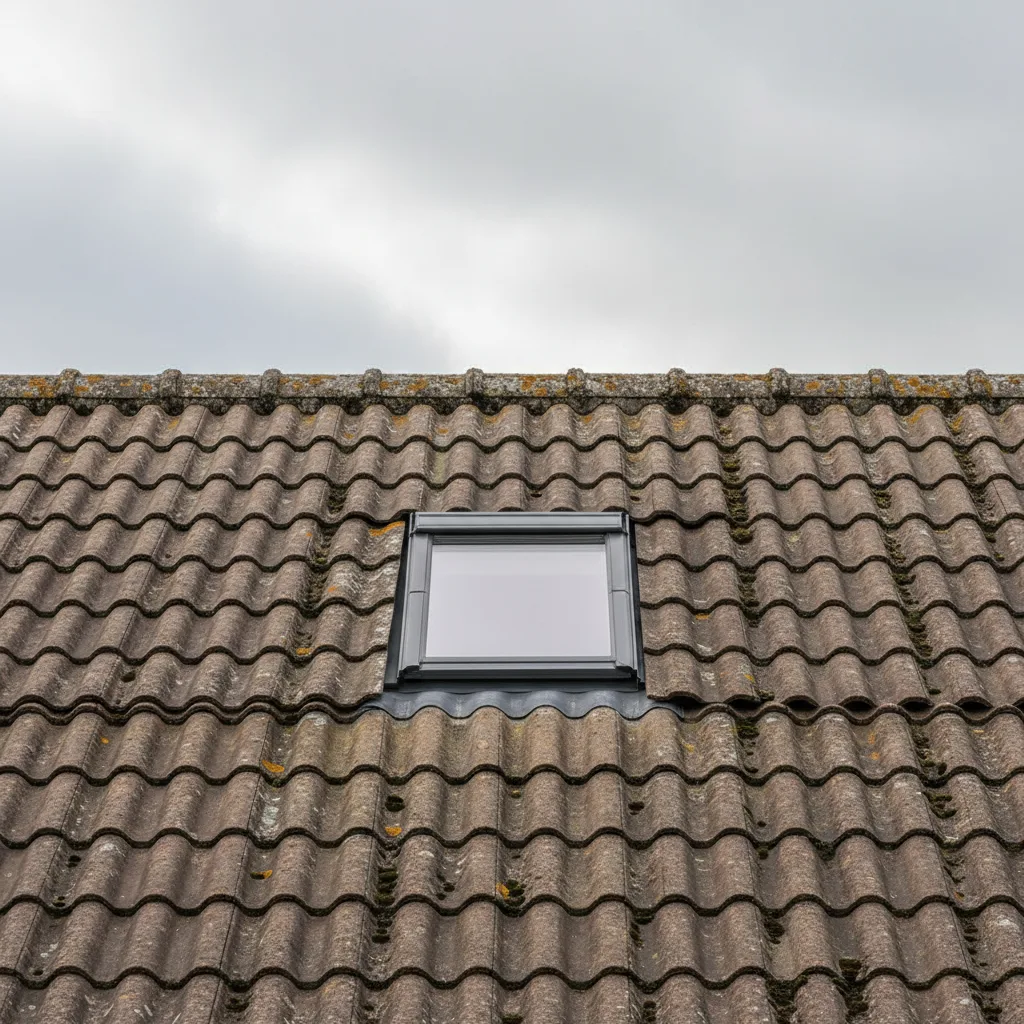
Between two adjacent windows there is a narrow channel with a great deal of water arriving in it: run-off from both windows plus whatever the roof above delivers. A combination kit provides a proper flashed gutter down that gap, carrying the water out at the bottom.
Two single kits butted together give you two apron edges facing each other with no designed drainage between them. It leaks, and because the leak is between two windows it is often blamed on both.
The gap is fixed

Combination kits specify the distance between units, typically 100mm or 250mm depending on the system. That is not adjustable on site: the flashing is manufactured for it.
Which means the opening has to be set out to that dimension. Getting it wrong by 30mm means either a new kit or altering the opening, and on a trimmed roof neither is trivial.
Structure

Two windows either side of an existing rafter, with the combination gap matching the rafter width, is the cheapest arrangement because nothing structural changes.
Where the gap does not align with a rafter, the opening is trimmed as one and the rafter between removed, which is more work.
Vertical combinations

One above another, on a tall roof. Kits exist. Worth thinking about whether the upper window will be too high to see out of, in which case it is a light source rather than a window.
Three or more

Same principle, with kits available for runs. Past three the setting out becomes critical, because a cumulative error of a few millimetres per gap adds up across the run.
Yes, with a coupling kit

Most manufacturers make purpose designed coupling kits that join two or more roof windows side by side or one above another, with a common flashing running around the group and a slim structural section between the units.
From the ground it reads as one wide opening divided by a bar, and it is a proper engineered solution rather than an improvisation.
What it must not be

Two windows butted together with a flashing improvised between them. The junction between two units is the hardest detail on the roof, water arrives there from both sides, and it is not something to invent on site.
If a quotation proposes coupling without naming the manufacturer’s kit, ask what is going between them.
Why couple rather than fit one large unit

Structure. Two narrower units may sit between rafters or trusses without any structural trimmer, where one wide unit would need one. On a trussed rafter roof that is frequently the difference between a straightforward job and an engineered one.
Handling. Two moderate units go up a tower. One very large unit may need a lift.
Cost. Glass price rises steeply rather than proportionally with size, so two moderate panes are usually cheaper than one large one of the same total area.
Failure. They fail independently, so a seal failure in twenty years means replacing one modest unit rather than a very large and expensive pane.
What coupling requires
Consistent spacing, which means the structure has to accommodate the specified gap exactly. That is measured off the roof rather than assumed from a drawing, and it is one reason a survey does real work here.
It also means both units have to be the same model and, usually, the same height.
Mixing fixed and opening
A coupled pair can combine a fixed unit with an opening one, which is frequently the sensible specification. You get the glazed area without paying for two mechanisms, and the opening unit provides the ventilation and, where required, the means of escape.
The alternative
Two separate units with a gap between them, each with its own flashing. In most rooms that gives better light distribution than a coupled pair, because two spaced apertures read as ambient daylight where one wide opening gives a bright band with the ends darker.
Couple where the effect wanted is a single generous opening. Space them where the aim is an evenly lit room.
Yes, and it is the correct way to do it
Manufacturers make combination flashing kits specifically for units installed side by side or one above the other, and they are the right product for the situation.
A combination kit provides a single continuous weathering system across both openings, with a purpose made section between them. It is not two separate kits butted together.
Why two separate kits fail
Where two individual kits meet, there is a junction that neither was designed to make. The side flashing of one has to interface with the side flashing of the other, and between them is a narrow strip of covering, frequently too narrow to lay properly.
That strip is the failure point. It is too small to shed water reliably, it collects debris, and on a shallow pitch it holds water against both flashings.
An installer who has done this is usually working around not having ordered the right kit.
The dimension that must be right
Combination kits specify the gap between the units, and it is not a preference. It is a fixed dimension the kit is built around, and it corresponds to the rafter left between the two openings.
That means the structural opening positions are determined by the kit before any carpentry starts. Setting the openings by eye and ordering the kit afterwards is how a pair of windows ends up needing lead dressed by hand.
The bonus of doing it this way
Two units side by side over the same rafter give a wide expanse of glass without cutting a rafter, which is far cheaper than one wide opening. The combination flashing makes the pair read as a single element from the ground.
More on Roof Window Installation
Ready to bring the daylight in?
Tell us about your project and we’ll send a clear, fixed written quote, no pressure, no surprises.
- Fixed written price before any work starts
- No pressure, no obligation, no sales calls
- Flexible survey times that suit you
- A reply within one working day