How steep can a roof be for a roof window?
Steeper is rarely the problem. Most units work from about 15 to 90 degrees.
Part of our Roof Window Installation guide
Most standard roof windows are made for pitches from about 15 to 90 degrees, and the common domestic range of 20 to 55 sits comfortably inside that.
Steep roofs
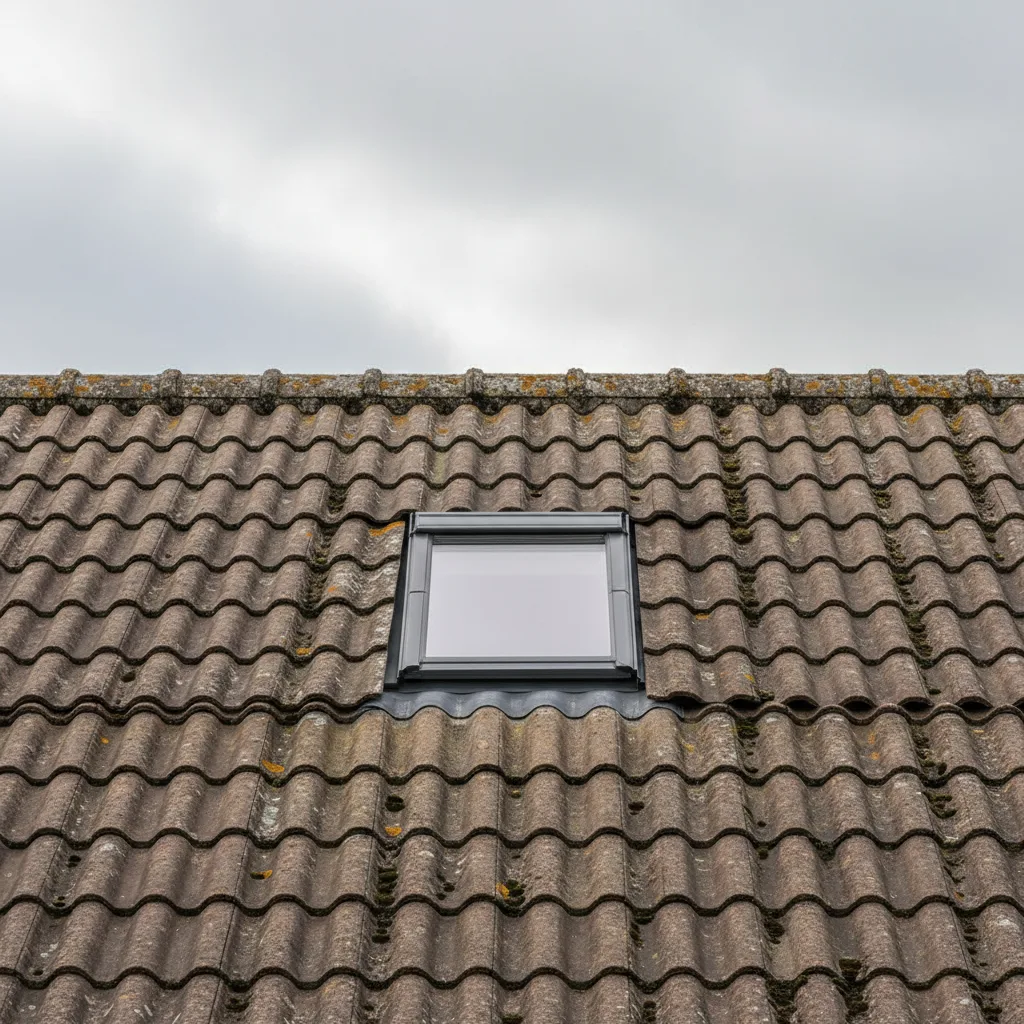
Rarely a technical problem. Victorian and Edwardian roofs at 45 degrees or more take roof windows without difficulty, and the steepness helps: better drainage, less debris, quieter in rain, and a view that is more horizontal.
Two practical points. On a very steep roof a centre pivot window swings further into the room. And access for installation is harder, which usually means scaffold.
Very steep, near vertical

Above about 75 degrees you are effectively fitting a wall window in a roof, and manufacturers make specific units for it, often for dormer cheeks.
Shallow roofs, the real constraint

Below 15 degrees is where problems start. Standard flashing kits are outside their working range, water moves slowly enough to work back under laps, and debris stays.
Low pitch kits extend the range to around 10 degrees with deeper laps and modified soakers. They cost more and they are the correct answer between 10 and 15.
Below 10 degrees a roof window is the wrong product. A kerb mounted rooflight is the right one, because the kerb creates the height above the water line that the roof does not provide.
Locally

Plenty of post-war housing in Colchester has shallow roofs, and it is worth establishing pitch at survey before anyone gets attached to a product. It takes five minutes and it saves specifying something that cannot be fitted.
Most manufacturers state 15 to 90 degrees

The usual working range for a pitched roof window is a minimum of around 15 degrees and a maximum of around 90, which covers effectively every domestic roof in this country and a good many walls as well.
The minimum exists because below it water no longer sheds reliably and the flashing detail cannot cope. The maximum is generous enough that steepness is almost never the constraint.
Very steep roofs

Roofs above about 55 degrees are unusual in domestic building but they occur: some Victorian and Edwardian houses, Gothic revival work, and steeply pitched plain tile and shingle roofs.
Two practical points. The window operates differently, because a centre pivot sash on a very steep slope behaves more like a wall casement, and the balance point changes. And working on the roof needs proper access, because a steep slope is not somewhere to be standing.
Manufacturers publish which models suit which range, and on anything unusual it is worth confirming rather than assuming.
Very shallow roofs

The more common problem. Below 15 degrees a standard pitched roof window is out of specification, and the answer is a flat roof rooflight on a kerb instead, which is designed for exactly that situation.
Some manufacturers make specific units for the 10 to 15 degree band, and they are worth asking about on a shallow mono pitch extension roof.
What changes with pitch

Weathering. The shallower the roof, the less water sheds naturally and the more the flashing detail is doing. On a 45 degree slate roof gravity does half the job; on a 27 degree modern tile roof it does considerably less, and the correct deep profile kit becomes critical.
Headroom gain. A window in a steep slope gains you a lot of standing height. The same window in a shallow roof gains much less.
The reveal. A shallow pitch gives a longer reveal, which blocks a surprising amount of the light the window collects. Splaying it, cutting back at an angle at head and sill rather than boxing it square, opens the beam out and is the best value upgrade available on a shallow roof.
Solar gain. A shallower unit is closer to horizontal and collects more of the high summer sun, which argues for solar control glass on a sunward facing shallow slope.
Mixed pitches
Older properties extended repeatedly frequently have different pitches on different sections. Each opening is assessed on the slope it actually sits in rather than on the roof as a whole, which is one reason a survey does real work on a period building.
The upper limit and what it affects
Most mainstream roof windows are warranted across a broad pitch range, and standard domestic roofs sit comfortably inside it. Very steep roofs, above the mid fifties in degrees, start to fall outside some ranges and the manufacturer specification has to be checked rather than assumed.
What changes at a steep pitch is not weathering, which gets easier, but operation. A centre pivot sash on a very steep roof swings out a long way when rotated, and the balance of the mechanism is designed around a pitch band.
Reach changes too. On a steep roof the head of the window is a long way up the slope from the floor, and a window that is easy to open at 35 degrees may need a pole or a powered opener at 60.
The choice of operation follows from the pitch
On a steep roof a top hung window frequently works better than a centre pivot, because it opens outward and upward and leaves the whole opening clear rather than putting half the sash into the room.
On a shallow roof the reverse applies, and a centre pivot is easier to operate because the top of the window is within reach.
The other end of the range
The minimum pitch matters more in practice, because water moves slowly on a shallow roof and driven rain has more chance to get under the covering. Below the manufacturer minimum, a pitched roof window is not warranted and a flat roof unit on a kerb is the correct product instead.
More on Roof Window Installation
Ready to bring the daylight in?
Tell us about your project and we’ll send a clear, fixed written quote, no pressure, no surprises.
- Fixed written price before any work starts
- No pressure, no obligation, no sales calls
- Flexible survey times that suit you
- A reply within one working day