Rooflight and skylight installation in East Mersea
The quiet end of the island: farms, scattered houses and full exposure.
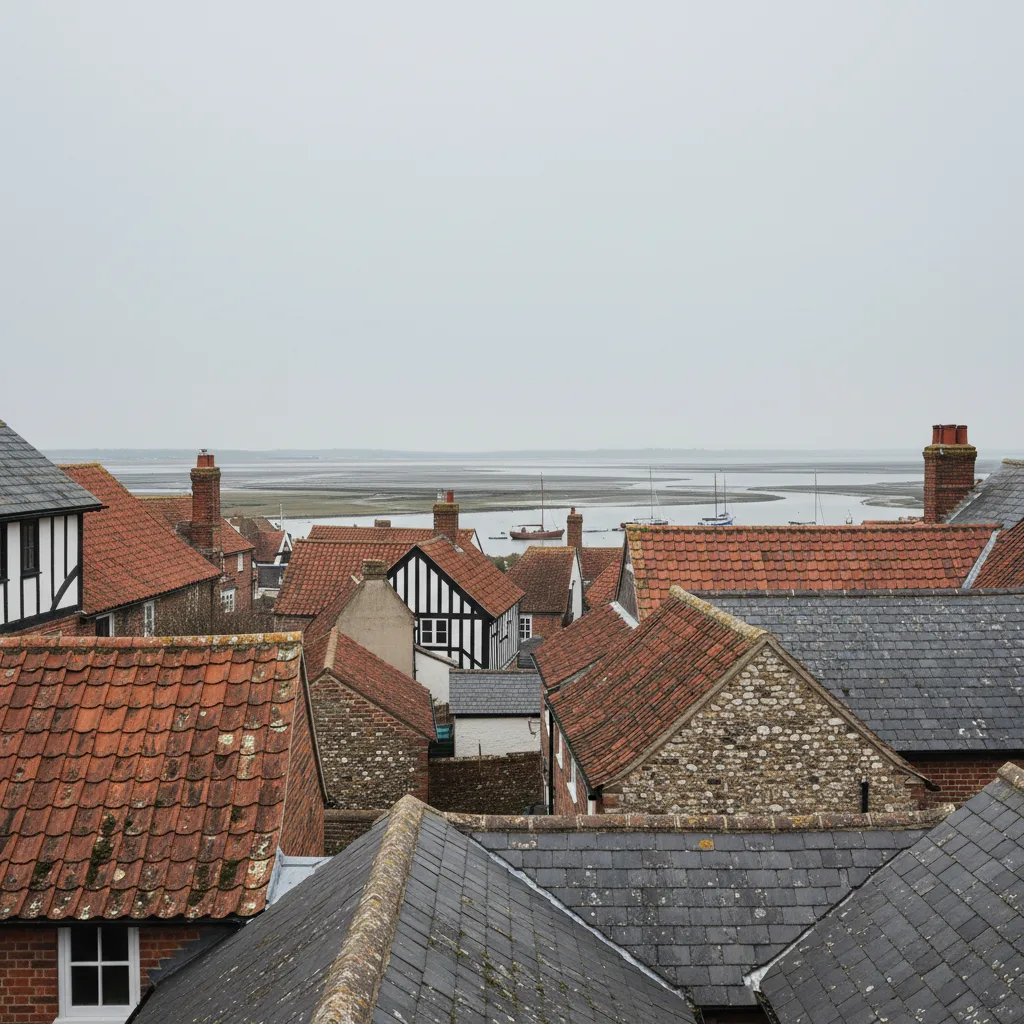
Rooflights we install in East Mersea
Every job is surveyed first. The right unit depends on the roof you have, not on what we would rather sell.
 Roof Lantern Installation
Read more
 Flat Roof Rooflight Installation
Read more
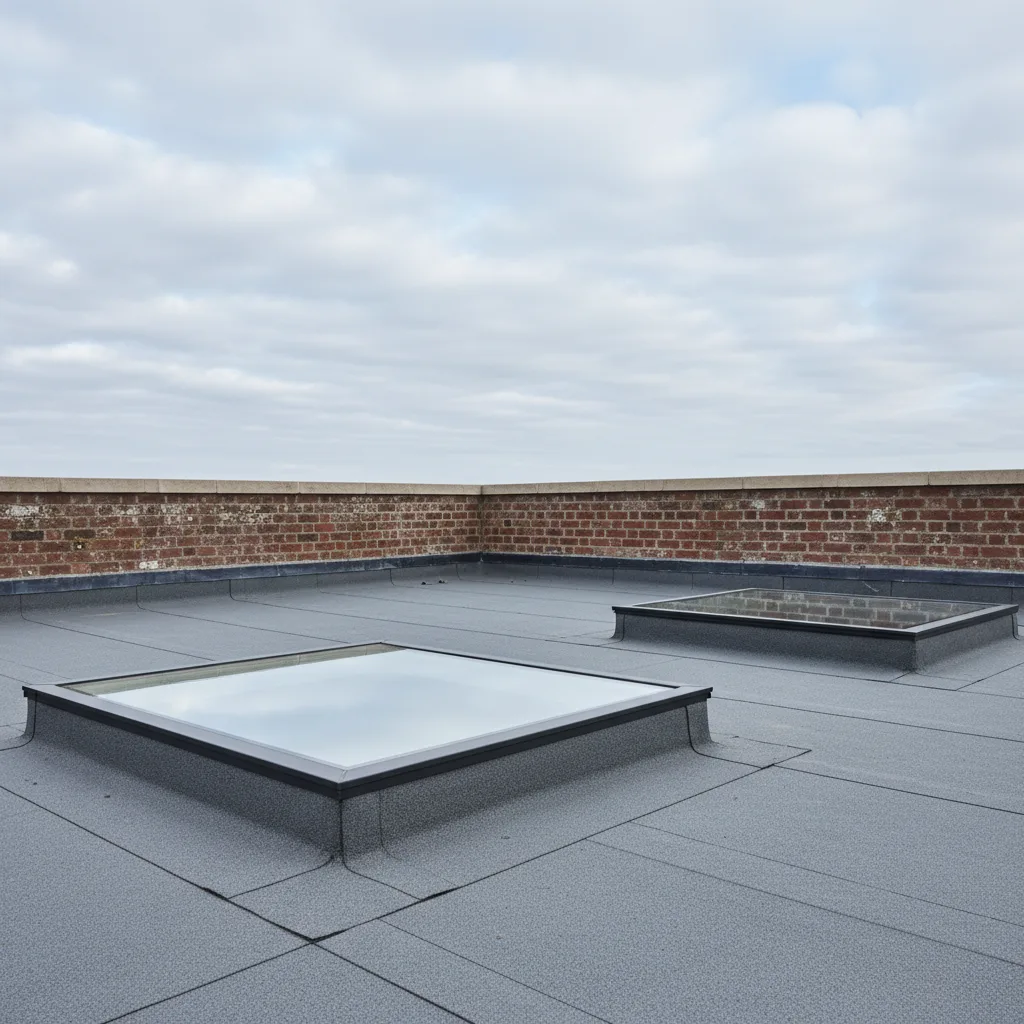 Roof Window Installation
Read more
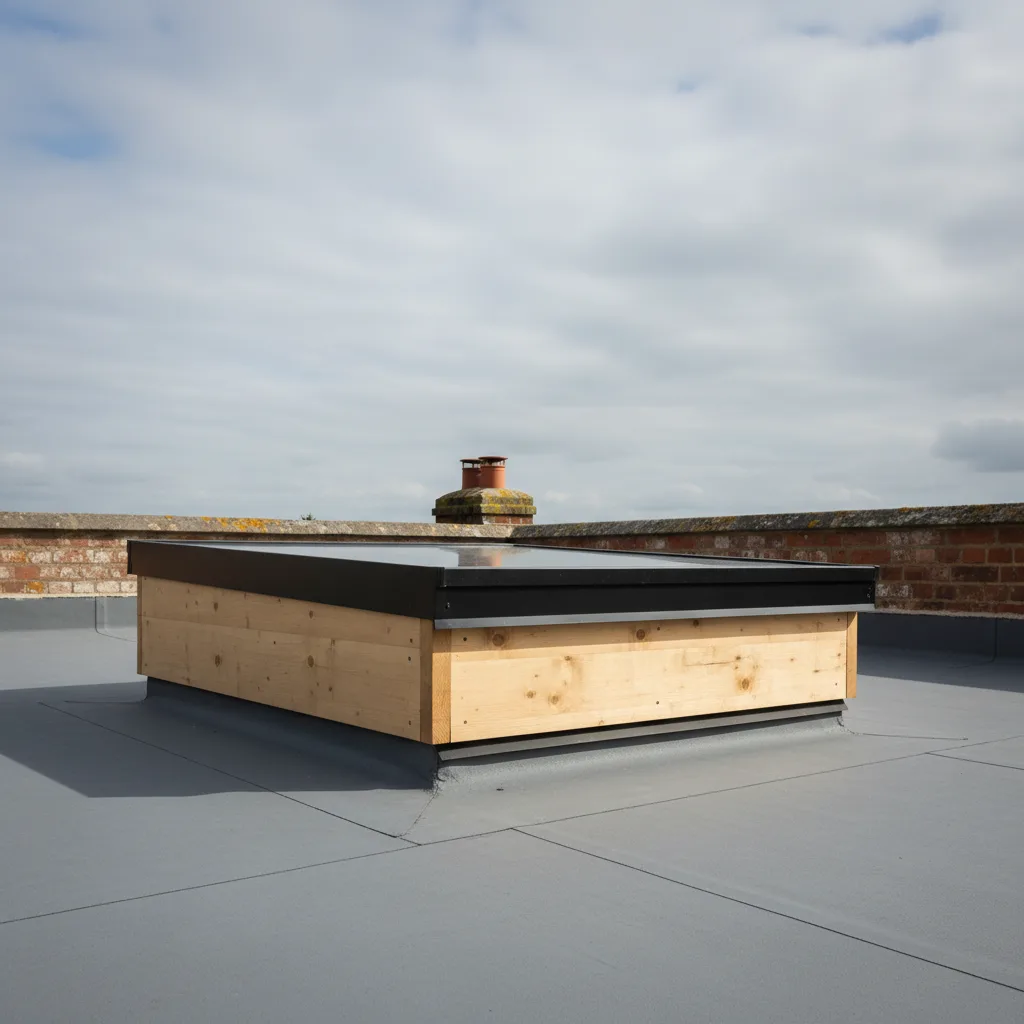 VELUX Window Installation
Read more
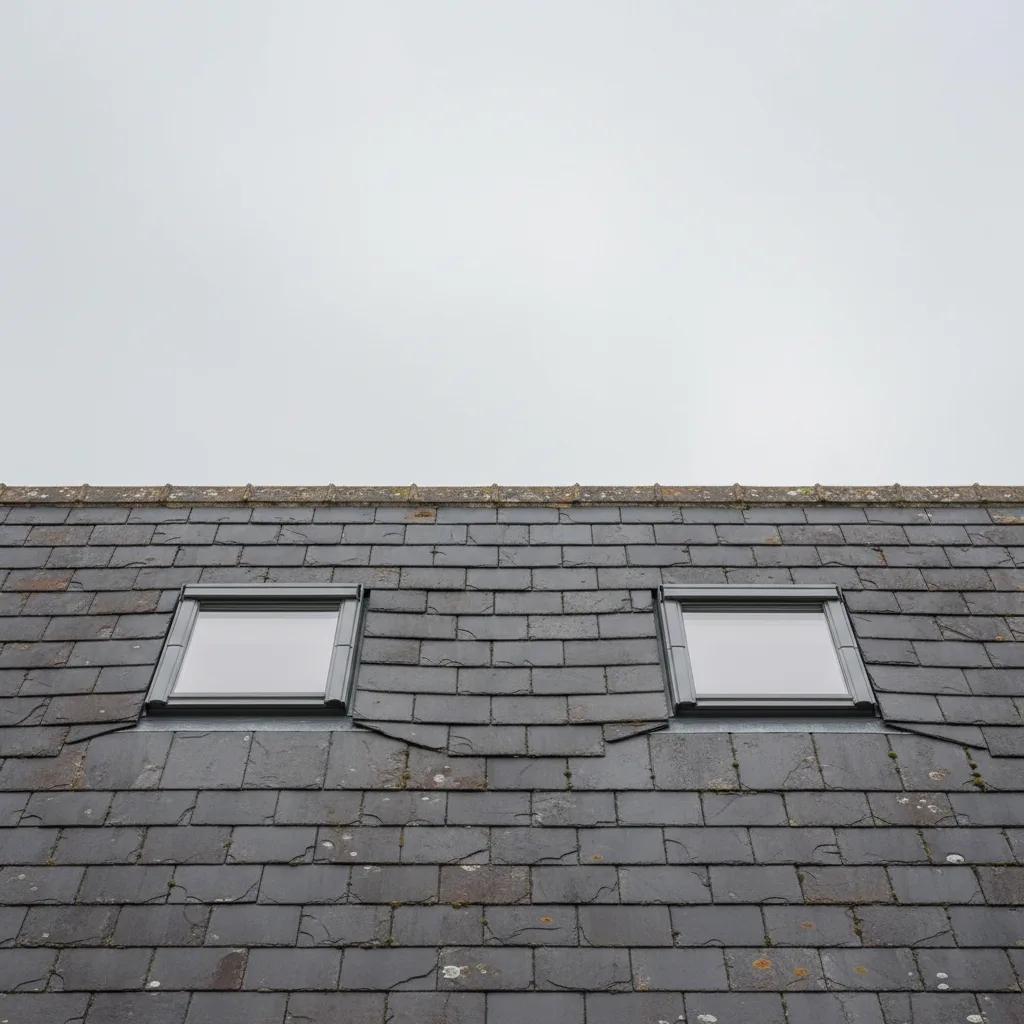 Electric and Opening Rooflights
Read more
 Energy Efficient Rooflights
Read more
 Replacing a Failed or Misted Rooflight
Read more
 Walk-On Rooflight Installation
Read more
 Conservation Rooflight Installation
Read more
 Sun Tunnel Installation
Read more
East Mersea is the quiet end of the island, largely farmland with scattered houses, a church and holiday accommodation.
Same causeway, same salt

Everything said about the Strood and about marine grade specification on the West Mersea page applies here, and if anything the exposure is higher because there is less shelter.
Rural and holiday stock

Farmhouses, converted outbuildings and holiday properties. The conversions are good candidates for rooflights because they have large roof planes and few wall openings, and where they are listed the flush conservation unit is what gets agreed.
Holiday lets bring a scheduling constraint rather than a technical one: work usually has to fit between bookings, which favours a short predictable job over an open-ended one.
| Local factor | In East Mersea |
|---|---|
| Planning authority | Colchester City Council |
| Conservation position | Limited |
| Typical roof covering | Clay pantile |
| Roof structure | Cut roofs |
| Exposure | Exposed coastal. Marine grade coating and stainless fixings |
| Most common job here | Replacement to a marine specification |
Skylight and rooflight work we cover in East Mersea

Roof lanterns, flat roof rooflights, roof windows, VELUX replacements, conservation units and sun tunnels, all surveyed before they are quoted. We also work in West Mersea, Peldon and Brightlingsea.
The far end of the island

East Mersea is the quieter half of the island: a scattered parish of farms, cottages and a small number of houses, with the church, the country park and a long stretch of undeveloped coast. There is no village centre in the ordinary sense.
Two facts govern the work here. The properties stand in open ground on an island, which is about as exposed as building gets in Essex. And there are not many of them, which means every job is an individual building.
Exposure, which decides the specification
This is the most weather beaten position we work in and the specification should reflect it rather than repeat what would be fitted inland.
Stainless steel fixings throughout. Salt is in the air here most days of the year, and plated fixings corrode within a few years. Once a fixing has gone, the flashing it held is loose. The cost difference is trivial and it cannot be put right later without opening the work up.
A high durability exterior finish. Aluminium clad timber suits this position particularly well, because the cladding takes the weather and the timber behind it stays dry. Where a manufacturer offers a coastal grade coating, take it, and note that in some cases it is a condition of the warranty.
Weathering sized for driving rain. What matters here is not how much rain falls but how it arrives. Wind driven water is pushed under a covering rather than running down it, so gravity is doing very little of the work and the underlay collar and the flashing kit are doing almost all of it. A universal kit adequate in a sheltered position will let water past here within a couple of winters, and it is precisely where a low quotation saves money.
Wind loading checked against the site. Not assumed from a catalogue, particularly on larger units and anything that opens. An open sash is a sail and the stay and actuator have to hold it in gusts inland properties never see. A rain sensor on a motorised unit earns its keep here more than anywhere.
Realistic expectations on sealed unit life. Fifteen to twenty five years in an ordinary position, and toward the shorter end here, because the perimeter seal takes more thermal cycling, more wind driven water and more salt.
Farms and converted buildings
Most of the older property here is agricultural in origin or associated with it, and those buildings are their own category.
The first question is what the roof is actually made of, since historic timber, twentieth century lightweight trusses and steel frames all occur, and the answer decides whether a heavy unit such as a lantern needs structural work. It is not something to assume from the appearance of the building.
The second is what any conversion permission said, because conversions are frequently granted with conditions about rooflights, or with permitted development rights removed entirely by condition, and those conditions run with the property.
Where a property is listed, listed building consent is required for a rooflight on any slope, visible or not, with no small works threshold.
Access, and the causeway
The Strood floods on the highest tides, which is the one genuinely unusual logistical fact about working on Mersea. We check tide times when planning a delivery of a large unit or a scaffold erection. It sounds fussy and it prevents a wasted day.
On site, access is excellent. Space around almost every property to stand a tower or erect scaffold on private land, no highway licences, and generally room for a delivery vehicle. The practical constraint is more often the single track lanes than the working position.
Because the parish is small and remote, we plan East Mersea work as full days rather than short visits. Access and travel are fixed costs shared across everything done on the same visit, so if there is more than one thing that needs doing, mention it at the enquiry stage rather than one item at a time.
What a job costs out here

An indicative range by email from a photograph, free and without an appointment, then a fixed written itemised price after survey.
What moves the number on an East Mersea property is not the same as inland. The unit costs slightly more, because coastal grade fixings and finishes are worth specifying and stock timber units are not. The weathering costs more, because the flashing kit is generously sized and correctly profiled rather than universal. And travel is a fixed cost that is more worth sharing here than anywhere, since the parish is small and remote.
Against that, access on site is excellent and rarely needs scaffold on the single storey property that makes up much of the parish, which pulls the other way. A straightforward roof window into a bungalow slope here is not an expensive job.
Doing more than one
The reliable saving. Access and travel are fixed costs shared across everything done on the same visit, and on an island parish that share is proportionally larger than in town.
Since units fitted at the same time fail at about the same time, and coastal exposure brings sealed unit life toward the shorter end of the fifteen to twenty five year range, a second replacement is usually coming whether it is planned or not. If two of three have misted, ask what the third costs while we are already there.
What the quotation itemises
The unit with manufacturer, model, size and glazing specification, including the coastal grade options. The flashing kit and which profile. The fixings, specified as stainless. The insulation collar as a named line, or on a flat roof the kerb detail including whether the outer face is insulated. Access. Making good and whether decoration is included. Disposal. Building Control where notifiable. And a stated contingency for decayed timber on older property.
A quotation with one number against roof window supplied and fitted is not comparable with anything, and on an exposed island site the differences that are not written down are exactly the ones that decide whether the installation lasts.
Guarantee
Ten years on our workmanship, covering the weathering, the flashing, the frame fixing, the insulation collar and the making good. Alongside that sits the manufacturer’s warranty on the product, which is separate cover from a separate party.
Most rooflight problems are installation problems rather than product failures, which is why the first matters more. Where a unit does fail under a manufacturer’s warranty on a job we did, we handle that claim ourselves rather than leaving you to argue about a product we chose and fitted.
Choosing the right product for an island building

Three decisions come up repeatedly out here and each has a clear answer.
Fixed or opening. Opening, almost always, because these buildings run damp and an opening at the highest point of a room is the most effective thing available against condensation. With a rain sensor on a motorised unit it closes itself when the weather turns, which on this coast is the difference between a window that gets used and one that stays shut.
Timber or aluminium clad. Aluminium clad, on any exposed elevation. The cladding takes the weather and the timber behind it stays dry, which on an island is worth the modest premium several times over.
One large or several small. Several, in almost every case. They light a room more evenly, each can sit clear of structural timber without trimming, and they fail independently. On an exposed roof there is a fourth reason: a smaller pane carries wind loading more easily than a large one.
What we would advise against
A universal flashing kit, which on this island is the single most consequential economy a quotation can make. Plated fixings, which corrode and stain and cannot be swapped without opening the work up. And triple glazing as a default, which adds weight and cost and reduces daylight for a modest thermal gain that solar control glass and an insulated kerb would deliver more usefully.
Getting here
We check tide times when planning a delivery of a large unit or a scaffold erection, because the Strood floods on the highest tides. It sounds fussy and it prevents a wasted day.
Privacy, and glazing choices out here
Overlooking is essentially never the issue on a scattered island parish. What does come up is glare and heat on an unshaded roof with no surrounding buildings or trees to soften it.
Solar control glass on any south or west facing unit is the answer to that, and it costs a modest premium at the point of order against a great deal afterwards. On a north facing slope, specify nothing extra: the light is even and glare free all day and solar control would only make a good room darker.
Where privacy is wanted for a bathroom, obscure glazing solves it permanently without a blind. Avoid it anywhere the view matters, because obscure glass gives light without any sense of sky, and on a property looking out over the coast that is a real loss.
How we work
A survey before a fixed price, and on an island parish that survey establishes what the roof can carry as well as what it is made of.
An itemised written quotation naming the product including coastal grade options, the flashing kit, the fixings and the insulation collar. Disposal of what comes out. A ten year guarantee on our workmanship alongside the manufacturer’s warranty on the product.
Where the work is notifiable we handle Building Control, and where listed building consent is needed we prepare the material for the application. On a converted agricultural building we read the original permission before quoting.
Talk to us
Send a photograph of the roof and one looking up inside the loft, and tell us the address. You will get a realistic range back the same working day wherever possible, without an appointment.
Because the parish is small and remote, we plan work here as full days, so it is worth mentioning everything that needs doing at the enquiry stage rather than one item at a time.
Asked by people in East Mersea
Is East Mersea different from West Mersea?
Quieter and more scattered: largely farmland with individual houses, a church and holiday accommodation. Same causeway and same salt, so the scheduling and the specification are identical; only the density changes.
Does holiday accommodation need anything different?
Mainly it changes when work can happen. Occupancy patterns matter more than the building does, and out of season is usually easier for everyone. The specification is the same coastal one.
What about exposed farm buildings?
Open exposure on top of salt, which is the hardest combination for a coating. Marine grade, compatible fixings, and flashing detail that assumes driven rain rather than hoping for shelter.
Do you cover the whole island?
Yes, both ends, tide permitting, and we plan the day around the causeway.
More areas we cover
Ready to bring the daylight in?
Tell us about your project and we’ll send a clear, fixed written quote, no pressure, no surprises.
- Fixed written price before any work starts
- No pressure, no obligation, no sales calls
- Flexible survey times that suit you
- A reply within one working day