Do rooflights need trickle vents?
Background ventilation is required in habitable rooms, and most roof windows provide it through a flap.
Part of our Energy Efficient Rooflights guide
Habitable rooms need background ventilation, and on a roof window that is usually provided by a ventilation flap in the top of the frame rather than by a separate trickle vent.
How the flap works

Operated by the handle or a separate lever, it lets a controlled trickle of outside air in without opening the sash. It is weathered so rain does not enter through it, and there is a filter behind it.
It is designed to be left open permanently. That is the intended use, not an oversight.
What the regulations expect
Background ventilation in habitable rooms, sized by room. Where a roof window is the main or only opening, its flap may count towards that.
On a replacement in a habitable room, the new unit should generally provide background ventilation no worse than what it replaced. In practice any modern unit with a flap satisfies this.
Flat roof rooflights

Many fixed flush glazed units have no ventilation provision at all. Where the rooflight is the only opening in a habitable room, ventilation has to come from elsewhere: another window, an opening rooflight, or mechanical ventilation.
Worth establishing at design stage rather than at completion.
Why it matters beyond compliance
Background ventilation is what keeps humidity down. Two adults asleep in a loft bedroom produce a lot of moisture overnight, and a sealed room with a cold roof window is exactly where it condenses.
A clogged filter is the most common cause of condensation appearing on a window that was previously fine. Clean it annually.
Closing it in winter

A false economy. The heat lost is small and the condensation caused is not.
Most roof windows have one built in
Look at the top edge of the sash on almost any pitched roof window and there is a ventilation flap, frequently with a filter behind it. That is the trickle ventilator, and it provides background ventilation with the window closed.
It is usually operated by the same handle position that starts to open the sash, or by a separate catch, so a window can be left providing background ventilation while remaining locked.
What the regulations ask

Part F covers ventilation and it separates two things.
Background ventilation, a continuous small provision to keep air moving and control moisture. This is what a trickle ventilator does.
Purge ventilation, the ability to clear a room rapidly, which is what opening the window does. It is calculated on free open area rather than on the size of the unit, so a top hung window and a centre pivot of the same size are not equivalent.
Where a rooflight is being fitted as part of notifiable work, both provisions are assessed for the room as a whole rather than for the window in isolation.
Ventilation on a flat roof unit
Fewer have integral trickle vents, particularly fixed units, so the background ventilation for the room usually comes from elsewhere: wall vents, other windows, or a mechanical system.
That is worth checking on an extension where the rooflight is the main glazing, because it is easy to end up with a well sealed room and no background ventilation at all.
Why it matters more than people think

Modern homes are airtight, and moisture that cannot leave condenses on the coldest surface in the room, which is frequently the rooflight. Blocking or never opening a trickle vent is a common contributor to exactly the condensation people then blame the window for.
Maintenance
The filter behind the vent clogs with dust over a few years. When it does, the ventilation stops working and the room gets damper without anybody connecting the two.
Cleaning it is a minute’s work once a year and it is part of the routine along with cleaning the gasket.
Should you leave it open

Generally yes, through the heating season particularly. The heat loss through a trickle vent is small; the moisture it removes is not.
What to check on your own window
Open the sash and look at its top edge. On most pitched roof windows there is a flap, frequently with a removable strip covering a filter behind it. That is the trickle ventilator.
Check the filter while you are there. It clogs with dust over a few years, at which point the ventilation stops working and the room gets damper without anybody connecting the two. Vacuuming or rinsing it is a minute’s work once a year.
On a fixed unit or a flat roof rooflight there may be no integral vent at all, in which case the background ventilation for the room comes from elsewhere. On an extension where the rooflight is the main glazing, that is worth confirming rather than assuming.
Leave it open through the heating season. The heat lost through a trickle vent is small; the moisture it removes is not.
What trickle ventilation is for

Background ventilation: a small continuous air exchange that removes moisture and stale air without opening anything. It is separate from purge ventilation, which is what opening a window does, and from mechanical extraction.
Whether a rooflight needs one depends on how the room as a whole satisfies the ventilation requirement, not on the rooflight in isolation.
How it appears on a roof window
Most manufacturers build a ventilation flap into the head of the sash, with a filter behind it. It opens and closes with a control on the operating bar, so it can be left open for background ventilation with the window shut and locked.
It is a genuinely useful feature, particularly in a loft bedroom where the alternative is leaving the window open at night.
The filter, which nobody maintains
Behind the flap is a filter that collects dust, pollen and insects. It gradually blocks, and when it does the ventilation stops working silently.
It lifts out, gets washed, and goes back. Once a year is plenty and almost nobody does it.
On a flat rooflight
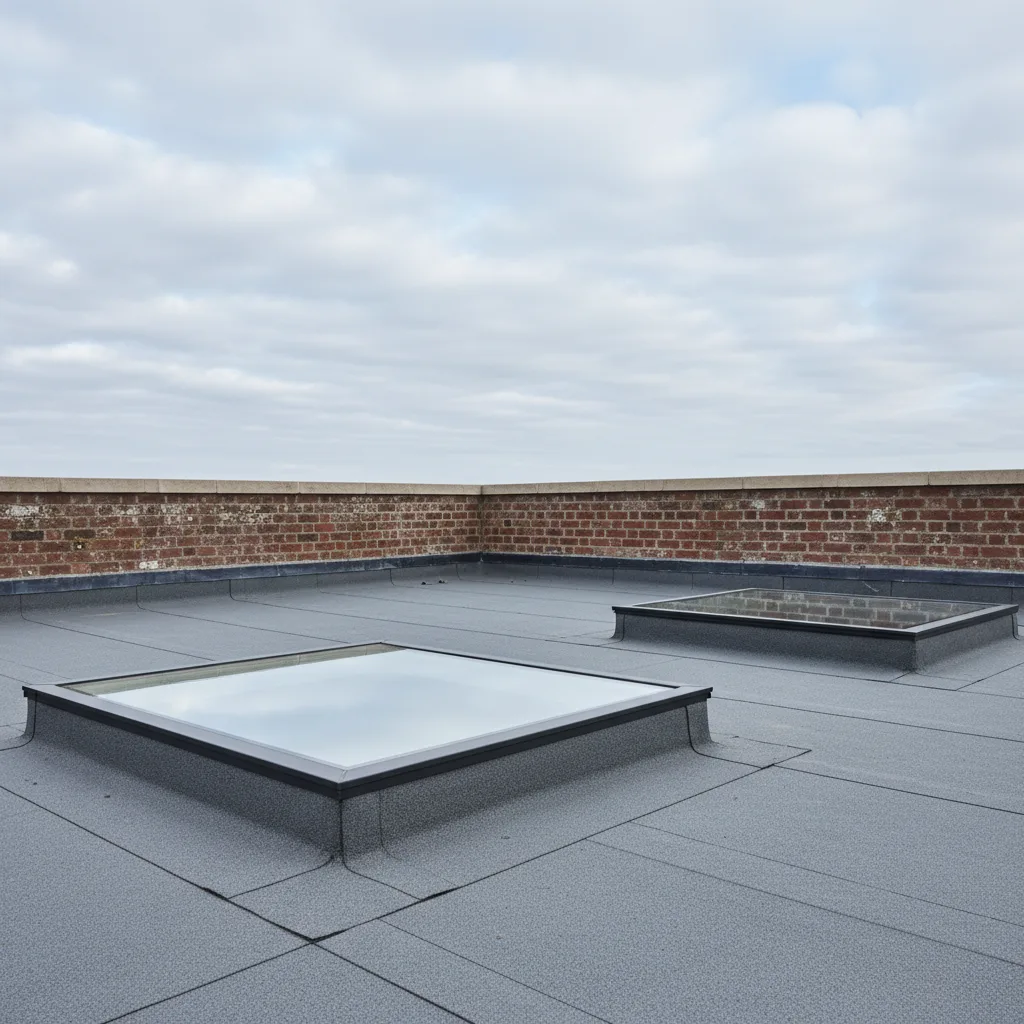
Fixed flat rooflights generally have no ventilation at all, so the requirement is met elsewhere in the room.
Where the rooflight is the only opening in a room, a comfort vent or an opening unit is worth specifying rather than assuming the room will be fine.
The wider point
A room that cannot lose moisture will condense it on the coldest surface, which is the rooflight. Complaints about condensation on a rooflight are frequently complaints about ventilation in the room, and the trickle vent is part of the answer rather than the problem.
More on Energy Efficient Rooflights
Ready to bring the daylight in?
Tell us about your project and we’ll send a clear, fixed written quote, no pressure, no surprises.
- Fixed written price before any work starts
- No pressure, no obligation, no sales calls
- Flexible survey times that suit you
- A reply within one working day